Jun
6
2011
Posted by
editor
Comments

Caught Between Washington and a Hard Place

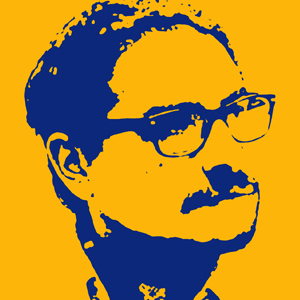
Petardo de PetareWNVZ is proud to introduce the newest blogger to join our ranks – el Petardo de Petare.  Petardo will offer his viewpoint on Venezuelan political and social issues with his characteristic wit and insightful analysis. In the first installment of his blog, Petardo takes on the recent sanctions imposed by the United States against PDVSA and the political circus that followed.

Since the United States announced sanctions against our state oil company, PDVSA, Venezuelans have been enduring a daily dose of government-sponsored marches condemning the U.S. measure. PDVSA workers around the country have been forcefully mobilized – dressed from head to toe in their finest red clothing – to rally against the “Yankees.” Mr. Chávez’s own party, PSUV, recently held a rally to protest the U.S. sanctions. Hoards of state-organized mobs have proclaimed their repudiation of the “Yankee imperialists,” accusing them of threatening our sovereignty. As if synchronized – and it is – the government-run media has devoted a majority of its news coverage to the issue. Not a moment goes by without some or other government official loudly proclaiming their defense of our national sovereignty and making wild accusations against the United States. PSUV National Assemblyman, Aristóbulo Isturiz went as far as accusing the United States of attempting to sabotage next year’s presidential elections. Another Chávez lackey suggested the final goal of the United States is to invade Venezuela. You get the drift.

All this huffing and puffing is much to do about nothing. The sanctions will have little to no impact on Venezuela. After all, CITGO, our Bolivarian mole in the United States, is not impacted by the move. Thus, Venezuela will continue to be able to export more than 40% of our oil production to what the regime calls “capitalist, imperialist robber barons to our north.” Even with all its chest pounding, the Chávez government did not dare touch its oil exports to America. The reason is simple. The United States is the leading buyer of our golden goose – oil – which provides for most of our foreign currency reserves. For a government whose only economic policy is to spend money buying new voters, the U.S. money spigot is the most important revenue source and, therefore, all that really matters to them.

The most interesting sideshow to this situation is the unusual parallel between the government’s reaction and that of the opposition political parties and leaders. For the first time in the millennia, Washington accomplished something not very often seen in Venezuela. That is the government and opposition agreeing on something. Both have condemned the U.S. sanctions.

For the Venezuelan opposition, the decision to condemn the sanctions was not easy. In doing so, they found themselves caught between Washington and a hard place. Not so for the government. The default stance of Chavistas is to blame the United States for virtually everything that is wrong in our country – never mind that our hardships are really a direct result of the government’s utter incompetence. In rejecting the U.S. sanctions, the opposition risked alienating its most ardent supporters. You see, among the opposition hardliners, any agreement with the government is considered a cardinal sin. For the hardliners, opposing Chavismo means disagreeing with anything and everything President Chávez does. If you dare agree on anything, no matter how large or small the scale of the issue, you are automatically branded “too soft.” At the same time, had the opposition expressed even the most timid support for the U.S. sanctions, the Chávez government would have attacked them as “servants of the American imperialists,” and willing partners in “selling out” Venezuela’s independence and sovereignty.

The opposition’s decision to reject the sanctions was honest, brave, and smart. Otherwise, they would have handed Mr. Chávez, in a silver platter, a fantastic excuse to shift the political debate in our country from what really matters – inflation, food shortages, blackouts, etc. – to useless, anti-American rhetoric. It would have strengthened Mr. Chávez’s ability to portray himself as the only political leader capable of standing up for our country. At a time when the government is more vulnerable than ever with the headlines being dominated by the most recent blackouts and economic morass, disagreement would have handed Chavistas a winning card. Clearly, the opposition is willing to alienate a small but vociferous minority rather than jeopardize its credibility with the middle-of-the-road majority voters, who hold in their hands the future of Venezuela.

The sanctions issue also highlights how Caracas and Washington are on completely different wavelengths when it comes to the issues that really matter. Every time I read the U.S. media, I see that when discussing Venezuela, U.S. opinion leaders only care about Mr. Chávez’s links to Iran and other “undesirables.” But here, in Petare, that is hardly a concern or topic of discussion. At a time when Venezuelans are forced to fight every day to find sugar, coffee, and meat, or to hold on to their jobs, or to protect themselves from becoming a victim of crime, Mr. Chávez’s extracurricular activities in the world stage are not a domestic priority. That’s not to say that the government’s foreign policy should not be scrutinized, but rather that Venezuela’s foreign policy should be judged based on what is in our national interest and not that of any other country, including the United States.

 
Jun
3
2011
Posted by
editor
Comments

In Case You Missed It… Articles Roundup Week of 6/3/11

In this week’s roundup…The housing crisis is the top of mind issue for Venezuelans, as the country copes with soaring inflation and rising debt. Meanwhile, the oil sanctions debate rages on as President Hugo Chávez jokes about his government’s ties to Iran.

FACTBOX-Housing among top worries for Venezuelans, Reuters

Venezuela’s housing shortage is a challenge for President Hugo Chavez, a major concern for millions in the South American OPEC member, and one of the issues that could shape next year’s election. With 29 million people, Venezuela is short of 2 million housing units. Chavez blames past capitalist governments and local businesses for putting profit motives before the needs of society at large.

Chavez to Request $10.5 Billion in Debt Under New Venezuela Law, Bloomberg

Venezuelan President Hugo Chavez said he will send a request to the National Assembly today to issue up to 45 billion bolivars ($10.5 billion) in new bonds this year as part of a special debt law. Of the total, 20 billion bolivars would help pay for 153,000 homes as part of a housing drive, 10 billion bolivars would go to a new job creation program, 10 billion to cover public debt and 5 billion to respond to heavy rains that have damaged homes and infrastructure, Chavez said.

Venezuelans struggle to cope with soaring food prices, inflation tops Latin America, The Washington Post

Soaring food prices are forcing many Venezuelans to change their eating habits, trim their shopping lists and set aside more of their earnings to feed their families. The oil-exporting country is coping with one of the highest inflation rates in the world: 22.9 percent as of last month, and food prices are rising even faster. “It’s gotten 100 percent worse,” said Evelyn Villamizar, a 29-year-old student who is raising a 5-year-old son in a poor barrio of the Venezuelan capital, Caracas. She said she feels “strangled by the prices.”

Hugo Chavez in the U.S. Crosshairs, Foreign Policy

Finally, Hugo Chavez is being held accountable for his reckless efforts to aid and abet Iran’s illegal pursuit of a nuclear capability and evasion of international sanctions. This week, the Obama administration announced it was imposing sanctions on Venezuela’s state oil company PDVSA and the Venezuelan Military Industries Company CAVIM for their illicit dealings with Iran.

US Oil Sanctions Against Venezuela May End Up Helping Chavez, The Wall Street Journal

U.S. sanctions against Venezuela’s state oil company may benefit rather than hurt President Hugo Chavez’s government by providing fuel for anti-U.S. rhetoric as the leftist leader rallies supporters ahead of next year’s presidential elections. Slamming Washington is a timeworn strategy for winning votes in many parts of Latin America, and it could provide a boost to the re-election bid by Chavez, who in his 12 years in power has become the region’s loudest U.S. critic. “Chavez is using [the sanctions] as a weapon to consolidate his base, to put the opposition in an uncomfortable situation and to rally support for his election campaign,” said Anibal Romero, a Caracas-based retired professor of political science. While analysts don’t expect the recent sanctions to have much effect on Petroleos de Venezuela SA, or PdVSA, as the state oil company is known, the reaction from the Chavez government has generated unease among holders of Venezuelan debt, weighing on bonds trading in New York in recent days.

Chavez condemns US sanctions, jokes about missiles, Associated Press

President Hugo Chavez mocked U.S. concerns about Venezuela’s ties with Iran on Tuesday, joking that while his adversaries worry about Iranian-made missiles lining his country’s coast his government is actually erecting windmills there. The socialist leader at first said missiles could be launched at Washington and other U.S. cities, then held up a photograph of windmills along the South American country’s coast, saying “here they are.”

 
May
31
2011
Posted by
editor
Comments

In Case You Missed It… Differing views on U.S.-imposed sanctions on Venezuela

Below are two differing views on the sanctions the U.S. recently imposed on Venezuela’s PDVSA.

US Oil Sanctions Against Venezuela May End Up Helping Chavez
The Wall Street Journal

By Ezequiel Minaya and Kejal Vyas
May 30, 2011

U.S. sanctions against Venezuela’s state oil company may benefit rather than hurt President Hugo Chavez’s government by providing fuel for anti-U.S. rhetoric as the leftist leader rallies supporters ahead of next year’s presidential elections. Slamming Washington is a timeworn strategy for winning votes in many parts of Latin America, and it could provide a boost to the re-election bid by Chavez, who in his 12 years in power has become the region’s loudest U.S. critic. “Chavez is using [the sanctions] as a weapon to consolidate his base, to put the opposition in an uncomfortable situation and to rally support for his election campaign,” said Anibal Romero, a Caracas-based retired professor of political science. While analysts don’t expect the recent sanctions to have much effect on Petroleos de Venezuela SA, or PdVSA, as the state oil company is known, the reaction from the Chavez government has generated unease among holders of Venezuelan debt, weighing on bonds trading in New York in recent days.

Read more…


Hugo Chavez in the U.S. Crosshairs
Foreign Policy

By José R. Cárdenas
May 27, 2011

Finally, Hugo Chavez is being held accountable for his reckless efforts to aid and abet Iran’s illegal pursuit of a nuclear capability and evasion of international sanctions. This week, the Obama administration announced it was imposing sanctions on Venezuela’s state oil company PDVSA and the Venezuelan Military Industries Company CAVIM for their illicit dealings with Iran. The sanctions are admittedly minimal, but one hopes they signal a new vigor on the part of the administration towards further exposing and countering the nefarious Venezuelan-Iran axis.

Read more…