Feb
7
2013
Posted by
admin
Comments

Mysterious Check Reignites Controversy over Iran-Venezuela Relationship

r TAHMASB MAZAHER CHECK large570 e1360253117979 Mysterious Check Reignites Controversy over Iran Venezuela Relationship

Courtesy of: Associated Press

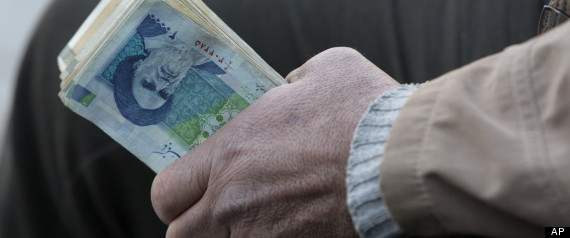
Controversial ties between two countries hostile to the United States reemerged on Saturday when a former Iranian official was caught in Germany with a sizable check from a Venezuelan bank. The German newspaper Bild am Sonntag first reported that German officials are investigating Tahmasb Mazaheri, Iran’s former central bank chief and economy minister, for smuggling after he was caught with an undeclared check worth approximately $70 million.

Upon his arrival from Turkey on January 21, Mazaheri was stopped and searched by German customs officials at the Dusseldorf airport. A check for 300 million Venezuelan Bolivars issued by the state-run Bank of Venezuela was found in his luggage.

According to customs authorities, visitors entering any of the European Union countries must declare incoming amounts above $13,580. Failure to disclose the funds is a civil offense punishable by a fine of up to $1 million. German authorities have not yet disclosed to whom the check was directed and are expected to decide later this month whether to press charges. In the meantime, local and international concern has emerged, sparking questions about how a former Iranian official ended up with a check of such a significant amount – in Venezuelan currency.

Iran’s ambassador to Venezuela, Hojattolah Soltani, told the Venezuelan media that the check was going to pay the expenses of the Kayson Company, an Iranian construction business that builds public housing for the Venezuelan government. According to the ambassador, Kayson has a contract to build approximately 10,000 low-income housing units. However, it remains unclear why Mazaheri misled German officials; declaring he was traveling with less than $13,580. When questioned by customs authorities, he failed to provide adequate explanation of the purpose and recipient of the funds, leading to further skepticism. Soltani claimed Mazaheri did not declare it because the check was not for him and was not destined for a German bank.

Reports confirm that Mazaheri has returned to Tehran, as officials launch an inquiry into possible impropriety and determine whether to return the check. But the controversy has given rise to the possibility that Venezuelan banks are helping Iran evade the economic sanctions imposed against it as a result of its nuclear development program. According to sources, the discovery has prompted a further investigation by the international community into the ties between the Venezuelan financial system and Tehran.

Such actions mirror the ongoing U.S. investigations into some of the largest European banks for violating sanctions against Iran. The investigations resulted in billions in fines between 2010 and 2012.

Members of the Venezuelan opposition alleged that the Kayson Company is on Canada and the United Kingdom’s list of undesirable companies, largely due to its links with illegal businesses.

United by their public condemnation of the U.S., Iran and Venezuela have built a strong alliance since Iranian President Mahmoud Ahmadinejad assumed office in 2005. They have reportedly signed over 70 joint venture agreements in housing, agriculture and energy, among other areas. The deals are valued at up to $17 billion, though neither country has much to show in terms of progress.

Mazaheri was personally involved in one of those projects back in 2008, when he became president of the International Development Bank (IDB), opened in Caracas as an independent subsidiary of the Export Development Bank of Iran (EDBI). Nine months after its opening, the U.S. Treasury Department imposed economic sanctions on both entities for financing Iran’s nuclear programs.

Citing the irresponsible handling of funds money by the Venezuelan government, the country’s opposition is demanding an explanation. Venezuelan officials have yet to comment on the matter. And with Hugo Chávez’s condition unknown to any except his Cuban medical team – now two months after his cancer surgery – the world remains wanting for answers.
 
Nov
16
2012
Posted by
admin
Comments

In Case You Missed It… Articles Roundup Week of 11/16/12

propiedad comunal In Case You Missed It… Articles Roundup Week of 11/16/12

Courtesy of: AVN

In the news this week, Venezuela won a seat on the United Nations Human Rights Council despite international criticism; regulators of the securities industry had tough questions for U.S. broker-dealers regarding practices used to mitigate money laundering and sanctions risks related to their involvement in a Venezuelan government-run exchange system; Venezuela’s crumbling infrastructure remains in the news as the electric energy minister admits the nation’s electrical system has been out of date for twenty years; and government takeovers continue as PDVSA seizes control of the Loma de Niquel mine from the Anglo American mining and natural resource company. Meanwhile, Chávez continues to lay the foundations for a communal state as forty communes await authorization by the Venezuelan government; Capriles looks to the regional December elections to legitimize the opposition coalition not only to a weary electorate but also to its own fractious members; problems persist in Venezuela’s industrial sector as the lack of raw materials reaches 83 percent; and the Venezuelan government continues to violate collective bargaining agreements, causing protests among workers. Lastly, the ADEN Competitiveness Institute ranks Venezuela among countries with the lowest competitiveness index, citing “problems of macroeconomic instability and institutional mishaps.”

Venezuela, the bane of human rights, The Washington Post

ON MONDAY, new members will be selected for the United Nations Human Rights Council, the top-level group for the protection and promotion of human rights. Its members have not always been paragons of respect for human dignity.

U.S. broker-dealers scrutinized for anti-laundering compliance in Venezuelan currency swaps, Reuters

NEW YORK, Nov. 13 (Thomson Reuters Accelus) -Securities industry regulators are beginning to ask U.S. broker-dealers tough questions about how they are mitigating money laundering and sanctions risks associated with their involvement in a 2-year-old currency exchange system run by the Venezuelan government, sources familiar with the issue said.

Some 71% of Venezuela’s electric energy system is outdated, El Universal

Venezuela’s Electric Energy Minister Héctor Navarro stated that 71% of the national electric system has been out of date for 20 years.

Venezuelan gov’t takes over Loma de Níquel mine, El Universal

Last Saturday, at 12 a.m., multinational Anglo American handed over to the Venezuelan State the control of Loma de Níquel mine, upon the expiration of the concession and failure to get a renewed term for the operation.

Communes await authorization by Venezuelan Government, El Universal

The Venezuelan National Assembly (AN) continues laying the foundations for the communal State. On October 20, during a meeting of ministers, President Hugo Chávez urged his cabinet to speed up the establishment of communes.

Capriles, Opposition Seek to Solidify Gains in Venezuela, World Politics Review

CARACAS — With campaigning for Venezuela’s December gubernatorial races now officially under way, the country’s political opposition finds itself in a tough spot. Still licking its wounds from its loss in October’s presidential election, the Democratic Unity Coalition (MUD) must get quickly off the mat to prove its credibility not only to a weary electorate but also to its own fractious members.

Lack of raw materials hits 83% of Venezuelan industries, El Universal

Obstacles are hitting the Venezuelan industrial sector, as lingering barriers continue to undermine their performance, according to data provided by the Venezuelan Confederation of Industries (Conindustria).

Government allegedly trying to uproot collective bargaining agreements, El Universal

In recent years, numerous labor protests by different sectors have sparked in Venezuela. Only in October, some 521 demonstrations were reported, 204 of which were labor-related, said the NGO Venezuelan Observatory of Social Unrest.

Venezuela among the countries with lower competitiveness index, El Universal

Chile is the leader of competitiveness among 18 Latin American countries, based on the Competitiveness Index established in October 2012 by the ADEN Competitiveness Institute. The information was disclosed by the higher studies institution based in Argentina, Efe quoted.

 
Mar
2
2012
Posted by
admin
Comments

In Case You Missed It… Articles Roundup Week of 3/2/12

In this week’s roundup… Rumors surround Hugo Chávez’s health as conflicting reports emerge following his operation in Cuba; Chávez’s absence triggers discontent among the country’s military ranks; MUD candidate Capriles’ youthfulness could play to his advantage in the October presidential elections if Chávez’s condition worsens. Price controls continue to increase the country’s soaring inflation, hurting food production and industrial output; Venezuela continues to send aid to embattled Syrian president Bashar Assad despite international sanctions; public and private investments fall to 10.3 percent, below 2008 numbers; and anarchy reigns in the Venezuela penitentiary system due to a lack of government oversight.

Chávez Surgery Revives Speculation, The Wall Street Journal

Venezuelan President Hugo Chávez, who is running for re-election, was in good condition after undergoing surgery overnight in Cuba to remove a pelvic lesion near where surgeons had removed a cancerous tumor last year, Vice President Elias Jaua said on Tuesday.

Hugo Chávez’s illness triggers new reports of discontent, fear in the military, Boston Herald

President Hugo Chávez’s illness has deepened the internal fissures of the Venezuelan Armed Forces, an institution that never integrated into one unique block of support of the Bolivarian Revolution and whose members have for months shown signs of concern and discontent, according to internal reports by the private intelligence company Stratfor leaked by WikiLeaks.

Chávez Surgery Opens Venezuela Election Chances For Candidate Henrique Capriles, The Huffington Post via the Associated Press

Throughout his presidency, Hugo Chávez has relied on his vigor and endurance: playing baseball, speaking for hours at a stretch and making decisions on the fly while bounding around Venezuela exuding energy.

Chávez’s Cancer Mystery: What if Venezuela’s President Doesn’t Run for Re-Election?, TIME
Lent, the pre-Easter season that started last week, is traditionally a time when Christians ponder their mortality – and Venezuelan President Hugo Chávez had a lot of it to contemplate before he left Caracas for Havana to undergo more cancer surgery.

Chávez’s health makes an impact on Venezuelan foreign policy, El Universal

Since last September, Colombian Ambassador to Venezuela Alfredo Curé has been waiting for a meeting with Venezuelan President Hugo Chávez to produce his credentials accounting for the official notice of the beginning of his mission in the country.

Chávez, his friends and life after death, The Financial Times

One of the more interesting lines of speculation about Hugo Chávez’s deteriorating health and possible death is what it might mean for the socialist Venezuelan president’s many foreign allies.

Venezuela’s New Price Controls Order Cuts Of Up To 25 percent, Fox Business

The Venezuelan government will cut prices on a slate of basic goods up to an average of 25 percent as part of a long-awaited first wave of broadly expanded price controls that officials say will combat the country’s soaring inflation, Vice President Elias Jaua announced Monday.

Agricultural balance still in the red, El Universal

World food prices will continue playing a key role in goods availability in the Venezuelan market in 2012. While the value of some commodities, including sugar, cereal and oil, dropped at the end of 2011, international organizations fear that prices this year will continue above the average.

Venezuela’s aluminum and steel production below 1997 numbers, El Universal

Official statistics reveal that the output of the subsidiaries of the Venezuelan Guayana Corporation (CVG) and private manufacturing, of the essence to diversify exports and supply raw materials to the rest of the economy, is seriously shrinking.

Venezuela sends fuel to Syria, no plans to halt shipments aimed at aiding Assad regime, The Washington Post via the Associated Press

Venezuela has been sending diesel fuel to Syria and the government of President Hugo Chávez has no plans to halt the shipments, the country’s energy minister said Tuesday.

Public and private investment 10.3 percent below 2008 level, El Universal

Thanks to raising oil prices, the Venezuelan government is able to inject a significant dose of public spending and the economy takes again the road of growth.

Venezuela’s Gladiators, The New York Times

Two men with knives face off in a pit. Hundreds gathered around are egging them on, while on the walkway above others are picking their winner and placing bets.