May
17
2013
Posted by
admin
Comments

In Case You Missed It…Articles Roundup Week of 5/13/13

This week: Shortages prevent Venezuelans from buying basic foodstuffs, from milk to flour to cooking oil. Foreign direct investment plummets The widespread shortages caused by Maduro’s socialist policies have now choked off the supply of a new household item: toilet paper; To address rampant crime, Maduro sends Venezuela’s military into high-violence areas. Analysts worry that Venezuela, entirely dependent on oil revenues, may turn into a failed state when oil prices inevitably drop. Desperate for a scapegoat on which to blame Venezuela’s economic woes, Maduro accuses Venezuela’s largest food company, Polar, of hoarding.  Polar’s CEO convincingly rebuts these allegations and offers advice on how the government might work with the private sector to combat shortages. A conciliatory Maduro begins to show signs of extending an olive branch to the private sector.


Eclac reports 15% drop in foreign investment in Venezuela in 2012, El Universal

Foreign investment in Venezuela fell 15% in 2012, said the Economic Commission for Latin America and the Caribbean (Eclac) of the United Nations in its report “Foreign Direct Investment in Latin America,” released on Tuesday. The regional agency report highlighted that in 2012, Venezuela received USD 3.21 billion versus 3.77 billion a year earlier. In this way, Ecuador joined Venezuela, Nicaragua, Mexico, Bahamas, Granada, Saint Kitts and Saint Lucia as the only countries in the region where foreign investment has dropped. Thanks to the positive performance of other countries, on average, Latin America and the Caribbean in 2012 hit a new record amount of direct foreign investment of  USD 173.36 billion (6.7% higher than in 2011), despite the external context of declining capital flows, Eclac reported in a press release.

How food shortages are dividing Venezuela, BBC News

Some 30 people are queuing outside a state-run supermarket in the 23 de Enero neighbourhood in Caracas. A woman walks out with a bag in her hands. “There is milk!” she says enthusiastically, much to the delight of the other customers. Milk is one of the products that are not easily available in Venezuela. Others include toilet paper, sugar, cooking oil and the cornflour used to make arepas, Venezuela’s national dish. According to data from Venezuela’s Central Bank, the scarcity index rose to 21% last month, the highest since the bank started tracking the measure in 2009. This means that out of 100 goods, 21 are not available.

Roiled over rolls: No toilet paper has Venezuelans fuming, USA Today

Gil, a 43-year-old Venezuelan housewife, spent two days looking for toilet paper in this city of 150,000 in the central state of Aragua. She found paper towels and napkins but no toilet paper. Gil, a 43-year-old Venezuelan housewife, spent two days looking for toilet paper in this city of 150,000 in the central state of Aragua. She found paper towels and napkins but no toilet paper.”Call me a counterrevolutionary but there are certain things that are essential and toilet paper is one of them,” she says, staring at the bare shelves where toilet tissue used to be stocked at the Morichal supermarket, one of the city’s largest. “What do they expect us to use? Banana leaves?”


Venezuela’s military enters high-crime slums, Miami Herald

Stern-looking soldiers clutching assault rifles wave down the beat-up Chevy Caprice entering this sprawling slum on the outskirts of Caracas. Flashlights in his face, the driver steps out and places his hands on the roof while the soldiers frisk him for drugs and weapons. He’s clean, and a hand gesture from the commanding officer sends him off into the maze of ramshackle homes that is Petare, one of the most dangerous parts of Venezuela’s notoriously crime-infested capital.

The People of Venezuela Are in Dire Need of Toilet Paper, New York

The AP brings us news that Venezuela is having a serious humanitarian crisis, one with which anyone who’s ever made a frantic late-night run to the corner bodega can sympathize. Namely, the entire country is running out of toilet paper. Venezuela’s socialist government has promised to import 50 million rolls of toilet paper (or maybe 25 million double-rolls?) and 760,000 pounds of food to make sure all citizens can eat and poop in comfort once more. “The revolution will bring the country the equivalent of 50 million rolls of toilet paper,” the country’s commerce minister said. “We are going to

Venezuela remains mired in a political and economic crisis that shows no signs of letting up. But while street protests, soaring inflation, scarcity, and skyrocketing crime are massive headaches, the government can count on still-high oil prices to soothe the pain a bit. The question that begs asking is: How will Venezuela maintain stability if oil prices drop?

Venezuelan food firm tells Maduro government to boost output, Reuters

Venezuela’s top food producer, Empresas Polar, on Monday challenged the country’s socialist government to boost output of basic staples and ease nagging product shortages, rejecting accusations it is hoarding products to destabilize the economy. Food supplies have become increasingly unsteady since late last year. Shoppers struggle to find corn, wheat flour and basic medicines – a constant complaint that could become a political liability for President Nicolas Maduro. The president over the weekend said Polar, which makes products from beer to detergent, was intentionally cutting output to leave supermarket shelves bare and weaken his government through “economic war.” Polar President Lorenzo Mendoza, in a combative press conference, said the product shortages have been partly spurred by inefficiency of state-run companies nationalized during the 14-year-rule of late socialist leader Hugo Chavez.

Caracas Offers Peace to Private Sector, Wall Street Journal

New President Nicolás Maduro, trying to shore up Venezuela’s economy amid growing shortages of everything from corn flour to toilet paper, has extended an olive branch to the country’s private sector, in particular the country’s largest food maker. It is a surprising turnaround given the antics of his predecessor, the late populist Hugo Chávez, who regularly threatened to nationalize the food maker, Empresas Polar SA, and accused it of hoarding products in order to sabotage his self-styled revolution.
 
Feb
26
2013
Posted by
admin
Comments

ICYMI: Hugo Chavez’s legacy of economic chaos; Tough times ahead for Venezuela

José Cardenas is a former senior official at the U.S. State Department, National Security Council and the U.S. Agency for International Development, where he served as Acting Assistant Administrator for Latin America and the Caribbean. He is a regular What’s Next Venezuela contributor.

Venezuela Protest e1361899707868 ICYMI: Hugo Chavezs legacy of economic chaos; Tough times ahead for Venezuela

Courtesy of: Associated Press

Washington Times
February 26, 2013
By José Cardenas

The recent return home from Cuba in the dead of night of cancer-stricken Venezuelan President Hugo Chavez is likely not a sign that his condition is improving. In fact, it is more likely that his doctors have decided there is nothing more they can do than to allow him to go home to die peacefully, surrounded by family.

That suits just fine senior Venezuelan officials and their Cuban minders, who need Mr. Chavez’s physical presence nearby to better stage-manage a chavista succession. They now can tell the Venezuelan people, with whom Mr. Chavez maintains a deeply emotional connection, that the “comandante” remains intimately involved in the process, “approving” all decisions.

It appears the only decision to be made at this point, however, is whether Mr. Chavez’s inner circle declares the ailing leader “incapacitated” or whether they wait out the inevitable before calling elections within 30 days, as the constitution mandates.

If they have their wits about them, they probably will move to “retire” the Venezuelan leader sooner rather than later. A few months down the road, they are likely to be facing a much less favorable political climate than they are enjoying today. That’s because Mr. Chavez has bequeathed to them a ticking economic time bomb, which is set to blow up in the faces of the very people Mr. Chavez has claimed to represent — the poor and working masses.

Much will be written in the coming weeks that Mr. Chavez’s legacy is that he transformed Latin American politics by giving a voice to the voiceless. Less will be focused on just what the cost will be to those very same people, as well as their children.

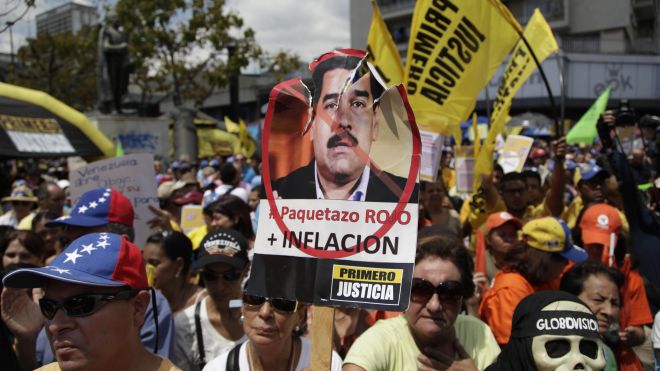
Once the emotion of the moment passes, Venezuelans will be left to pick up the pieces from Mr. Chavez’s gross mismanagement of the Venezuelan economy. To squander Venezuela’s vast oil wealth takes real effort, but Mr. Chavez and his profligate spending proved up to the task. In what has been an abject lesson in the perils of populist economics, his actual legacy will be soaring inflation, a bloated public sector, a crippled private one, electricity blackouts, shortages of basic goods and one of the highest homicide rates in the world.

The first sign of more difficult days ahead came on Feb. 8, when the government ordered a 46 percent devaluation of the country’s currency. Inflation, already running at 22 percent, is now expected to surge, prices of goods will increase, and shortages of items such as toilet paper and cornmeal (the staple of arepa cakes) and even automobiles will grow worse.

Of course, the burden of such economic dysfunction always falls on the poor and working classes, who devote a higher portion of their incomes to basic necessities. As a result of the devaluation, Venezuelans’ real income is expected to decrease by 20 percent this year, at the time when their purchasing power already has dropped to 1966 levels.

What’s more, it will only get worse. Analysts say another devaluation is almost inevitable, given that this latest one will not come close to balancing the government’s books. Rumors are also rampant that the government will soon introduce rationing measures for basic food items.

Nor is any relief likely to come from the private sector, which has been plagued by price and currency controls, expropriations, government interventions, legal uncertainty and oppressive labor laws. Indeed, under Mr. Chavez, the number of private companies has dropped from 14,000 to 9,000. While a decade ago, 8 out of 10 jobs were generated by the private sector, today that figure is 6 out of 10.

Neither does it appear that China is willing to continue to pay Venezuela’s bills. Having already lent Mr. Chavez $39 billion against future oil sales, it recently sent home Venezuelan Foreign Minister Elias Jaua empty-handed, with no indication that further loans were in the offing.

The fix is already in that the uncharismatic Nicolas Maduro will be entrusted with trying to keep chavismo alive without Mr. Chavez. Whether he and his Cuban advisers can successfully exploit Mr. Chavez’s image to confront formidable challenges on the horizon remains to be seen. One thing is certain, however: As opposition leader Henrique Capriles tweeted upon Mr. Chavez’s return to Venezuela, “Hopefully the president’s return means that Mr. Maduro and his ministers can get to work. There are thousands of problems to resolve.” Without a doubt.

To read this article at The Washington Times, please click here.

 
Feb
22
2013
Posted by
admin
Comments

In Case You Missed It…Articles Roundup Week of 2/22/13

 In Case You Missed It...Articles Roundup Week of 2/22/13

Courtesy of: Associated Press

This week: Hugo Chávez returns home to Venezuela, fueling speculation he will soon retire due to his declining health; the military hospital in Caracas housing Chávez remains the center of attention, though there have been no physical signs of the president; as the president remains hidden, Venezuela faces political uncertainty and an impending constitutional crisis; and the Venezuelan government remains discouraged about Chávez’s condition as his breathing difficulties persist. Chávez’s return to Venezuela prompts discussion of succession and a new election; the president’s declining health prevents a visit from his ally President Evo Morales of Bolivia; and Cuba continues to play an outsized role in Venezuelan politics. Lastly, Globovisión, the sole remaining Venezuelan TV channel that criticizes the Chávez regime, accuses the government of excluding it from a new digital television system; Harvest Natural’s deal to sell Venezuelan assets falls through after the devaluation causes the company’s shares to plunge; and companies from the U.S., China and Canada question the lawfulness of the Venezuelan government.

Chavez Return to Venezuela Fuels Speculation He’ll Quit, Bloomberg Businessweek

Venezuelan President Hugo Chavez was rushed to a military hospital early this morning after returning home from two months of cancer treatment in Cuba.

Venezuela hospital at center of attention in Chavez’s cancer fight, but no sign of leader, The Washington Post

At Caracas’ military hospital, the only outward signs that President Hugo Chavez is a patient inside are the motorcades that come and go and the soldiers standing guard, some of them wearing red berets.

Venezuela: Constitutional Crisis and a Barely Visible President, The Huffington Post

“Now that the president is back, there can be no doubt about the democratic institutions working in Venezuela,” said communication and information minister Ernesto Villegas on the return to Caracas of the Venezuelan president.

Venezuela Downcast on Chávez’s Condition, The Wall Street Journal

Venezuelan President Hugo Chávez, who is recovering from cancer surgery at a military hospital, is still suffering respiratory problems and hasn’t responded favorably to treatment, a government spokesman said late Thursday.

Chavez Back in Venezuela, Stirs Succession Talk, ABC News

Hugo Chavez’s sudden return to Venezuela after more than two months of cancer treatments in Cuba has fanned speculation that the president could be preparing to relinquish power and make way for a successor and a new election.

Chavez’s Health Prevented Him From Seeing Ally Morales, Bloomberg Businessweek

Venezuelan President Hugo Chavez has endured the “most difficult moments of his life,” according to Bolivian President Evo Morales, who didn’t get to see his close ally during a visit to Caracas.

Cuba has outsized role in Venezuela as Chavez fights cancer, The Washington Post

It’s become a well-worn routine here: A news flash about President Hugo Chavez’s battle with cancer is issued, invariably delivered with great fanfare but scant details.

Venezuela launches digital television, critical TV channel complains it was excluded, The Washington Post

A Venezuelan television channel that takes a critical stance toward President Hugo Chavez accused the government on Wednesday of excluding it from a new digital television system, and it warned that the action could force it off the open airwaves

Harvest Natural’s $725 Million Deal to Sell Venezuela Assets Falls Through, The Wall Street Journal

Harvest Natural Resources Inc. (HNR) said a deal under which Indonesia’s state-owned PT Pertamina had agreed to buy its interests in Venezuela for $725 million has been terminated.

Chinese companies query into Venezuelan governance lawfulness, El Universal

Companies from China, United States and Canada have a big question mark as to lawfulness of governance in Venezuela. For this reason, they hesitate to invest in the country, said Adolfo Salgueiro, an expert in international law.