Dec
7
2012
Posted by
admin
Comments

In Case You Missed It… Articles Roundup Week of 12/7/12

yv 1003 5 300x199 In Case You Missed It… Articles Roundup Week of 12/7/12

Courtesy of: AFP

This week: a likely devaluation and spending cuts look set to decrease Venezuelans purchasing power; the Venezuelan Central Bank reports November’s inflation rate was the nation’s highest in 16 months; despite the oil boom in Venezuela, Chávez has failed to alleviate poverty, which has only dropped 4.1 percent over a five year period; the Chávez administration named 15 new ambassadors via twitter; violence remains rampant as 45 bodies were taken to the Caracas morgue over the weekend; the state-run Venezuelan airline, Conviasa has been banned from flying in the European Union due to safety reasons. Meanwhile, Norway will close its Venezuelan embassy after 45 years in Caracas, citing rampant crime; according to a recent Transparency International study, Venezuela is the most corrupt nation in Latin America and one of the most corrupt nations in the world; Chávez’s continued absence causes more speculation over his health. Finally, after a canceled appearance at the Mercosur summit this week, Chávez returns to Venezuela after a ten day medical trip to Cuba.

Likely devaluation and spending cuts are to curb consumption in Venezuela, El Universal

In the third quarter, Venezuelan households’ consumption hit its highest level ever since 1998, as well as a 7.8% leap over the same period in 2011, according to the numbers disclosed by the Central Bank of Venezuela (BCV).

Venezuela Names 15 New Ambassadors, Via Twitter, The Wall Street Journal

CARACAS—Venezuela President Hugo Chávez, who will be in Cuba for an undetermined period receiving follow-up treatment after his battle with cancer, named 15 new ambassadors to countries in the region, the Middle East and Africa, Information Minister Ernesto Villegas announced Monday.

A total of 45 bodies are taken to Caracas morgue in the weekend, El Universal

As many as 45 bodies had been taken to Bello Monte morgue in Caracas from Friday morning through Monday morning, according to unofficial sources. The body of Roberto José Pinto, 29, a detective of the Scientific, Criminal and Forensic Investigation Agency (Cicpc), was added to the weekend account.

Venezuela is headed for economic adjustments despite oil boom, El Universal

The last thing one expects from people who have won the lottery is that after six years their debts are higher, they are having difficulties to meet daily expenses, and they have slightly reduced poverty.

Venezuela’s Conviasa blacklisted by the European Commission, El Universal

The European Commission on Thursday updated the blacklist of airlines that have been banned from flying on the European Union due to safety reasons. Venezuelan state-run airline Conviasa has been included in the list.

UPDATE 2-Venezuela’s November inflation was highest in 16 months, Reuters

CARACAS, Dec 4 (Reuters) – Venezuela’s monthly inflation accelerated to 2.3 percent in November, the central bank said on Tuesday, the highest rate in more than a year.

Citing Crime, Norway to Close Venezuela Embassy, ABC News

Norway will close its embassy in Venezuela because of rampant crime in the South American country and move the diplomatic mission to neighboring Colombia, its ambassador said Wednesday.

Corruption Perception Index Ranks Venezuela as One of World’s Most Crooked Countries, Fox News Latino

Venezuela is the most corrupt nation in Latin America and one of the most crooked countries in the world, according to an NGO annual report. The Andean nation ranked 165 out of 174 nations on Transparency International’s 2012 Corruption Perception Index.

Chavez’s Longest Silence Since Cancer Fuels Health Rumors, Bloomberg Businessweek

Venezuelan President Hugo Chavez’s longest absence from public view since he first underwent cancer surgery 18 months ago is fueling speculation that his health is worse than he’s letting on.

Chavez back in Venezuela after Cuba treatment, USA Today

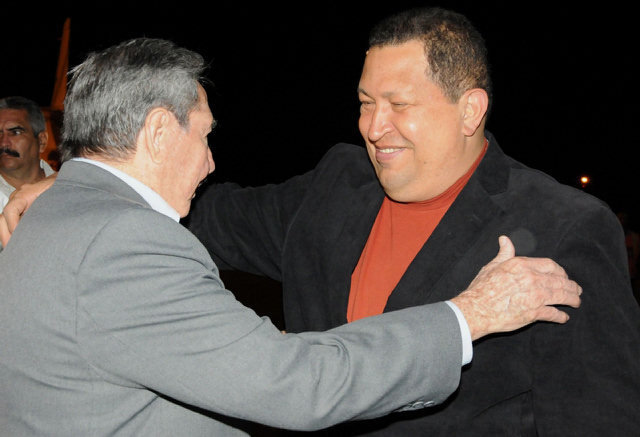
Venezuela (AP) — Venezuelan President Hugo Chavez arrived back home in Caracas early Friday after 10 days of medical treatment in Cuba. State television showed images of Chavez arriving at Caracas’ airport and walking down the steps of the presidential jet wearing a track suit.
 
Nov
30
2012
Posted by
admin
Comments

In Case You Missed It… Articles Roundup Week of 11/30/12

 In Case You Missed It… Articles Roundup Week of 11/30/12

Courtesy of: Raul Abreu / AP

This week: the Bolivar’s value hits a record low as Chávez feels the pressure to increase bond sales; the Venezuelan opposition seeks amnesty for political prisoners and opponents of Chávez living in exile; and Venezuelan Judge Afiuni says she was raped while in prison, after she was jailed for issuing a ruling that irked Chávez. Chávez’s recent medical trip to Cuba causes many Venezuelans to question his longevity and the viability of his socialist regime; the central bank of Venezuela reports that non-oil exports are at their worst level since 1997; Henri Falcón, the opposition governor of Lara, says he and supporters were attacked with tear gas and stones during a political event. Meanwhile, Chávez continues to advance his plan for communes in Venezuela; the UN Economic Commission for Latin America and the Caribbean registered an escalation of poverty in Venezuela, despite the decrease in poverty in other Latin American countries. Lastly, the Economist reports that Chávez’s nationalization of Venezuelan ports has led to inefficient, congested wharves and a dramatic increase in imports.

Chavez Choking on Bolivars to Spur Venezuelan Bond Sales, Bloomberg

The bolivar’s plunge to a record on the black market is pressuring Venezuelan President Hugo Chavez to end the longest drought of dollar-bond sales in five years.

Venezuela opposition seeks amnesty for prisoners and return home for Chavez opponents in exile, Washington Post

CARACAS, Venezuela — Venezuelan opposition lawmakers have drawn up a list of prisoners they consider to be wrongly jailed and want freed, and are also demanding that dozens of government opponents living in exile should be allowed to return home.

Venezuelan Judge Who Angered Chávez Says She Was Raped While in Prison, New York Times

CARACAS, Venezuela — An arrested judge at the center of one of Venezuela’s most prominent human rights cases was raped while in prison and then had an abortion behind bars after becoming pregnant, according to the judge’s lawyer and a book published last week in Caracas that has stirred new controversy around the case.

Venezuelan non-oil exports at the worst level since 1997, El Universal

Venezuela’s entry into the Common Market of the South (Mercosur) took place amidst the worst moment of the local industry. Dependence on oil revenues, higher imports, and small export capacity are just some of the aspects defining the country’s current economy.

Chavez’s return to Cuba for treatment rattles Venezuela, Reuters

(Reuters) – Venezuelan President Hugo Chavez flew into Cuba on Wednesday for cancer-linked medical treatment that revived questions about the viability of his socialist rule and left Venezuelans again guessing about his exact condition.

Venezuela Opposition Gov Says Supporters Attacked, ABC News

The opposition governor of Lara state in central Venezuela says he and his followers were attacked with guns, tear gas and stones during a political event, presumably by rival ruling party supporters.

Communal state advances in Venezuela, Buenos Aires Herald

Barely a wink after the October presidential elections, Venezuelans will once again be returning to the polls on Sunday, December 16. With Hugo Chávez re-elected for another six years with 54 percent of the vote, but absent and silent for the last 12 days and now heading to Cuba for more medical treatment, in the coming elections Venezuelans will now choose 23 governors and 233 state lawmakers.

Venezuela Raises Prices on Corn Flour, Rice, Coffee, Loyo Says, Bloomberg

Venezuela raised price caps on pre- cooked corn flour, white rice and ground coffee by as much as 46 percent, Agriculture Minister Juan Carlos Loyo said today. The cost of a kilogram of pre-cooked corn flour rose 46 percent to 5.93 bolivars ($1.38) from 4.06 bolivars and a kilogram of white rice rose 28 percent to 7.2 bolivars from 5.62 bolivars, Loyo said on state television.

ECLAC: Poverty and indigence escalate in Venezuela, El Universal

According to the UN Economic Commission for Latin America and the Caribbean (ECLAC), based on information compiled until 2011, seven out of 12 countries in Latin America reported a drop in poverty.

Cancelling Christmas, The Economist

THOSE who claim to deplore the commercialisation of Christmas should move to Venezuela. Seasonal products, from Christmas trees to toys, trinkets and delicacies, are piled up in the country’s ports, thanks to inefficient, congested wharves and a dramatic increase in imports.

 
Oct
17
2012
Posted by
admin
Comments

REPORT: CHÁVEZ EXPROPRIATES 1,168 COMPANIES IN A DECADE; JAUA SAYS THERE’S MORE TO COME

agropatria1210 REPORT: CHÁVEZ EXPROPRIATES 1,168 COMPANIES IN A DECADE; JAUA SAYS THERES MORE TO COME

Courtesy of: Jack Bocaranda / AVN

During the last 13 years, Hugo Chávez has earned his reputation as a fierce opponent of private industry. Even as inflation soared and Venezuelans experienced shortages of even the most basic goods, Chávez held true to his socialist ideology, nationalizing huge swaths of the nation’s economy – from farming to oil production to the media. A report from the analysis firm Conindustria indicates that from 2002 to 2012 Chávez’s government nationalized 1,168 private companies. From the seizure of private oil operations to the expropriation of millions of hectares of farmland to the takeover of vacation homes on Los Roques, Chávez has shown that no sector of the economy is beyond his grasp.

However, the pace of expropriations slowed drastically in the months before the election. It seemed that even Chávez recognized his crusade did not represent sound economic policy. The trend began late last year, when Chávez slowed the rate of expropriations and began striking deals with companies he once derided – part of an effort to prop up Venezuela’s economy in an election year.

But now, having been granted the political cover of a new six-year term, Chávez has vowed to deepen his socialist revolution. A reinvigorated opposition can challenge the president on many fronts, but on his bread and butter policy of expropriations, Chávez will likely have free rein. Former Vice President Elias Jaua said in an interview last week that Chávez plans to take full advantage of that power. He told media that the “strategic expropriation” of companies is again on the agenda for Chávez’s next term. Since that time, Jaua has been replaced by Foreign Minister Nicolas Maduro and now stands as a candidate for Governor of Miranda state against Henrique Capriles.

Economists agree that Chávez’s policies have made Venezuela one of the hardest countries on the world in which to do business.  And Venezuela’s people have felt the consequences: foreign direct investment has fallen to less than $1 billion per year from $3.9 billion the year before Chávez took office. Meanwhile, government policies have kept arable farmland idle, forcing Venezuela to raise imports by more than 400 percent to make up for the losses.

Unfortunately for Venezuelans, the situation seems unlikely to improve in the immediate future.