Jun
18
2013
Posted by
admin
Comments

ICYMI: Breast-feeding is best, so ban bottles, Venezuelan lawmaker proposes

CNN
June 18, 2013
By Catherine E. Shoichet

population e1371580976192 ICYMI: Breast feeding is best, so ban bottles, Venezuelan lawmaker proposes

Courtesy of: Reuters

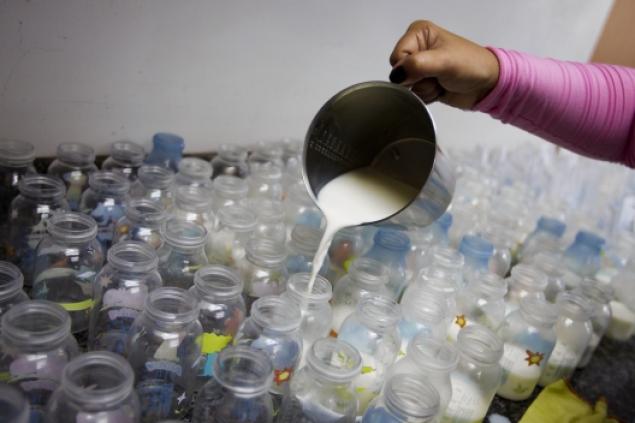
Venezuelan lawmakers are weighing whether to ban the use of baby bottles as part of a push to promote breast-feeding, state media reported.

The proposed measure will be up for debate in the South American country’s National Assembly on Tuesday, lawmaker Odalis Monzon said in an interview with state-run VTV.

“Every baby has the right to breast-feeding,” said Monzon, a lawmaker from the ruling United Socialist Party of Venezuela.

In addition to banning bottle-feeding, the proposed revisions to Venezuela’s Law of Promotion and Protection of Breastfeeding also include plans to penalize those who advertise baby formula, she said.

Transnational companies that market formula, she said, have interfered with a crucial bond between mother and child.

“The most important is the love, the connection between mother and child, that sometimes is lost because they do not give them the warmth that nursing a baby provides,” Monzon told VTV.

The proposal includes exceptions for mothers who cannot breast-feed due to illness, Monzon said. It would also provide for the creation of more breast-milk banks and require companies to set aside space for mothers to nurse.

She did not provide details about how authorities would enforce the measure if it passes, or what sorts of punishments violators would face.

The measure has drawn sharp criticism from some lawmakers, who argue that the government can promote breast-feeding without prohibiting anything, CNN affiliate Globovision reported.

“This is unacceptable and alarming,” said Eduardo Marin, a lawmaker for the opposition Justice First party.

The 2007 law that Monzon is pushing to amend was aimed at promoting breast-feeding, Marin said, not “questioning, stigmatizing and practically criminalizing those who have opted for (other methods) of feeding.”

Earlier this month, Venezuela’s Health Ministry said that 27.1% of mothers in the country who are able to breast-feed actually do so and that officials aimed to increase that number to 70% by 2019,VTV reported.

To read this article at CNN, please click here.

 
May
13
2013
Posted by
admin
Comments

With the Economy in Dire Straits, Maduro Scapegoats a Beloved Venezuelan Company

pan0.jpg.520.360.thumb  e1368469039817 With the Economy in Dire Straits, Maduro Scapegoats a Beloved Venezuelan Company

Courtesy of: El Universal

Nicolás Maduro and his socialist government cannot claim that they were not warned. Economists have long predicted that a Venezuelan economy propped up by excessive borrowing and an unsustainably high oil market would collapse spectacularly. Hugo Chávez, his cancer kept at bay just long enough to secure reelection, spent enough borrowed money in his final months to postpone the crash until Maduro had taken control. But the reckoning was inevitable. Now Maduro, eager for a scapegoat, is intensifying his attacks on the private sector, taking aim at Venezuelans’ most beloved company: Empresas Polar.

Polar is a pillar of the Venezuelan economy, producing staple goods from cornflour to household supplies and the nation’s most popular beer. Maduro issued his latest threat against the company on Saturday, when he accused the company of economic “sabotage” and demanded company President Lorenzo Mendoza to appear before the government to “explain the situation.” It was the latest in a series of escalating rhetoric against Polar, and a disturbing sign that Maduro refuses to learn the lessons inflicted on Venezuelans by years of failed socialist policies. Mendoza is scheduled meet with Vice-president Jorge Arreaza on Monday and with Maduro on Tuesday.

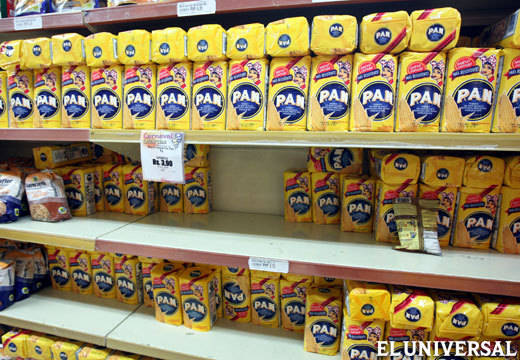
In a press conference held on Monday before the scheduled meetings, Mendoza addressed Maduro’s statements. He noted that Polar’s cornflour brand, PAN, operates at 100 percent capacity, but has only a 48 percent stake in the Venezuelan market, making it impossible to meet the country’s full demand. Thus far this year, Polar has produced 10 percent – 15,000 tons – more than last year. The remaining 52 percent of the market is comprised primarily of government-owned businesses, which are producing at less than 40 percent of their capacity. In response to Maduro’s accusation of “hoarding,” Mendoza stressed that Polar simply cannot hoard products to begin with since every step of the production and distribution process is regulated by government overseers.

As economists have noted, the shortages and inflation Maduro blames on the private sector are in fact caused by the government’s own policies. Rampant expropriations, price controls and other heavy-handed policies have harmed business and left farmland idle, sapping more than 11 percent from the country’s gross domestic product between 2005 and 2010.

Inflation is soaring, the nation’s debt continues to mount, and a currency devaluation has crippled Venezuelan’s purchasing power. As What’s Next contributor Joel Hirst observed, the economic crisis has left Maduro in the “awkward position of blaming Venezuela’s hobbled private sector for the failure of his own socialist policies.” The Central Bank’s scarcity index for Venezuela, which measures the percentage of goods unavailable in the market, rose to its highest number since it began tracking in April, 2009.

The facts, of course, could not be clearer. The company persevered under the yoke of Chávez’s policies, and continues to provide the goods Venezuelans need even as government controls force Polar and other companies to operate at a loss. These private companies are Venezuela’s best hope for brighter economic days; Maduro, in a desperate bid to save his own political skin, has chosen to marginalize them even further. It is ordinary Venezuelans, however, who will suffer the consequences.

 
Dec
5
2011
Posted by
admin
Comments

ICYMI: Chávez’s 40-Year Plan to Conquer Vice ‘Socialism, socialism and more socialism.’

The Wall Street Journal
December 5, 2011
By Mary Anastasia O’Grady

Venezuela’s Hugo Chávez says his Bolivarian Revolution needs more time to produce its utopian fruits. “We barely have 10 years here,” he told a crowd of supporters in Caracas last week. “We will take it to 10 more and 10 more and 10 more to construct the new social virtues.”

In that time, Mr. Chávez pledged, “we will deepen the socialist revolution: socialism, socialism and more socialism. We have to deepen the struggle and defeat the vices of the past that still persists among us: violence, insecurity, corruption, selfishness, individualism.”

Considering that the human condition hasn’t changed much since we got kicked out of the garden, a 40-year plan to conquer vice seems pretty ambitious. But Mr. Chávez has never suffered a lack of self-confidence. Of course being an individual is hardly a vice. On the other hand, notably absent from his list was another perennial transgression that has yet to be defeated in Venezuela: the central bank’s sinful practice of printing money to finance the government.

Double-digit inflation has been the Venezuelan norm for decades. An annual rate below 20% since 1987 has been the exception; this year the International Monetary Fund expects a 25% increase in the price level.

Of course Mr. Chávez does not blame the central bank for inflation. In his school of economics rising prices are caused by producers, suppliers and merchants, who control the availability of goods and continually charge more for their products so that they can have a fatter profit. The solution to this injustice against the consumer, according to chavismo, is price controls. When they don’t work, the answer is more of the same.

It was 2003 when the Chávez government introduced its first big wave of price controls. That year inflation exceeded 31%. Since then prices have been frozen on a wide variety of food items—meat, corn flour, rice, bread, sugar, coffee, powdered milk, cooking oil—and a host of other products and services, including cement and building materials, domestic air travel, private education and medical clinics. The main effect is that many items that used to be readily available are now scarce. Yet inflation stubbornly persists.

The inflation tax hits the poor the hardest and they are Mr. Chávez’s most important constituents. Thus, in August he officially redoubled his efforts to control inflation by decreeing the “law of costs and fair prices.” This sweeping new legislation creates a regulator charged with monitoring what consumers are charged, analyzing those charges by researching the cost of production and setting “just” prices. An army of 4,000 apparatchiks will make up “committees” that will fan out around the country to report and denounce noncompliance. Hoarders, speculators or anyone found guilty of price gouging will be prosecuted. Offenders can be fined, lose their property, be banned from commerce, and even go to jail.

Among Mr. Chávez’s more amusing traits—providing you don’t live in Venezuela—is his unshakable belief that he can dictate what the Austrian classical-economist Ludwig Von Mises called “human action.” Thousands of years of experience suggest otherwise, most recently in the Soviet Union. But never mind. It is Venezuela’s destiny to suffer central-planning hubris all over again.

Mr. Chávez recognizes at least some limitations. He knows he cannot decide, from the commanding heights, every price in the Venezuelan economy on day one. So his latest effort will start small. On Nov. 22 his government added 19 new products, mostly in the area of personal hygiene and home-cleaning, to the list of items with frozen prices. By Dec. 15 regulators will have analyzed the cost to make these products—advertising and marketing costs not included—and will decide what they should be sold for. Once those prices are set, the bean counters will move on to other goods.

Mr. Chávez has asked the regulators to keep a close eye on foreign-based companies like Colgate-Palmolive, Pepsi, Coca-Cola, Nestle, GlaxoSmithKline, and Johnson and Johnson. The Italian milk company Parmalat, now controlled by the French Lactalis Group, has already been accused of hoarding. But the large Venezuelan food producer Polar is also in Mr. Chávez’s cross-hairs.

Putting aside the absurdity of government bureaucrats overruling the laws of supply and demand, there is also the problem that many producers require dollars—which are not available at the official exchange rate—to pay for imported inputs. If the state insists on using the artificially strong Bolivar exchange rate to calculate costs, the vast majority of producers will either be judged guilty of overcharging or go out of business.

Consumers are anticipating what will ensue. In recent weeks the local press has reported that shops have been cleaned out of many price-controlled items. Sources say that products that are hard to find in stores can usually be purchased from street vendors at market prices.

In the meantime the government is feeding inflation by ramping up spending ahead of the election. Maybe Mr. Chávez will need more than 40 years to cure original sin.

To view the article on The Wall Street Journal, please click here.