This article was originally posted by The Wall Street Journal
Venezuelan President Hugo Chavez is accusing the international press of working with local opposition forces to slander his government and turn voters against the ruling socialist party in key upcoming elections.
“The foreign press corps’ strategy of defamation … has been put into action,” Chavez wrote in his weekly column Sunday, four weeks ahead of legislative elections. “They have powerful tools and they’re going to be using them.”
The president specifically mentioned several foreign media outlets, including CNN and the New York Times. The Times published an article recently claiming Venezuela is deadlier than Iraq in terms of civilian deaths from violence in 2009. The issue of soaring crime rates promises to be a key issue on the minds of Venezuelan voters next month.
But Chavez scoffed at the U.S. newspaper’s comparison of Venezuela to Iraq, saying the “uncorked violence” in Iraq is far worse than the “structural” public safety problem in his country.
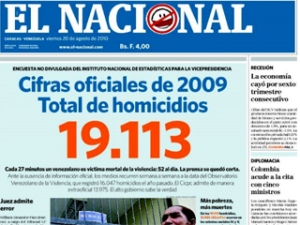
For Venezuela’s murder rate, the New York Times article used statistics from the Venezuelan Observatory of Violence that are based on police files and are cited by many news outlets, including Dow Jones Newswires. The Chavez government has stopped releasing statistics publicly, but recent media reports suggest official figures on homicides in Venezuelan are actually higher than nongovernmental counts.
Chavez acknowledged crime and violence in Venezuela are a problem, but said previous administrations are to blame. Chavez has been in power for 11 years.
Calls Sunday to the New York Times weren’t immediately returned.
The National Assembly elections on Sept. 26 are being seen by many as a key test of support for Chavez, who is scheduled to face a presidential election in 2012.
Opposition forces that boycotted congressional elections five years ago are taking part in next month’s vote and have formed a relatively united front against Chavez’s socialist party.
Economic problems and soaring crime rates could help the opposition as they try to grab a majority control of the legislature, which would make it more difficult for Chavez to govern with the hands-on style he’s accustomed to.
But Chavez still has broad support among the poor, in part due to heavy spending on social welfare projects. As such, many pollsters say the president’s socialist party will likely retain control of the National Assembly.
Venezuelan President Hugo Chavez is accusing the international press of working with local opposition forces to slander his government and turn voters against the ruling socialist party in key upcoming elections.
“The foreign press corps’ strategy of defamation … has been put into action,” Chavez wrote in his weekly column Sunday, four weeks ahead of legislative elections. “They have powerful tools and they’re going to be using them.”
The president specifically mentioned several foreign media outlets, including CNN and the New York Times. The Times published an article recently claiming Venezuela is deadlier than Iraq in terms of civilian deaths from violence in 2009. The issue of soaring crime rates promises to be a key issue on the minds of Venezuelan voters next month.
But Chavez scoffed at the U.S. newspaper’s comparison of Venezuela to Iraq, saying the “uncorked violence” in Iraq is far worse than the “structural” public safety problem in his country.
For Venezuela’s murder rate, the New York Times article used statistics from the Venezuelan Observatory of Violence that are based on police files and are cited by many news outlets, including Dow Jones Newswires. The Chavez government has stopped releasing statistics publicly, but recent media reports suggest official figures on homicides in Venezuelan are actually higher than nongovernmental counts.
Chavez acknowledged crime and violence in Venezuela are a problem, but said previous administrations are to blame. Chavez has been in power for 11 years.
 This