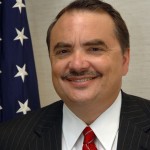
José R. Cárdenas served in several foreign policy positions during the George W. Bush administration (2004-2009), including on the National Security Council staff. He is a consultant with Vision Americas in Washington, DC.
Each time Hugo Chávez travels to Cuba for chemotherapy, he leaves behind an economy in worse shape than he is. As the Financial Times put it recently, “Venezuela’s economy suffers from all kinds of unique problems, which the government does seem to want to resolve” – only every time it tries, it winds up making things worse.
That’s because reality has a way of punishing populist economic policies.
Yet, despite the widespread damage to the Venezuelan economy caused by nationalizations, strict currency and price controls, and lack of property rights and judicial guarantees, Chávez continues to forge ahead, believing that Venezuela’s oil patrimony means he’s exempt from the laws of economics or accepted standards of governing.
Consider his latest scheme: transferring billions of dollars in Venezuelan cash reserves from U.S. and European banks to “friendlier” countries such as Russia and China, and repatriating billions more in gold from abroad.
Regime officials say it is to protect Venezuela from “disturbances” in the international markets, but experts say there is no economic justification for such a risky move; that it is political. Meaning that one can be sure Chávez is acting in his own interest and not that of the Venezuelan people.
Whatever his motivations, the immediate results are that investor confidence in Venezuela will likely erode further and the cost of borrowing (which Chávez is currently doing at a record pace) will increase. (Due to Chávez’s anti-free market policies, Venezuela already has the highest borrowing costs among major emerging-market economies, according to Bloomberg.)
Indeed, Wall Street was quick to react: Standard & Poor’s cut Venezuela’s credit rating one level to B+, four steps into junk status, citing growing “uncertainty” over Chávez’s “changing and arbitrary laws, price and exchange controls, and other distorting and unpredictable economic measures [that] have undermined private-sector investment and hurt productivity, weakening Venezuela’s domestic economy.”
All of this does not bode well for the Venezuelan people as the country heads into an election year. Despite his precarious health situation, Chávez insists he will run for re-election, which means he will need even more cash for lavish social projects and mitigating the myriad domestic crises – shortages of electricity, food, and housing – he has created. Something has to give.
To date, Chávez’s gambit has been that oil revenues would continue to outpace the exorbitant spending that fuels his popularity; but that gambit appears to be running its course. PDVSA’s Golden Goose is on the verge of collapse from exhaustion. Declining oil production and dropping prices means less cash, more borrowing on unfavorable terms, and more mortgaging of Venezuela’s future.
The Venezuelan opposition has plenty of opportunities to hold Chávez to account after 12 years in power: horrendous crime statistics, rampant inflation, and the aforementioned scarcities. But they should add his reckless decision-making in international economic matters. Not only is he saddling the next government with prohibitive debt and a crippled oil company, but do Venezuelans really want China and Russia, hardly known for their transparency and legal guarantees, to be the custodians of their hard currency wealth?
The United States cannot be an idle bystander in this process. What happens in Venezuela directly impacts U.S. interests. While the country is a nearby source of oil (some 10% of our imports), under Chávez it has played an exceedingly unhelpful regional role in terms of its counter-narcotics and counter-terrorism polices. Besides massive purchases of Russian arms that have alarmed his neighbors, Chávez has also provided a platform for Iran to establish a presence in Latin America, as it attempts to secure strategic resources in the face of United Nations sanctions.
The Obama administration should be concerned less about Chávez’s reaction to what we say and more about standing solidly behind principles of a free, fair, and peaceful democratic process. Hugo Chávez is fully capable of attempting to bring down the temple around him if he sees his political fortunes rapidly going south. The goal of the U.S. policy should be to help Venezuelans prevent that from happening, rather than just arriving in time to help them pick up the pieces.
