Jul
26
2013
Posted by
admin
Comments

In Case You Missed It…Articles Roundup Week of 7/26/13

ob xv412 pd0613 g 20130613101301 e1374873855883 In Case You Missed It...Articles Roundup Week of 7/26/13

Courtesy of: Zuma Press

This week: Maduro responded to Samantha Power’s negative comments on Venezuela by halting efforts to improve U.S.-Venezuela relations; the United States leaves door open to improve relations but it does not rectify Power’s statements; Venezuelan Chargé d’Affaires to the United States affirms that the effort to restore relations was ‘suspended’ but that the government is willing to have a “friendly” bilateral relations with Washington; and Venezuela-Colombia relations are improving with country leaders meeting and discussing their responsibility of working together. The Eclac forecasts that Venezuela will have a 1 percent gross domestic product growth in 2013, the lowest in Latin America; Venezuela seeks $5 billion loan with China to finance a state investment fund that was recently involved in a $85 million embezzlement fraud; Venezuela’s dollar auction is seen by analysts as too little of an effort to revamp the price distortions in the economy; and Ferrominera workers halt the state-owned iron company in rejection of the militarization of the firm. Authentic leaked audio recording describes the highest levels of the Venezuelan government as gripped by rivalries and corruption; almost a dozen state institutions were hacked by groups of cyber pirates demanding Maduro’s resignation; Cabello stated that he will make public hard evidence of assassination attempts that were targeted against himself and president Maduro; and medical associations declare a state of emergency in Venezuela’s health system.

Venezuela Stops Efforts to Improve U.S. Relations, New York Times

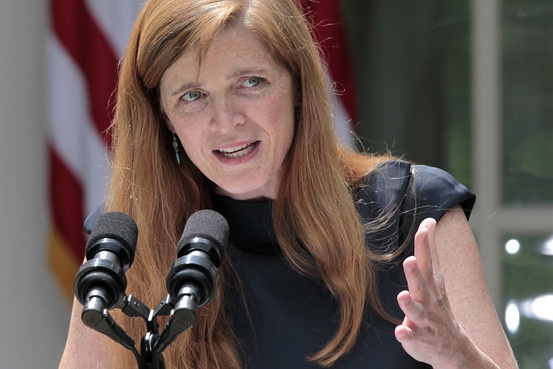
The nominee for US ambassador to the United Nations, Samantha Power, spoke before a Senate committee last Wednesday and said that one of her roles as an ambassador would be to challenge a “crackdown on civil society” in several countries, including Venezuela. These statements were first lashed out by Nicolás Maduro on Thursday, and late on Friday the Foreign Ministry said it was terminating efforts to improve relations with the US.

US leaves “door open” to Venezuela, says no apologies, El Universal

The US confirmed on Wednesday that the door was open to improve relations with Venezuela, but avoided any sort of rectification as requested by President Nicolas Maduro, who announced the end of discussions to restore relations after the statements issued recently  by the US ambassador nominee to the United Nations, Samantha Power.

Venezuela willing to have friendly relations with the United States, El Universal

Venezuelan Chargé d’Affaires to the United States Calixto Ortega stated on Thursday that a bilateral rapprochement launched in June to restore relations between the US and Venezuela has been “suspended,” but stressed that Nicolás Maduro’s Administration is willing to have “friendly” bilateral relations with Washington.

Venezuela, Colombia Resume Relations After Spat, Latin American Herald Tribune

Venezuela and Colombia renewed relations after two months of Maduro accusing Santos of destabilizing political harmony by meeting with Venezuelan opposition leader Capriles. Santos acknowledged that there are things the two parties don’t agree on, but that the obligation and responsibility of providing prosperity to their countries will enable them to work together.

Venezuela to experience the lowest economic growth in Latin America, El Universal

Venezuela is the country with the lowest forecast gross domestic product growth in Latin America for 2013. In fact, The Economic Commission for Latin America and the Caribbean (Eclac) estimated that Venezuelan economic growth would hit only 1% this year, below El Salvador, with 2%.

Venezuela seeks $5 billion China loan for scandal-plagued fund, Reuters

Venezuela is seeking a loan of up to $5 billion from China to finance a state investment fund that was recently the victim of an embezzlement scheme by the fund’s own employees involving millions of dollars. Eight people were arrested for appropriating $84 million from the fund, which has received two $4 billion tranches from the China Development Bank since its inception in 2007.

Venezuela’s Revamped Dollar Auctions Seen as Too Little, Wall Street Journal

Venezuela revived its system of auctions for putting more hard currency into the hands of importers and travelers, but analysts say the effort is falling short of addressing distortions caused by the country’s restrictive foreign exchange policies.

Venezuela’s Ferrominera comes to a halt amid militarization, El Universal

A group of workers with Venezuelan state-owned iron company CVG Ferrominera on Thursday blocked both the gate seven and the railways leading to the plant, in rejection of the militarization of the firm on Wednesday evening. Demonstrators explained that the company’s board suspended the transport service on Wednesday evening and troops blocked the gates as part of a contingency plan to restart the plant with National Guard troops.

Venezuelan Newspaper: Probe Says Leaked Audio Describing Corruption Is Authentic, Wall Street Journal

And audio recording allegedly describes the highest levels of the government as gripped by rivalries and corruption. Mr. Silva discussed with a Cuban intelligence officer a rivalry between Diosdado Cabello, the head of the national legislature, and recently elected President Nicolas Maduro. The man said to be Mr. Silva also accuses Mr. Cabello of raiding the government’s international reserves through the use of shady import companies.

Massive cyber attack against Maduro’s Venezuelan, Miami Herald 

From the stock market to the army, the air force and the national guard, web pages of almost a dozen Venezuelan state institutions were hacked by groups of cyber pirates demanding Nicolás Maduro’s resignation from a presidency they called fraudulent. The groups Anonymous Venezuela and Venezuelan Hackers claimed joint responsibility for the attacks launched Tuesday night. The targets include web pages of government agencies, ministries, municipalities…

“Overwhelming” Evidence of Plot to Assassinate Venezuela’s Maduro, Global Research

Head of Venezuela’s National Assembly Diosdado Cabello has stated that he will make public “hard evidence of assassination attempts” targeting himself and President Nicolas Maduro “in due course”. Cabello told legislators “We know who they are, what they are, what they want, and we will find them.”

Medical associations on state of emergency in Venezuela, El Universal

The Network of Medical and Scientific Associations declared a state of emergency in the Venezuelan health system and rejected the scale of charges drafted without including health federations, professional associations, private hospitals and other relevant entities. “We declare a state of emergency for multiple reasons. We cannot ignore how serious it would be regulating, over the use of force, charges arising out of clinical services or closing private health centers based in the country

 
Feb
13
2013
Posted by
admin
Comments

ICYMI: Venezuela’s Devaluation has China written all over it

Foreign Policy
February 12, 2013
By Juan Nagel

xin 36203042716504212722961 e1360786862231 ICYMI: Venezuelas Devaluation has China written all over it

Courtesy of: Getty Images

In a widely expected move, the Venezuelan government announced last Friday that it would devalue its currency by 32 percent. The Venezuela Bolívar (BsF) will now trade at 6.3 BsF per U.S. dollar, up from 4.3 BsF per dollar. This costly move was probably influenced by events that took place halfway around the world, in Beijing.

The first question a casual observer might ask is why the government needed to devalue. The answer is simple, and it relates to the peculiar role the state plays in Venezuela’s economy.

The government-owned oil monopoly is the only significant exporter in the country, and thus is also the only supplier of hard currency into the market. Since 2003 (and following a long tradition that dates to Chávez’s predecessors), the Venezuelan state has set the price of the dollar far below the market price as a way of subsidizing everything the country imports, which includes pretty much everything. Since most of its spending is in the local currency, the price at which it sells its petro-dollars determines much of the government’s income. In effect, Venezuela’s currency regime and its fiscal policy are one and the same.

Selling dollars at below-market prices is tremendously costly for the state, which last year ran a record-setting deficit of 15 percent of GDP. Even though it cut spending immediately after the October presidential elections in order to reduce the deficit, further cuts may prove politically costly, considering Venezuela will likely hold another presidential election in the coming months, pending Chávez’s health.

A more pressing problem the government is facing is the scarcity of basic food staples, as evidenced by a recent video showing consumers scrambling for chicken in a supermarket that quickly went viral.

Importers realized that cheap dollars were on their way out. Currently, dollars are being sold on the black market at 21BsF per dollar. Therefore, if you are a businessman or a government bureaucrat lucky enough to nab a few greenbacks, you have every incentive to sell them in the black market instead of using them to import the goods you were supposed to be importing. This creates a situation whereby dollars assigned to import basic staples are used for financial arbitrage — causing a shortage of everyday items. Ordinary Venezuelans also instinctively understand the relationship between the dollar and their personal economics, and demand for dollars typically shoots up when they suspect that a devaluation is in the pipes. As if on cue, immediately after this latest devaluation, Venezuelans flocked to electronics stores and airlines agencies to buy whatever they could that was still priced at the old dollar rate.

By devaluing, the government is lowering the budget deficit, which still lies at a hefty 5.3 percent of GDP, according to estimations by the Bank of America. Narrowing the gap between the official and black market exchange rate lessens the incentive to engage in arbitrage instead of importing goods, which may ameliorate the scarcity problem.

However, the move will prove costly. This measure alone means Venezuelan real wages have fallen, in terms of dollars, and inflation is sure to shoot up. One is left wondering what other options the government had but failed to enact.

This is where the Chinese angle comes in.

In the last few weeks, reports have surfaced that the Chinese, the main underwriters of last year´s enormous fiscal deficit, are growing frustrated with their Venezuelan counterpart; they are in no mood to continue lending to the government, and felt that Venezuela sacrificed productive investments for cheap pre-electoral spending. In spite of this, reports surfaced that Venezuela is asking China for more cash.

Last week, newly-appointed Foreign Minister Elías Jaua traveled to Beijing, returning with a vague statement that the Chinese ratified their interest “in continuing to cooperate with Venezuela” and that President Xi Jinping sent “a hug” to Hugo Chávez.

Too bad, because he wasn’t sent to Beijing to fetch “hugs.” What Jaua did not say is that he failed to secure new funding from China — and this may have triggered the move to devalue.

As I have already argued, Venezuela is like a Ponzi scheme: Continued returns to lenders rely on getting fresh new funding. Once the funding dries up, the losses begin to accumulate.

After last week’s devaluation, it looks like the loss is borne on the backs of ordinary Venezuelans, who woke up earning less and paying more for practically everything.

To read this article at Foreign Policy, please click here.

 
Feb
8
2013
Posted by
admin
Comments

ICYMI: Venezuela’s economy: Out of stock

The Economist
February 9, 2013

27717escasez e1360352874868 ICYMI: Venezuela’s economy: Out of stock

Courtesy of: TalCual

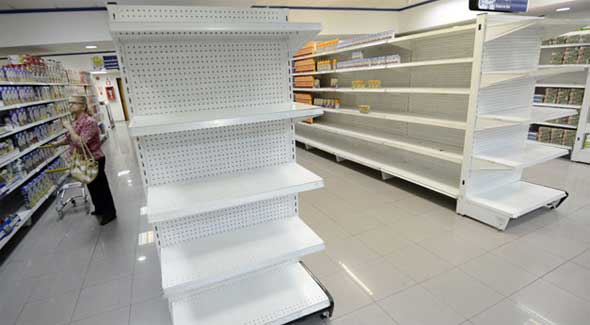
It is now two months since Venezuelans last saw or heard from their president, Hugo Chávez, who remains in intensive care in a high-security Havana hospital, battling what seems to be terminal cancer. But it is an absence of a different kind that is uppermost in many people’s minds. Cooking oil, sugar, wheat flour, coffee and the all-important pre-cooked maize flour that goes into many Venezuelan dishes are among the staple items that have largely disappeared from the shelves. Both the Central Bank, which tracks the level of supply, and private economists reckon that shortages are at their greatest since 2008.

Temporary shortages often occur at the start of the year, thanks to higher demand, reduced output and distribution delays over the Christmas holidays. But this year they are a symptom of bigger distortions, which include a black-market dollar that trades at more than four times the official exchange rate, and chronic inflation (20.1% in 2012 and likely to rise this year).

Economists expected a big devaluation in the early months of this year. That would make revenue from oil exports go further in local currency, bridging a fiscal deficit which reached 8.5% of GDP last year after an increase in spending of 26% in real terms in the 12 months before a presidential election in October, won by Mr Chávez. But there is no sign of it, probably because the president’s agony means that a fresh election is just around the corner.

The underlying problem is a shortage of cash at the state oil monopoly, Petróleos de Venezuela (PDVSA), which provides 94% of the country’s foreign earnings. Under a plan announced in 2005, Venezuela should have produced 5.8m barrels a day by 2012. Even by the government’s reckoning, it pumped little more than 3m; private sources suggest the number was around 2.8m. Local consumption has risen sharply, partly because petrol is provided almost free to Venezuelans but also because power plants have switched to fuel oil because PDVSA is unable to supply them with gas. Around 270,000 b/d of oil goes to China, to repay loans to the government, and almost 400,000 b/d at a big discount to Cuba and other allies. Refinery and production snags have even forced the company to import crude and oil products.

PDVSA is also obliged by the government to divert billions of dollars into unaudited funds which the president manages at his discretion. The biggest, known as Fonden, absorbed $15.5 billion last year, forcing PDVSA to pay part of its taxes in the form of IOUs. The Central Bank’s foreign reserves have been depleted, too, to $30 billion (down from $42 billion in 2008). Most of that is in gold or other non-liquid assets; liquid reserves amount to only a couple of months’ worth of imports. Importers say it is taking six months to obtain foreign currency at the official rate.

Official propaganda proclaims that Mr Chávez’s socialist revolution has promoted sovereignty and “endogenous development”. But Venezuela is more dependent than ever on imports. Domestic production has fallen victim to an overvalued currency and government hostility to the private sector. A wave of expropriations and confiscations has left millions of hectares of farmland and a swathe of the food industry in government hands. The expansion of the money supply, along with redistributive policies, has raised demand for food and other basic goods, met largely by imports.

Officials blame private-sector “hoarders” and “speculators” for inflation and shortages. They have raided warehouses, seizing 8,520 tonnes of sugar, for example, from Pepsi-Cola, which the company says was imported with government permission. As with other staples, the state controls the price and import licences for sugar, and its distribution (which can only be carried out with government permits). It also owns most of the sugar industry. In the case of pre-cooked maize flour, the government owns half of production capacity, but only supplies a fifth of the market, according to figures from Datanálisis, a market-research company.

Some stopgap measures have been taken to ease the flow of dollars. The government has quietly started to cut spending, and shaved PDVSA’s annual contribution to Fonden by $2.9 billion. It is looking for fresh loans, especially from China. But Fedecámaras, the main employers’ federation, says it will take three or four months to reduce food scarcity. That suggests that predictions of a March election are wide of the mark. Eventually, says Jorge Botti, the chairman of Fedecámaras, the government will have to “move towards the centre and understand how the private sector works”. But there is no sign of that yet.

To read this article at The Economist, please click here.