Apr
10
2013
Posted by
admin
Comments

ICYMI: Draft Law in Venezuela Is the Private Sector’s Death Knell

Joel Hirst is a democracy activist and a Principal at Cordoba Group International. He is a regular What’s Next Venezuela contributor.
741686 525 380 w e1365617072329 ICYMI: Draft Law in Venezuela Is the Private Sectors Death Knell

Courtesy of: The New York Times

The Huffington Post
April 8, 2013
By Joel Hirst

On April 4, acting Venezuelan President Nicolas Maduro announced he had uncovered a “conspiracy” to destabilize the government in order to lend support to his opponent in the upcoming elections, Miranda Governor Henrique Capriles Radonski.

Maduro told supporters the plot was undertaken by Empresas Polar, a global food and beverage manufacturer and processor that happens to be one of the largest and best known brands in Venezuela. Maduro alleged that Polar has plotted to create a situation of “unrest, shortages, hoarding and speculation.”

He ended his comments with an overt threat, telling Polar that “everything in life has its time.”

For Venezuelans, this is just a typical day of anti-capitalist bombast from a leader working hard to channel recently deceased President Chávez. But a new legislative proposal quickly moving through that country’s National Assembly gives new force to that country’s ‘socialist’ government’s war on the private sector.

Venezuela’s proposed Law Against Monopolies and Other Similar Practices grants the government the broad discretion and unchecked power to single out and nationalize the few remaining large companies in the country — a sanction for what the Venezuelan government calls anti-competitive behavior. Assembly leaders have announced the law will move through the assembly with “parliamentary urgency.” A procedural vote was already held and the common committee review will be expedited.

While the world remains fixated on President Hugo Chávez’s recent death, and the upcoming presidential election to chose his successor, this so-called monopoly law continues to progress slowly through the Assembly. Passage would legitimize the government’s extensive and arbitrary power over the Venezuelan private sector.

The bill departs from internationally accepted terms for anti-competitive behavior focused on market share, instead calling for a vague definition of an entity’s “economic space,” an amorphous term whose meaning the government will then define according to their own agenda. If passed, Chávez’s successor will be granted unprecedented power over the private sector — even more than was wielded by President Chavez and his arbitrary nationalizations.

The proposed law creates a new commission, the National Superintendent Against Monopolies and Similar Practices (SUNAM), to be chaired by a presidential appointee. SUNAM would have the power to confiscate resources and materials at will. Moreover, it states that any company in violation of the new law can be expropriated. Because the SUNAM would lack oversight, this law would subject so-called “illegal” businesses to an arbitrary state takeover with no chance for appeal or independent review. Any attempt to challenge expropriations would die inside Venezuela’s judiciary, which is completely controlled by the executive.

Though the bill has progressed largely under the radar, experts and the political opposition have taken notice and are denouncing the law. Vestalia Sampedro, a Deputy in the Venezuelan National Assembly,states that the law will only further extend the government’s control over the economy, extending the socialism that has not worked. Jorge Botti, the President of the Venezuelan Federation of Chambers of Commerce notes that the bill’s broad language means that even small businesses who succeeded by developing quality products and successful marketing strategies may not escape the government’s reach.

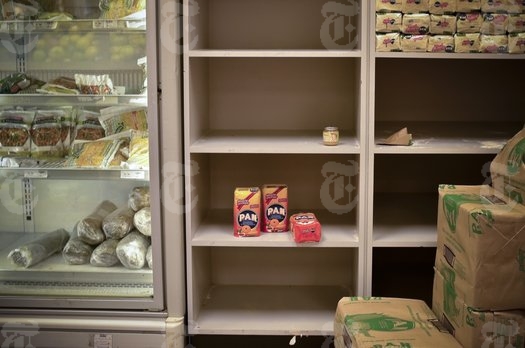
And all the while, the Venezuelan economy continues to worsen. The number of private companies in Venezuela has already declined by 36 percent from 1998. Price controls and the recent currency devaluation have worsened already-high unemployment, crippled Venezuelans’ purchasing power and exacerbated the shortages that now plague the country. Venezuelans already struggle to find basic necessities like chicken and corn. These economic policies have crippled vital industries like medical care as well. As of January, pharmaceutical shortages stood at 40 percent — a number which will only rise if the government acts on proposals to enforce price controls on medications as well. And with legislation like this monopoly law in the pipeline, few private investors would even consider bringing their capital to Venezuela.

While expropriations in Venezuela have become so common that they rarely even make news, in point of fact they are still illegal and unconstitutional. With the passage of this legislation, while remaining unconstitutional they would become ‘legal’ (a paradox that only those who follow Venezuela closely understand). Should acting President Maduro win, this would leave the country’s private sector in danger of extinction. Venezuela’s companies are already needlessly harassed and intimidated by the government, and the country’s economy has suffered as a result. This law, which the Assembly hopes to pass while the world looks the other way, would make matters far worse.

To read this article at the Huffington Post, please click here.

 
Jul
16
2012
Posted by
admin
Comments

ICYMI: Wall Street Journal and New York Times document Chavez’s media manipulation

Chávez’s War on the Media
Venezuela is holding a presidential election, but the president has squelched free speech.
The Wall Street Journal
July 15, 2012
By Mary Anastasia O’Grady

Argentine press freedom award goes to Hugo Chavez 300x211 ICYMI: Wall Street Journal and New York Times document Chavezs media manipulation

Courtesy of: UPI / Maryam Rahmanian

Suppose the country you live in is holding a presidential election and the incumbent is running for another term. Suppose further that the economy is in bad shape. The ranks of the unemployed and poor have swelled, the government is spendthrift, and the central bank is no longer independent.

The president takes no responsibility. He blames everything on the rich. He says they are exploiting the working classes and don’t pay their fair share in taxes. Fomenting class envy and resentment is his stock in trade. Now suppose there is no independent media.

Welcome to Venezuela. Think the country can hold a fair presidential election?

South America’s oil dictatorship kicked off the campaign season on July 1. Hugo Chávez, who has been the commander in chief of the military government since 1999, hopes to keep his job when Venezuelans go to the polls on Oct. 7. Henrique Capriles Radonski, the former governor of the state of Miranda, is out to unseat him.

Outside observers, including the international media, are treating the race like a real battle of ideas. But how can that be when there is no free speech?

Let’s put aside for a moment all the obvious problems. Forget about the lack of an independent electoral body to ensure fairness in voter registration, at polling stations, and when tallying ballots. Forget about how Mr. Chávez makes up rules as he goes along and then gets the judiciary that he controls to bless them. Forget too that the state-owned oil monopoly (known by the Spanish-language initials PdVSA) is his campaign war chest, and the central bank prints money on demand. For now, consider only the military dictatorship’s capacity to control the message…

To read the rest of this article on The Wall Street Journal, please click here.


Extreme Home Makeover: Chávez Edition
The New York Times
July 13, 2012
By William Neuman

14venezuela span articleLarge 300x186 ICYMI: Wall Street Journal and New York Times document Chavezs media manipulation

Courtesy of: Meridith Kohut for The New York Times

EJIDO, Venezuela — Every Thursday, the state-run television channel here presents a live national broadcast of what might be called “Extreme Home Makeover: Socialist Edition.” It is part reality TV, part game show and part full-throated campaign rally.

The programming features top aides to President Hugo Chávez handing over new apartments and houses to down-on-their-luck Venezuelans, who respond with telegenic tears and expressions of gratitude to Mr. Chávez, who is running for re-election.

“I want to send a message to all the people in shelters, to have faith and keep up hope,” said Ramón Rondón, 64, on a recent broadcast, standing in the kitchen of his new apartment in a government-built development called El Cobre. A white-haired pro-Chávez activist, Mr. Rondón added, “This is a victory of the revolution.”

A short time later, Mr. Rondón’s wife, María Monsalvi, 54, relaxed in a new armchair, part of the furniture, including a sofa, beds, a kitchen table and chairs, provided by the government. Above Ms. Monsalvi’s head was a photo of Mr. Chávez hung by the show’s producers. Because her apartment was featured on television, she was given a deluxe “presidential line” of furnishings. She marveled at her good fortune after losing her home in a mudslide and then spending a year in a cramped shelter. “I felt like I won the lottery,” she said.

For Americans weary of underwater mortgages and housing booms and busts, there is surely something novel in Venezuela’s approach to its own housing crisis. The government estimates that in a country of 29 million people, 2.7 million families need new homes, either because they are homeless, the homes they live in are inadequate or multiple families are crowded together under one roof.

The giveaways are a prime example of how Mr. Chávez has been able to maintain popular support for nearly 14 years, despite out-of-control crime, erratic basic services and stubborn poverty. By making a show of delivering new homes to some, he keeps alive hope among many others that they too might some day benefit from the same largess.

Recovering from cancer treatments, Mr. Chávez has been far less visible in public than at any other time of his presidency. But his housing giveaways continue, whether he is there to personally hand over the keys to the dwellings himself or not. He finances the new homes with the country’s vast oil income and promotes the giveaways through the “Housing Thursday” broadcasts and television commercials that are essentially government-paid ads for Mr. Chávez’s candidacy. He recently gave a new apartment to a woman for becoming his three millionth follower on Twitter…

To read the rest of this article on The New York Times, please click here.

 
Apr
3
2012
Posted by
admin
Comments

The “Great Housing Mission,” Or The Great Hotel Hijack?

In 2010 and 2011, 140,000 Venezuelans were left homeless by severe flooding. Many of these families were stranded by the natural disasters, refugees in their own country.

Just as any community would pull together in the wake of tragedy, many Venezuelans who hadn’t lost their homes came to the aid of their countrymen, offering them shelter and support. So, fifteen months ago, when the Chávez government “respectfully” asked the hotels of Anzoategui state to allow refugees to stay for free under their roofs for two weeks until the government could find a suitable solution, the owners of those hotels patriotically obliged.

However, two weeks quickly turned into fifteen months and at present, the hotels are still being forced to shelter the refugees. Hotel owners have not been compensated and, with little noteworthy progress made toward finding a permanent home for the refugees, there is no end in sight to the government’s hijacking of their property.

cmimg 53759 The “Great Housing Mission,” Or The Great Hotel Hijack?

It’s only the latest offense committed in the name of Chávez’s so-called “Great Housing Mission,” under which Chávez recently promised to build 200,000 new homes. And while the government continues to seize private property in order to build the homes, the housing itself has yet to materialize, leaving many stripped of their private property and even more without a home. For instance, after the flooding, Calogero Alotto lost his mechanic shop and parking lot to the government. Today, the promised houses do not exist on his property and he is still waiting to get paid.

“I worked for 42 hard years to build my business and it didn’t count for anything,” said Alotto, 57. “I’ve been left without property and without a job. I’ve had to sell two trucks just to keep surviving.”

While many would rightly point out that these stories typify the Chávez administration’s disrespect for property rights, the more important lesson is that his policies have made this a losing situation for all parties involved.

The hotel owners, even after 15 months, must continue to provide uncompensated housing for droves of flood victims, which not only hurts the hotel’s bottom line but also damages the local economy, as paying customers remain unable to secure the rooms held down by the refugees. What’s more, the policies have hurt the refugeesthemselves who, thanks to the lackluster results of Chávez’s program, remain homeless nearly a year and a half after a natural disaster destroyed their houses. And many of the displaced haven’t been lucky enough to receive shelter in a hotel. These families live in constant uncertainty, spending their nights in car-parks and warehouses, waiting for their government to take action.