
Jun
10
2011
Posted by
editor
Comments

In Case You Missed It… Articles Roundup Week of 6/10/11

In this week’s roundup…Venezuelan opposition leaders react to President Hugo Chávez’s successful bid in raising the national debt limit, more fallout from the U.S.-imposed sanctions on PDVSA, opposition candidates get momentum, and the housing crisis continues to be top of mind for Venezuelans.

Venezuelan lawmakers authorize $22.5B in new debt, Associated Press

President Hugo Chavez won approval from legislators Thursday to increase the amount of new debt Venezuela’s government can take on this year to more than $22.5 billion. In December, lawmakers had authorized the equivalent of $12 billion in new debt this year. But Chavez last week requested that the limit be raised about 86 percent. Opposition lawmakers criticized the change, expressing concerns about the government’s growing debt. They said the boost was unjustified at a time when the OPEC member is enjoying higher prices for its oil.

Venezuela’s foreign minister says relations with Washington are ‘frozen’ following sanctions , The Washington Post

Venezuela’s relations with the U.S. are frozen and President Hugo Chavez’s government sees no possibility of improving them after its state oil company was hit with sanctions by Washington, the country’s top diplomat said Sunday.

The US Has Lost Sight Of Its National Interest In Venezuela, Business Insider

According to the U.S. Energy Administration, two months ago the United States total crude oil imports averaged 9,033 thousand barrels per day (tbpd), with the top five exporting countries being Canada (2,666 tbpd), Mexico (1,319 tbpd), Saudi Arabia (1,107 tbpd), Venezuela (930 tbpd) and Nigeria (918 tbpd.) Notice anything odd about this list?

Chávez Foe Sees Imitation as Best Path, Bloomberg

Henrique Capriles Radonski, whose family members own Venezuela’s biggest movie theater chain, is emerging as President Hugo Chavez’s strongest rival in 2012 elections by copying his favorite ploy of lavishing public money on the poor.

Venezuela’s Chávez says OPEC need not pump more oil, Reuters Africa

Venezuela’s President Hugo Chavez on Tuesday said current demand for oil does not justify an OPEC production hike, adding the market was well-supplied. The oil exporters group meets on Wednesday and Gulf Arab members are pushing for an output increase of at least 1.4 million barrels per day.

FACTBOX-Housing among top worries for Venezuelans, Reuters

Venezuela’s housing shortage is a challenge for President Hugo Chavez, a major concern for millions in the South American OPEC member, and one of the issues that could shape next year’s election. With 29 million people, Venezuela is short of 2 million housing units.

 
Jun
9
2011
Posted by
editor
Comments

Time to call Chávez’s oil bluff?

Dane Vallejo

WNVZ is pleased to introduce blogger Dane Vallejo as a guest writer to our website. An Associate Fellow at The Henry Jackson Society, Dane blogs regularly on Latin American issues. ¡Bienvenido Dane!


Washington has for some time been constricted in taking a tough stance against Venezuela’s Chávez by the threat it perceives to its security of oil supply. But what if that threat was little more than a bluff?
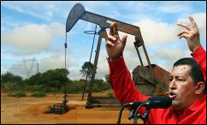
Hugo ChavezFor many interested parties, upon hearing of the fresh consignment of US sanctions imposed on seven foreign firms (including Petróleos de Venezuela – PdVSA) for their supply of refined petroleum products to Iran, immediate thoughts would have gravitated toward two questions that have been well trodden since: will this halt Iran’s nuclear programme? And, will the sanctions hit PdVSA hard?

The short answer to both questions is a round-about no.

The slightly longer version reads that since Tehran has proved itself adept at circumventing weakly imposed sanctions up until now, it seems unlikely that slapping the wrists of these seven firms will buck that trend. And as for PdVSA, oil exports to the US will continue unaffected as will the activities of its subsidiaries, i.e. Citgo, meaning that business will likely continue as usual, save the newly enforced bans on US government contracts, import-export financing and US export licences — none of which have particularly interested the Venezuelan oil giant in the recent past anyway.

But this exhibition of relative (though still fairly puny) diplomatic muscle from Washington also kicks up a third and less widely touted question: is now the time to start calling Hugo Chávez’s oil bluff?

In recent years, the firebrand has threatened to diversify Venezuela’s oil away from the US market, principally toward China, in a bid to secure new security of supply; making Washington think twice before dishing out demands and creating a bit of wiggle room in the process. But upon closer inspection, Chávez’s aggressive oil diplomacy is perhaps not as well grounded as he might have us believe.

If truth be told, it is actually the US that is better placed to play hardball. Indeed, one of the most curious aspects of the Washington-Caracas standoff is that while both states undoubtedly depend on the other’s custom, it is in fact Caracas whose dependency is more acute. In 2010, 8.3% of US oil imports arrived from Venezuela — no small fry — but in marked contrast, this 8.3% translated to fully 43% of Venezuelan oil exports. It should be clear who stands to take the larger hit.

As for the Chinese alternative, for Beijing to take the Venezuelan market seriously, it would require an astronomical investment in order to bridge the logistical gap, not only in terms of transportation, but also in acquiring the capability to process Venezuela’s characteristically thick crude. And the latter point is a particularly important one since the fungible nature of oil as a commodity is called into question when consumers with the ability to process one’s commodity are in short supply. Couple that economic expense with the inevitable political one attached to any move into the US’ ‘backyard’, long since considered its strategic preserve, and a long term strategic partnership between Caracas and Beijing appears unlikely while the latter has better options in Central Asia.

Short of revenue-sapping, politically-charged, regional energy schemes such as Petrocaribe then, Venezuela really has little room for meaningful diversification away from the US.

Taking stock of this reality is important for US policy makers as it essentially means that a significant departure from the trade status quo between Caracas and Washington would be in the interests of neither party and is therefore unlikely as such. Quite frankly, it pours a bucket of cold water on Chávez’s fiery oil-threat since, with paltry means of pulling the plug on US supply the threat becomes little more than a bluff.

With that room for manoeuvre established, what of Washington’s scope for pressing Chávez harder on the ideological line?

Let’s be clear, slapping a reducer on Chávez will be best achieved democratically. The failed coup of 2002, hastily endorsed by the Bush administration, showed in no uncertain terms that attempts at regime change only serve to fan the flames that have kept Chávez’s popular appeal burning. Hence, the focus in Washington has correctly shifted to sanctions — the uncertain, yet politically safer middle-ground between austere words and boots on the ground.

There is, of course, a legitimate debate to be had on the utility of sanctions as a foreign policy tool in the first place. Indeed, if the proof of the pudding really is in the eating, then the new round of sanctions go some way to exposing the failures of the original Comprehensive Iran Sanctions, Accountability, and Divestment Act (CISADA). That said, the newly revised stipulations in relation to PdVSA may be more useful — as long as they are backed by a suitably aggressive approach moving forward — in a secondary capacity, by drawing the relationship between Venezuela and Iran back into the international spotlight and providing a new set of red lines against which Caracas can be judged.

Washington needs to maintain this momentum by pushing a harder line (something that has in the past been constrained by the weighty oil millstone) and calling Chávez’s bluff since taking a tougher stance could help to fragment Chávez’s power. To cut a long story short, by forcing the authoritarian to choose between the two driving thrusts of his foreign policy agenda — the economic pragmatism of oil, and his proclivity for anti-neoliberalism — Washington can place its foe in a position he’d really rather not be.

Should Caracas take the first option, the US will score an important victory in making a further pariah of Iran, not to mention denting Chávez’s international standing as an anti-Western revolutionary.

And if Chávez opts for the second and probably more likely course, the US would then be positioned to hamper his ability to plough-back into his political project through further and harsher sanctions. In such an environment, the inevitable failure of Chávez’s unsustainable socialist program would likely be accelerated, perhaps too late to affect his run for another term in 2012, but certainly enough dent his aspirations for perpetual power.

Formulating a strategy around this central goal — isolating Chávez’s foreign policy thrusts from one another — should thus be a priority for the current administration in an environment where it needn’t worry excessively about the backlash. Smashing Chávez’s finely tuned balance between the fight against the ostensible ills of neo-liberalism (his raison d’être in the eyes of a significant percentage of Venezuela’s electorate) and reaping the rewards of an oil trade that funds it, could be the diplomatic reducer that Washington seeks.
 
Jun
6
2011
Posted by
editor
Comments

Caught Between Washington and a Hard Place

Petardo de PetareWNVZ is proud to introduce the newest blogger to join our ranks – el Petardo de Petare.  Petardo will offer his viewpoint on Venezuelan political and social issues with his characteristic wit and insightful analysis. In the first installment of his blog, Petardo takes on the recent sanctions imposed by the United States against PDVSA and the political circus that followed.

Since the United States announced sanctions against our state oil company, PDVSA, Venezuelans have been enduring a daily dose of government-sponsored marches condemning the U.S. measure. PDVSA workers around the country have been forcefully mobilized – dressed from head to toe in their finest red clothing – to rally against the “Yankees.” Mr. Chávez’s own party, PSUV, recently held a rally to protest the U.S. sanctions. Hoards of state-organized mobs have proclaimed their repudiation of the “Yankee imperialists,” accusing them of threatening our sovereignty. As if synchronized – and it is – the government-run media has devoted a majority of its news coverage to the issue. Not a moment goes by without some or other government official loudly proclaiming their defense of our national sovereignty and making wild accusations against the United States. PSUV National Assemblyman, Aristóbulo Isturiz went as far as accusing the United States of attempting to sabotage next year’s presidential elections. Another Chávez lackey suggested the final goal of the United States is to invade Venezuela. You get the drift.

All this huffing and puffing is much to do about nothing. The sanctions will have little to no impact on Venezuela. After all, CITGO, our Bolivarian mole in the United States, is not impacted by the move. Thus, Venezuela will continue to be able to export more than 40% of our oil production to what the regime calls “capitalist, imperialist robber barons to our north.” Even with all its chest pounding, the Chávez government did not dare touch its oil exports to America. The reason is simple. The United States is the leading buyer of our golden goose – oil – which provides for most of our foreign currency reserves. For a government whose only economic policy is to spend money buying new voters, the U.S. money spigot is the most important revenue source and, therefore, all that really matters to them.

The most interesting sideshow to this situation is the unusual parallel between the government’s reaction and that of the opposition political parties and leaders. For the first time in the millennia, Washington accomplished something not very often seen in Venezuela. That is the government and opposition agreeing on something. Both have condemned the U.S. sanctions.

For the Venezuelan opposition, the decision to condemn the sanctions was not easy. In doing so, they found themselves caught between Washington and a hard place. Not so for the government. The default stance of Chavistas is to blame the United States for virtually everything that is wrong in our country – never mind that our hardships are really a direct result of the government’s utter incompetence. In rejecting the U.S. sanctions, the opposition risked alienating its most ardent supporters. You see, among the opposition hardliners, any agreement with the government is considered a cardinal sin. For the hardliners, opposing Chavismo means disagreeing with anything and everything President Chávez does. If you dare agree on anything, no matter how large or small the scale of the issue, you are automatically branded “too soft.” At the same time, had the opposition expressed even the most timid support for the U.S. sanctions, the Chávez government would have attacked them as “servants of the American imperialists,” and willing partners in “selling out” Venezuela’s independence and sovereignty.

The opposition’s decision to reject the sanctions was honest, brave, and smart. Otherwise, they would have handed Mr. Chávez, in a silver platter, a fantastic excuse to shift the political debate in our country from what really matters – inflation, food shortages, blackouts, etc. – to useless, anti-American rhetoric. It would have strengthened Mr. Chávez’s ability to portray himself as the only political leader capable of standing up for our country. At a time when the government is more vulnerable than ever with the headlines being dominated by the most recent blackouts and economic morass, disagreement would have handed Chavistas a winning card. Clearly, the opposition is willing to alienate a small but vociferous minority rather than jeopardize its credibility with the middle-of-the-road majority voters, who hold in their hands the future of Venezuela.

The sanctions issue also highlights how Caracas and Washington are on completely different wavelengths when it comes to the issues that really matter. Every time I read the U.S. media, I see that when discussing Venezuela, U.S. opinion leaders only care about Mr. Chávez’s links to Iran and other “undesirables.” But here, in Petare, that is hardly a concern or topic of discussion. At a time when Venezuelans are forced to fight every day to find sugar, coffee, and meat, or to hold on to their jobs, or to protect themselves from becoming a victim of crime, Mr. Chávez’s extracurricular activities in the world stage are not a domestic priority. That’s not to say that the government’s foreign policy should not be scrutinized, but rather that Venezuela’s foreign policy should be judged based on what is in our national interest and not that of any other country, including the United States.