Aug
30
2013
Posted by
admin
Comments

In Case You Missed It…Articles Roundup Week of 8/30/13

130830 maduro 4a.photoblog600 e1377895796289 In Case You Missed It…Articles Roundup Week of 8/30/13

Courtesy of: Associated Press

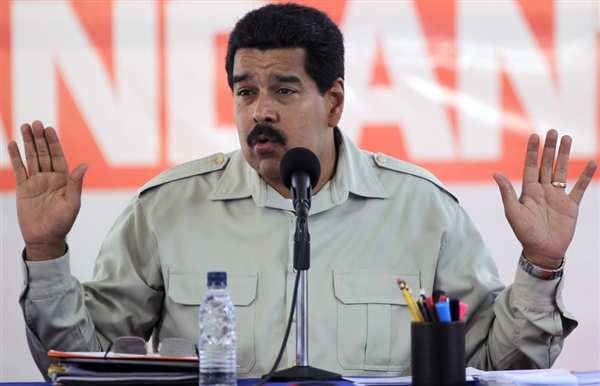
This week: Nicolás Maduro airs his own hypocrisy by seeking enhanced powers to “tackle corruption;” leading Venezuelan TV news channel Globovisión receives a volley of resignations amid government censorship; the Venezuelan daily newspaper Versión Final is sold to a government supporter,  likely leading to staff dismissals; and ex-managers for Venezuelan oil-giant Pdvsa are charged with corruption. Maduro claims that two Colombian men planned to kill him at the same time as the attack in Syria; despite a lack of evidence, Maduro demands an explanation, arguing President Barack Obama knew of the plot to assassinate him; Henrique Capriles, on the other hand, dismisses the government’s claims of an assassination plot; and Maduro misquotes a Biblical passage, saying “Christ multiplied the penises.” With the bolivar collapsing and prices spiraling higher, the government turns to political witch hunts to distract people from reality; Venezuela is again on the verge of another currency devaluation, likely after December’s municipal elections; Venezuelan authorities insist the country will become an exporting giant, yet non-oil exports are down 20.6% from last year; according to Central Bank statistics, the GDP of Venezuela’s public sector doubles that of the private sector;  and the public debt in Venezuela has drastically increased over the past two years, rising 53% since 2011.

In Venezuela, Absolute Power Corrupts Absolutely, Bloomberg

Venezuelan President Nicolas Maduro has lately been accused of hypocrisy for seeking enhanced powers to rule by decree so that he can tackle the corruption that rots Venezuela’s political institutions. The accusation is fitting. Maduro is finally admitting that the Venezuela he inherited from the late Hugo Chavez is wracked by corruption, just five months after he famously claimed, “There is no corruption, for the first time in the history of Venezuela, in 180 years.”

Venezuelan news TV channel Globovisión receives a volley of resignations, El Universal

“I am only left with job uncertainty, but have the peace of mind that comes with knowing that I always did the right thing,” journalist Román Lozinski read out on his radio show from a personal statement he wrote following his resignation from Globovisión. Resignations have been piling up at the television news network after the retirement of call-in show host Leopoldo Castillo on August 16.

Pressure over sale of Venezuelan daily newspaper Versión Final, El Universal

Workers from Versión Final are likely to be dismissed upon the sale of the daily newspaper to an alleged relative of Francisco Arias Cárdenas, ruling party governor of the state of Zulia, northwest Venezuela. There are reports that the company underwent a lot of pressure prior to the negotiation: it first experienced restrictions related to newsprint, then economic pressure that finally ended in the sale of the company to Carlos Alaimo, the father-in-law of Cárdenas’ son.

Pdvsa’s ex managers in Monagas charged with corruption, El Universal

The Public Prosecutor Ministry charged two former managers of Petróleos de Venezuela (Pdvsa) for the collection of VEB 600,000 (US$ 95.279,40) from a contractor. Defendants are Jannimett de Los Ángeles Flores Quijada (37), former legal counsel of Pdvsa in Punta de Mata, and Jorge Natera Barrios(35), former super intendant of litigation at same division.

Maduro: “The plan was to kill me in parallel with the Syria attack”, El Universal

Venezuelan President Nicolás Maduro reported on Wednesday that two Colombian individuals “hired by drug traffickers to kill the Head of State” were arrested. In that sense, Maduro rejected the remarks made by opposition deputy Julio Borges about the assassination claims aired on Monday. “Borges made an irresponsible and anxious statement, saying that (the hit men) that were arrested did not even have firearms to accomplish their task.

Venezuela demands US explanation over alleged assassination plot, The Telegraph

Nicolas Maduro called on the American president to explain what he knew of the alleged assassination plan. President Maduro said that besides Colombia, it was hatched by far-right Venezuelan opposition figures in Miami. The Venezuelan president is a frequent and fiery critic of Washington, as was his predecessor, the late Hugo Chavez.

Capriles: “The people laugh about assassination plots”, El Universal

On Monday, on a meeting with “Miranda’s entrepreneurs,” in Caucagua, Miranda state, Henrique Capriles, Governor of Miranda state and opposition leader, referred to the announcement of the arrest of a gang who allegedly wanted to assassinate President Nicolás Maduro and Deputy Diosdado Cabello.  “Nobody believes that tall story.

Nicolas Maduro Says ‘Christ Multiplied The Penises’ In Major Screw Up (VIDEO), Huffington Post

Christ did WHAT?!? The man who once gave us “Chavez came to me as a little bird” has uttered another phrase that is getting a lot of chatter online. Venezuelan president, Nicolas Maduro, seriously screwed up an iconic biblical anecdote while speaking at the Miranda Stadium when he said: “Multiply ourselves, like Christ multiplied the penises.”

Chavez’s Inflation Bites His Successor, Wall Street Journal

Hyperinflation and political witch hunts seem to go together. Just ask the Venezuelan opposition. With the bolivar collapsing and prices spiraling higher, the government alleged this month that its No. 1 adversary, former presidential candidate Henrique Capriles, is linked to a prostitution ring that was using minors in the state of Miranda, where he is governor.

Venezuela is on the verge of another devaluation, El Universal

Imbalances ailing Nicolás Maduro’s government are so pronounced that most financial entities agree that the country, after undergoing stringent adjustments last February 8 through which the official exchange rate jumped from VEB 4.30 to VEB 6.30, is heading towards another devaluation likely to take place after December’s elections for mayors.

Venezuelan non oil exports down 20.6%, El Universal

Venezuelan authorities insist on saying: Venezuela will become an exporting giant. However, official records say the opposite. According to the figures from the Central Bank of Venezuela, non oil exports accounted for just USD 810 million in the second quarter, 20.6% down with respect to a year earlier.

GDP of the public sector doubles that of the private sector, El Universal

The statistics of the Central Bank of Venezuela (BCV) suggest that the loss of dynamism of the Venezuelan economy has exerted a heavier impact on the private sector rather than the public sector with growth reported at 1.1% and 2.6%, respectively. Such great disparity between the sectors is attributed to the existing imbalance in the sale of US dollars aimed at importing raw materials, machinery, and finished products to supply the domestic market.

Debt of the Venezuelan gov’t soars 53% in two years, El Universal

Since 2011, the Venezuelan oil basket price has been above the USD 100 ceiling. In this context of high oil revenues, the Government has spurred indebtedness. Based on the figures of the Ministry of Finance, the public debt grows rapidly with liabilities jumping 53% from the first half of 2011 through 2013. Such increase is mainly attributed to heavy expenditure exceeding regular income, a situation that has made authorities seek other founding sources.

Venezuelan unemployment hits 7.6% in July, El Universal

Venezuelan unemployment rate stood at 7.6% in July, according to a monthly report on the workforce issued by the National Statistics Institute (INE). The information was released by Professor Elías Eljuri, president of the institute, who also said the unemployment rate reported in July was actually lower than that of 2012 (7.9) and 2011 (8.0%).
 
May
13
2013
Posted by
admin
Comments

With the Economy in Dire Straits, Maduro Scapegoats a Beloved Venezuelan Company

pan0.jpg.520.360.thumb  e1368469039817 With the Economy in Dire Straits, Maduro Scapegoats a Beloved Venezuelan Company

Courtesy of: El Universal

Nicolás Maduro and his socialist government cannot claim that they were not warned. Economists have long predicted that a Venezuelan economy propped up by excessive borrowing and an unsustainably high oil market would collapse spectacularly. Hugo Chávez, his cancer kept at bay just long enough to secure reelection, spent enough borrowed money in his final months to postpone the crash until Maduro had taken control. But the reckoning was inevitable. Now Maduro, eager for a scapegoat, is intensifying his attacks on the private sector, taking aim at Venezuelans’ most beloved company: Empresas Polar.

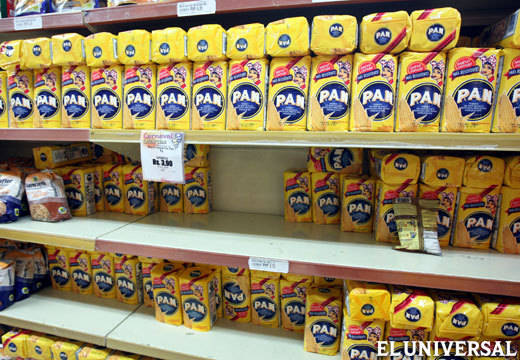
Polar is a pillar of the Venezuelan economy, producing staple goods from cornflour to household supplies and the nation’s most popular beer. Maduro issued his latest threat against the company on Saturday, when he accused the company of economic “sabotage” and demanded company President Lorenzo Mendoza to appear before the government to “explain the situation.” It was the latest in a series of escalating rhetoric against Polar, and a disturbing sign that Maduro refuses to learn the lessons inflicted on Venezuelans by years of failed socialist policies. Mendoza is scheduled meet with Vice-president Jorge Arreaza on Monday and with Maduro on Tuesday.

In a press conference held on Monday before the scheduled meetings, Mendoza addressed Maduro’s statements. He noted that Polar’s cornflour brand, PAN, operates at 100 percent capacity, but has only a 48 percent stake in the Venezuelan market, making it impossible to meet the country’s full demand. Thus far this year, Polar has produced 10 percent – 15,000 tons – more than last year. The remaining 52 percent of the market is comprised primarily of government-owned businesses, which are producing at less than 40 percent of their capacity. In response to Maduro’s accusation of “hoarding,” Mendoza stressed that Polar simply cannot hoard products to begin with since every step of the production and distribution process is regulated by government overseers.

As economists have noted, the shortages and inflation Maduro blames on the private sector are in fact caused by the government’s own policies. Rampant expropriations, price controls and other heavy-handed policies have harmed business and left farmland idle, sapping more than 11 percent from the country’s gross domestic product between 2005 and 2010.

Inflation is soaring, the nation’s debt continues to mount, and a currency devaluation has crippled Venezuelan’s purchasing power. As What’s Next contributor Joel Hirst observed, the economic crisis has left Maduro in the “awkward position of blaming Venezuela’s hobbled private sector for the failure of his own socialist policies.” The Central Bank’s scarcity index for Venezuela, which measures the percentage of goods unavailable in the market, rose to its highest number since it began tracking in April, 2009.

The facts, of course, could not be clearer. The company persevered under the yoke of Chávez’s policies, and continues to provide the goods Venezuelans need even as government controls force Polar and other companies to operate at a loss. These private companies are Venezuela’s best hope for brighter economic days; Maduro, in a desperate bid to save his own political skin, has chosen to marginalize them even further. It is ordinary Venezuelans, however, who will suffer the consequences.

 
May
3
2013
Posted by
admin
Comments

In Case You Missed It… Articles Roundup Week of 5/03/13

ay 108972837 e1367612866751 In Case You Missed It… Articles Roundup Week of 5/03/13

Courtesy of: EPA

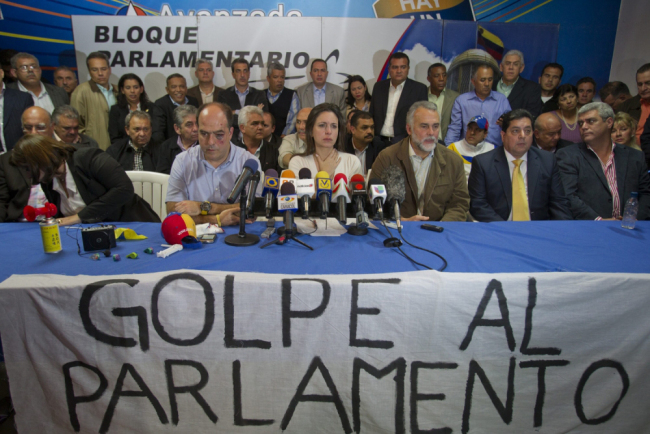
This week: Venezuela stumbles deeper into political chaos after a bloody brawl in Congress; Venezuela’s opposition asks for an investigation into the brawl on the floor of Congress that injured several of its lawmakers and caused at least one of them to undergo surgery; Venezuela’s government charges a US filmmaker for allegedly trying to incite anti-government violence and charges an ex-general for being critical of president Nicolás Maduro; and Maduro visits Cuba to meet with former leader Fidel Castro and re-pledge Venezuela’s allegiance to the island. The government begins a partial audit of the disputed election, though the opposition rejects the move as insufficient; unable to force a sweeping review of the disputed election, Venezuelan opposition supporters march on International Workers Day; opposition leader Henrique Capriles files a lawsuit in Venezuela’s Supreme Court to overturn the election, alleging fraud in the counting of ballots and voter intimidation; and Venezuelans become increasingly upset with daily power outages, growing food scarcities and a general fear of the government. Venezuelan debt remains severe as tensions continue to rise; homicides in Venezuela reach a record high in 2013, as nearly 58 are killed per day during the first four months of the year, highlighting a dire security situation amid political instability; and the sale of Globovisión, Venezuela’s sole television station critical of the government, hurts free speech in Venezuela even further.

Political Chaos Grips Venezuela After Legislative Brawl and Rival Marches, The New York Times

Venezuela stumbled deeper into political chaos this week as legislators brawled in the National Assembly and government supporters and opponents took to the streets for rival marches amid continuing tensions over the narrow election victory of President Nicolás Maduro.

Venezuela Opposition Wants Probe of Violence, The Associated Press

Venezuela’s opposition on Thursday asked prosecutors to investigate a brawl on the floor of congress that injured several of its lawmakers and forced at least one of them to undergo surgery.

Venezuela Charges U.S. Filmmaker, Arrests Ex-General, The Wall Street Journal

Venezuelan authorities brought criminal charges over the weekend against a U.S. filmmaker for allegedly trying to foment antigovernment violence, and arrested a retired Army general who has become a vocal critic of the government.

Venezuela’s New Leader Visits Cuba, Meets With Castro, The Wall Street Journal

Nicolás Maduro met with former Cuban President Fidel Castro in Havana on Saturday, an indication Venezuela’s new president will maintain the same close relations with the Communist island nation as that of his predecessor Hugo Chávez, who died last month after a battle with cancer.

Contentious Venezuela vote audit begins, AFP

Venezuela began a partial audit of the disputed election won by the late Hugo Chavez’s handpicked successor, as the opposition rejected the move as insufficient.

Venezuelan opposition protests vote, The Washington Post

Unable to force a sweeping review of last month’s disputed presidential election, opposition supporters marched in the streets Wednesday to demonstrate their fury at the ruling party’s efforts to blunt a recount.

Venezuelan Opposition Sues to Overturn Election, The Wall Street Journal

Venezuela opposition leader Henrique Capriles filed a lawsuit Thursday with the Supreme Court that seeks to overturn April’s presidential election, alleging fraud in the counting of ballots and pre-election voter intimidation.

Venezuelans on the Brink, Putting Up With Daily Outages, Growing Scarcity and Fear, Fox News Latino

There’s an old joke about the rabbi who explained to his congregants that Adam and Eve were the first communists, because they wore no clothes, had one apple between them, and thought they lived in paradise.

Venezuelan Debt Under Pressure As Tensions Rise, The Wall Street Journal

Abating a week ago, tensions in Venezuela are fast rising again, and it doesn’t bode well for the country’s debt.

Venezuelan Homicides Reach Record High In 2013, InSight Crime

Murders in Venezuela reached a record high of 58 per day during the first four months of the year, according to police figures contested by the government, highlighting a dire security situation amid political instability.

What the Sale of Venezuela’s Opposition TV Station Means for Free Speech, The Atlantic

Globovision is Venezuela’s last-remaining television station that is openly critical of the government of Hugo Chavez, (and his chosen puppet successor Nicolas Maduro) but on April 15, the majority shareholder Guillermo Zuloaga sold his portion to businessman Juan Domingo Cordero, sending both members of the opposition and some journalist rights groups into a frenzy.