Feb
7
2012
Posted by
admin
Comments

Game Changer in U.S.-Venezuela Relations

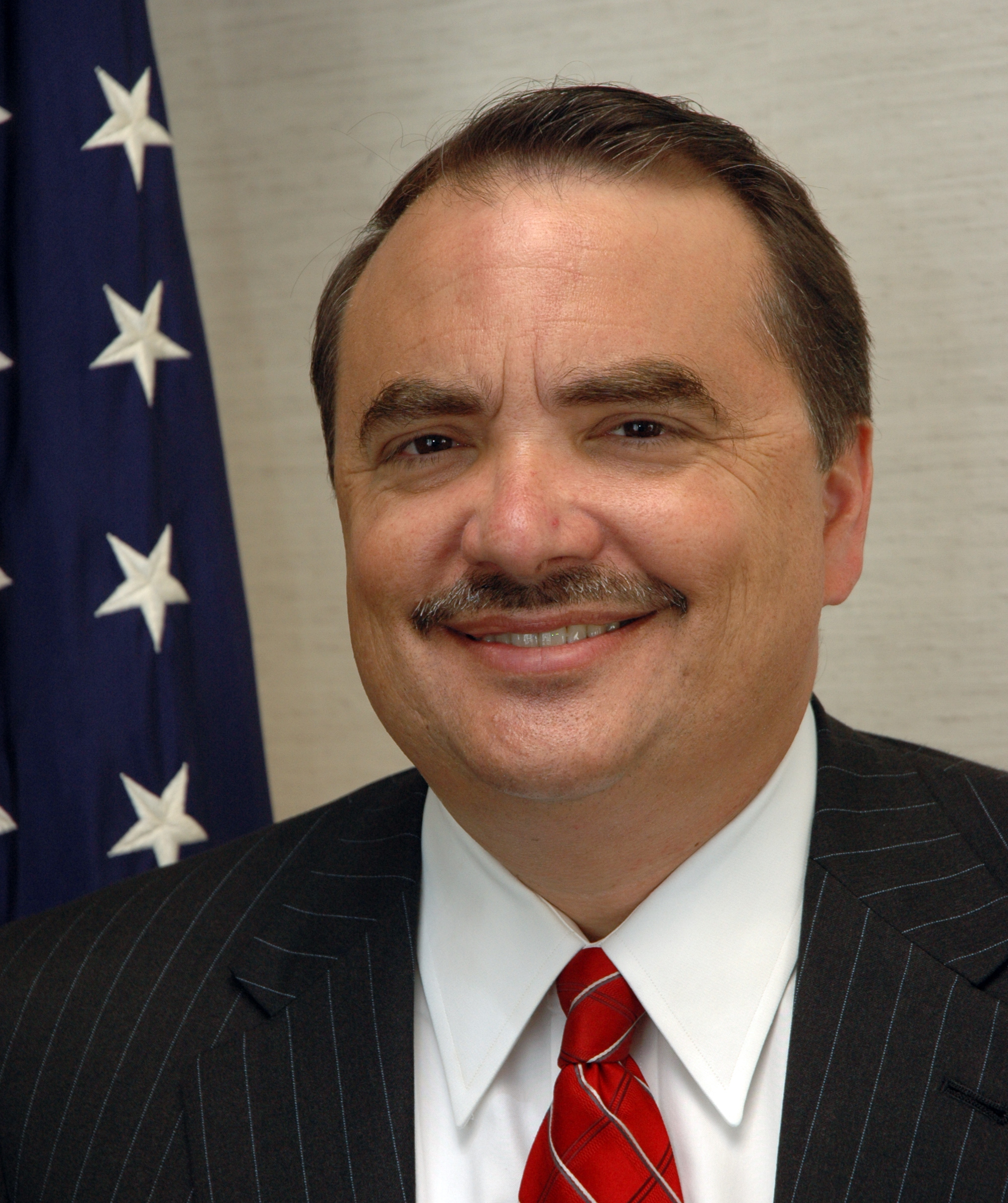
DSC 0754 150x150 Game Changer in U.S. Venezuela RelationsJosé R. Cárdenas served in several foreign policy positions during the George W. Bush administration (2004-2009), including on the National Security Council staff. He is a consultant with Vision Americas in Washington, DC.

Bombshell testimony on Capitol Hill last week by U.S. Director of National Intelligence James Clapper has dramatically altered the stakes in Washington’s relations with the Hugo Chávez regime in Venezuela. Speaking before the Senate Select Committee on Intelligence for the annual Worldwide Threat Assessment, Clapper said that Iranian leaders had changed their calculus and are now prepared to respond to perceived threats with terrorist attacks inside the United States.

Clapper said: “The 2011 plot to assassinate the Saudi ambassador to the United States shows that some Iranian officials — probably including Supreme Leader Ali Khamenei — have changed their calculus and are now more willing to conduct an attack in the United States in response to real or perceived U.S. actions that threaten the regime. We are also concerned about Iranian plotting against U.S. or allied interests overseas. Iran’s willingness to sponsor future attacks in the United States or against our interests abroad probably will be shaped by Tehran’s evaluation of the costs it bears for the plot against the ambassador as well as Iranian leaders’ perceptions of U.S. threats against the regime.”

The implications for U.S.-Venezuela relations are clear. Now that it has been assessed that Iran is prepared to attack the U.S. homeland, focus must now be placed on its capabilities and means to do so. That Hugo Chávez has made Venezuela — less than a three-hour flight from Florida — one of Iran’s most important international allies is now a paramount concern to U.S. security agencies.

Indeed, Chávez’s deep-seated economic, military, and intelligence relationship with Iran, running into the tens of billions of dollars, provides an enormous cover for covert operations and other destabilizing activities. That relationship runs from establishing Venezuela’s Margarita Island as a center for Iranian and Hezbollah operations in the Americas and facilitating Iran’s development of a nuclear capability by helping it obtain uranium, to blunting  sanctions by providing Iran’s access to Venezuela’s banking system and jointly trafficking in weapons (here and here) and narcotics. The DEA believes a weekly flight between Iran and Caracas is used for, among other nefarious purposes, smuggling South American cocaine to the Middle East.

Moreover, we know already that a member of the terrorist network plotting to detonate fuel tanks at JFK International Airport in New York in 2007 was arrested on the run to Venezuela, where he planned to board a Venezuelan flight to Tehran.

Lastly, the explosive documentary aired last month on Univisión, “The Iranian Threat,” included not only incriminating information on Venezuelan and Iranian diplomats discussing cyberattacks on sensitive U.S. computer systems (The State Department subsequently expelled the Venezuelan diplomat from the United States, where she had been re-posted), but also compelling evidence on how young Latinos are targeted for recruitment and paramilitary training in Iranian and Venezuelan camps visited by Hezbollah, Hamas, and the Colombian FARC.

As the Chairman of the House Foreign Affairs Committee, Congresswoman Ileana Ros-Lehtinen, put it succinctly in another hearing last week, “The Iranian regime has formed alliances with Chávez, Ortega, Castro, and Correa that many believe can destabilize the hemisphere. These alliances can pose an immediate threat by giving Iran – directly through the IRGC, the Qods force, or its proxies like Hezbollah – a platform in the region to carry out attacks against the United States, our interests, and allies.”

In addition, Clapper told the Senate that the intelligence community remains concerned about Iran’s ties to governments in the region and was tracking the issue closely, adding, specific to Iran’s activities in the region, “there is more to unfold here.”

Clearly, Clapper’s testimony reflects a substantial change in the U.S. government’s own calculus about Iran, Venezuela, and the Western Hemisphere.  If Iran is now prepared to strike the U.S. homeland, then all actions need to be pursued to debilitate its capability to do so, and that means targeting its presence in Venezuela. Hugo Chávez made a very dangerous bet when he introduced Iran to the Western Hemisphere. Now, he should be made to pay the price.

 
Jun
10
2011
Posted by
admin
Comments

In Case You Missed It… Articles Roundup Week of 6/10/11

In this week’s roundup…Venezuelan opposition leaders react to President Hugo Chávez’s successful bid in raising the national debt limit, more fallout from the U.S.-imposed sanctions on PDVSA, opposition candidates get momentum, and the housing crisis continues to be top of mind for Venezuelans.


Venezuelan lawmakers authorize $22.5B in new debt, Associated Press

President Hugo Chavez won approval from legislators Thursday to increase the amount of new debt Venezuela’s government can take on this year to more than $22.5 billion. In December, lawmakers had authorized the equivalent of $12 billion in new debt this year. But Chavez last week requested that the limit be raised about 86 percent. Opposition lawmakers criticized the change, expressing concerns about the government’s growing debt. They said the boost was unjustified at a time when the OPEC member is enjoying higher prices for its oil.


Venezuela’s foreign minister says relations with Washington are ‘frozen’ following sanctions , The Washington Post

Venezuela’s relations with the U.S. are frozen and President Hugo Chavez’s government sees no possibility of improving them after its state oil company was hit with sanctions by Washington, the country’s top diplomat said Sunday.

The US Has Lost Sight Of Its National Interest In Venezuela, Business Insider

According to the U.S. Energy Administration, two months ago the United States total crude oil imports averaged 9,033 thousand barrels per day (tbpd), with the top five exporting countries being Canada (2,666 tbpd), Mexico (1,319 tbpd), Saudi Arabia (1,107 tbpd), Venezuela (930 tbpd) and Nigeria (918 tbpd.) Notice anything odd about this list?

Chávez Foe Sees Imitation as Best Path, Bloomberg

Henrique Capriles Radonski, whose family members own Venezuela’s biggest movie theater chain, is emerging as President Hugo Chavez’s strongest rival in 2012 elections by copying his favorite ploy of lavishing public money on the poor.

Venezuela’s Chávez says OPEC need not pump more oil, Reuters Africa

Venezuela’s President Hugo Chavez on Tuesday said current demand for oil does not justify an OPEC production hike, adding the market was well-supplied. The oil exporters group meets on Wednesday and Gulf Arab members are pushing for an output increase of at least 1.4 million barrels per day.


FACTBOX-Housing among top worries for Venezuelans, Reuters

Venezuela’s housing shortage is a challenge for President Hugo Chavez, a major concern for millions in the South American OPEC member, and one of the issues that could shape next year’s election. With 29 million people, Venezuela is short of 2 million housing units.

 
Jul
28
2010
Posted by
admin
Comments

Tense energy ties between Venezuela and United States

This article was originally posted by Reuters Africa

Venezuelan President Hugo Chavez has threatened to cut off oil supplies to the United States in case of any military attack by Colombia as a row escalates over charges that Venezuela harbors leftist Colombian guerrillas.

Despite his heated rhetoric, the former paratrooper has never followed through on several previous threats to stop U.S. shipments. But energy ties between the two nations have become increasingly tense in recent years.

FALLING EXPORTS

* The United States is the Latin American OPEC member’s top customer, and Venezuela is currently the fifth biggest U.S. supplier after Canada, Saudi Arabia, Mexico and Nigeria. The volume of Venezuelan crude shipped to the United States has fallen 39 percent to 1.08 million barrels per day (bpd) last year from a peak of 1.78 million bpd in 1997, the U.S. Energy Information Administration says. (r.reuters.com/hyp99m)

* The decline is partly due to increasing sales by Caracas to customers such as Cuba, China and Iran, as well as stagnating production by Venezuelan state oil company PDVSA.

* U.S. President Barack Obama’s administration, for its part, wants to develop an energy policy that reduces foreign oil dependence.

THREATS TO SUPPLIES

* Chavez first warned back in February 2004 that he would shut off Venezuelan oil supplies to the United States if it tried to invade the Andean nation or impose a trade blockade against his country — after he accused former U.S. President George W. Bush’s administration of backing a short-lived coup attempt against him in 2002. The following month, he backed away from the threat and said he did not have any intention of damaging relations with Washington.

Read more