Jan
23
2013
Posted by
admin
Comments

ICYMI: The Missing President

The New York Times
January 22, 2013
By Alberto Barrera Tyszka and Cristina Marcano
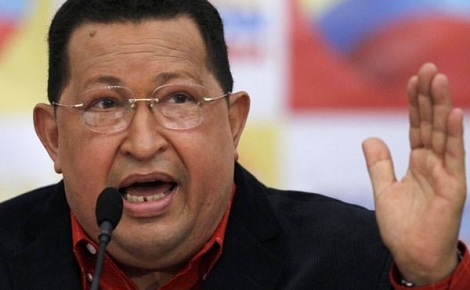
hugo chavez life support coma1 ICYMI: The Missing President

Courtesy of: Associated Press

ON Jan. 10, while Hugo Chávez lay in a hospital bed in Havana, he was symbolically sworn in as Venezuela’s new president in a ceremony here. The crowd that attended his virtual inauguration was moved to tears by a recording of Mr. Chávez’s singing the national anthem. The country is experiencing the very odd circumstance of being both with and without its leader; he is not here, but his voice endures.

From the intensive care unit, the president “continues to perform his duties”; he gives orders and sends kisses to children. This is what his vice president says. According to the Supreme Court, the Congress cannot consider him absent, for no matter how ill he is, only Mr. Chávez himself has the authority to declare himself absent. The opposition is demanding a “fe de vida” — proof that he is still alive, as if he were a kidnapping victim. Day after day, on the street, on Twitter, our president dies and comes back to life. But this is not a magical realist novel.

After 14 years as president, Mr. Chávez controls all public powers: the legislative body, the Supreme Court, the public prosecutor’s office, to say nothing of the oil industry. Of all those who have held office since the end of the military dictatorship in 1958, none has concentrated power quite as Mr. Chávez has.

From the moment he won his first election, he knew that he had not made it to the presidency in order to run a sound government. He had come to change the course of history. In the name of the dispossessed, he revived the ghost of the South American military caudillo, creating a new version of that traditional strongman. He sings ranchera songs on Sunday and negotiates with Iran on Monday. He is a child of the telenovela who invokes the old-fashioned left. As president he deftly combines power with melodrama.

He astutely took advantage of the failure of neoliberalism and the traditional elites, as well as the antipolitical climate at the time, promising to democratize the country’s oil income and eliminate deep social inequalities. And riding the wave of an oil boom, he secured the loyalty of the poor.

But his “21st century socialism” is a populist, patronage-oriented model that depends less on ideology than it does on the price of a barrel of crude. He has managed to revive the illusion of a sustainable society that distributes rather than creates wealth. And thanks to this illusion, he has been able to maintain his ironclad grip on power.

Last October’s elections gave him the chance to complete, “democratically,” 20 years as president. “Veinte años no es nada,” he said — a line from a famous tango song meaning “20 years is nothing.” More than eight million voters seemed to agree with him; probably around the number of people who have benefited from his administration’s social programs, which are called, rather religiously, “missions.” (Though the government says the number is much higher.)

Venezuelans today are less poor than they once were. But they are also far more dependent on the state, and more susceptible to a propaganda machine that attributes this “miracle” to Mr. Chávez. Over the past decade, his government has invested around $400 billion in social spending, an oil-infused luxury that few countries in the region have ever been able to indulge in.

There is one element of the Chávez leadership, however, that is no different from any of Latin America’s other personality-driven authoritarian regimes: its messianic nature. “With Chávez, everything; without Chávez, nothing,” is the government’s official slogan. “We are all Chávez” is its battle cry and love song. Over time, the state has built a powerful industry around the cult of personality. Few Venezuelans will ever forget the moment when Mr. Chávez, in a televised event at a church, implored Jesus Christ for more days on earth. Now, following an uncertain convalescence in Cuba that is being closely monitored by the Castro brothers, the president of Venezuela is already a myth on his way to consecration.

When he does go, many will feel orphaned. He fashioned himself into the axis around which the life of the country revolved, and his unique brand of authority will, without his physical presence, be very difficult to maintain. His absence will create a void in a society that was forced to divide and organize itself in two blocks: for or against Chávez. The propaganda machine that has turned Mr. Chávez into a religious talisman will not necessarily serve to legitimize the many pretenders, including his chosen successor, Vice President Nicolás Maduro, who are waiting to inherit his charismatic legacy.

That legacy, of course, is more than pure messianic zeal. Mr. Chávez will leave behind a country plagued with problems. With deep political divisions. With an appalling level of violence, including around 21,000 homicides last year. With the wild economic distortions that come from having some of the highest inflation on the continent and the cheapest gasoline on the planet. With dwindling productivity, an overvalued currency and an enormous foreign debt load. With unchecked public spending, and still one great dream that has yet to be fulfilled: the illusion of eliminating poverty forever.

To this end, absence might be just what Hugo Chávez needs to save him from his own failure. Myths survive only when they rise above the miseries of reality.

To read this article at The New York Times, please click here.
 
Jan
15
2013
Posted by
admin
Comments

Key Players in a Post-Chávez Venezuela

00004995115 Key Players in a Post Chávez Venezuela

Courtesy of: EFE

With each passing day of silence, the prospect that cancer-stricken Hugo Chávez will recover becomes less likely. Chávez has been absent from Venezuela for over a month and rumors about his death or incapacitation are rampant, leaving many wondering who will take over the presidency if he dies. On January 10, the constitutionally-mandated date Chávez was to be sworn in, government officials planned – and executed – an inauguration. International leaders flew in for the festivities, attended by thousands of Chávez supporters and government officials.  But the main attraction – Chávez himself – was nowhere to be found, apparently still convalescing in a Cuban hospital. In lieu of the president, the president’s supporters took the oath, donning presidential sashes a well as signs and t-shirts that read “I am Chávez.”

Government officials announced they would go forward with a symbolic event in the president’s honor just one day before the inauguration, when the Supreme Court voted to delay the president’s inauguration.

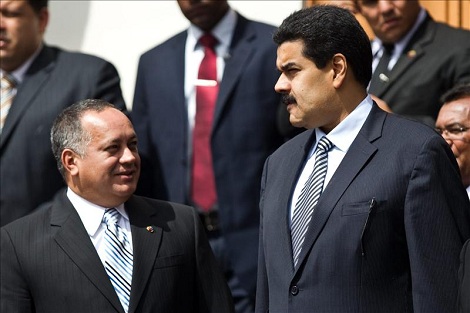
But as Venezuela remains in limbo, many are wondering what’s next for Venezuela. According to the constitution, four scenarios remain possible depending on when and if the president passes away. Despite the nuances of each, the one consistent fact is that if the president dies or is declared incapacitated, an election must be held. Henrique Capriles has emerged as the leader of the opposition and the likely candidate to run in a new presidential race. Within the Chávez government, however, are two possibilities. One is regarded as the head of the civilian, ideological members of the party: Cuban loyalist and Vice President Nicolás Maduro. The other, President of the National Assembly Diosdado Cabello, is known for his military ties and influence.

Below is a short background of each of the three possible presidential candidates.

1. Henrique Capriles: Henrique Capriles emerged as the opposition’s clear leader after winning Venezuela’s first ever primary election with 62 percent of the vote in February 2012. Despite losing the presidential election on October 7, Capriles earned 44 percent of the vote, the strongest challenge ever to president Chávez. His status as leader of the opposition was all but solidified two months later when he held on to his Miranda governorship in regional elections, defeating Chávez’s handpicked candidate and former vice-president, Elías Jaua. Capriles defeated Jaua despite significant losses for the opposition across the country.

Capriles’ national political career began in 1998, when at 26 he was elected to the then Chamber of Deputies, becoming the youngest elected member of Venezuela’s parliament. In 2000, Capriles was elected mayor of Baruta, a division of the Greater Caracas municipality in Venezuela. Following his second term as mayor, Capriles was elected in 2008 as Governor of Miranda, one of the largest and most densely populated states in the country, defeating Diosdado Cabello with 53 percent of the vote.

2. Nicolás Maduro: Nicolás Maduro has long been one of Chávez’s closest allies and advisors, both in Cuba and Venezuela. The relationship strengthened since June 2011, when Chavez underwent his first cancer surgery. During Chávez’s absence, Maduro assumed a leading political role, charged with conveying special messages from the president to Venezuelan public. Maduro was named vice-president shortly after October’s presidential election and was designated Chávez handpicked successor just before the president was rushed to Cuba to receive his fourth and most serious cancer surgery.

Chávez and Maduro have a long history together, going back to the founding of PSUV. Maduro even worked on Chávez’s 1998 presidential campaign. Coming from humble roots as a bus driver, Maduro is often regarded as a leader of the ideological faction of the PSUV – truly committed to the principles of socialism. He was elected Foreign Minister in 2006, developing strong ties with the Castros, and quickly becoming well regarded by the Cuban government. He is considered partially responsible for spearheading the creation of the Bolivarian Alliance for the Americas (ALBA) with other left-leaning Latin American governments. Maduro’s profile within Venezuela has continued to grow, acting as president since Chávez departed to Cuba.

3. Diosdado Cabello: Former member of the armed forces, Diosdado Cabello has been a long ally of president Chávez. The two participated in the failed coup attempt of February 1992, landing them both in jail. Cabello became Chávez’s chief of staff in 2001, later serving as Minister of Interior and Justice. During a two-day coup against Chávez in 2002, Cabello assumed the duties of the presidency. He showed his loyalty by quickly sending a group of elite navy troops to rescue Chávez as his first order. Cabello was rewarded with high-level offices, and was most recently re-elected as president of the National Assembly on January 5.

He governed the state of Miranda from 2004 until 2008 when he was defeated at the ballot by Capriles. In 2011 he became Vice-President of PSUV, making him the second most powerful figure in the party after Chávez. Cabello was first elected and sworn in as President of the National Assembly in 2012. As a former soldier, it is clear he has the military power within the party. His business interests and ties to narco-trafficking have raised questions, however, as he has been painted as one of the “boli-bourgeois” who have succeeded financially under Chávez’s government.

 
Jan
10
2013
Posted by
admin
Comments

ICYMI: Chávez, or at Least His Sash, Is Set for Venezuela Inauguration

New York Times
By William Neuman
January 9, 2013

CHAVEZ popup ICYMI: Chávez, or at Least His Sash, Is Set for Venezuela Inauguration

Courtesy of: Associated Press

CARACAS, Venezuela — President Hugo Chávez’s supporters have not ruled out swearing him in from his hospital in Havana. His detractors are calling for government investigators to go check his pulse themselves. The justices whom Mr. Chávez’s allies have named to the Supreme Court have decided that he can continue to govern in absentia.

In a country that Mr. Chávez has dominated for so long, his health crisis and the decision to proceed on Thursday with a quasi-presidential inauguration that he is unable to attend are producing a stream of bizarre developments and national angst about who is in charge.

“Who’s governing Venezuela?” Julio Borges, an opposition member of the National Assembly, said during a noisy legislative debate this week on the biggest issue facing the country, overshadowing other urgent matters like pressures for a painful currency devaluation, stagnant oil production and chronic shortages of food and other staples on store shelves.

Mr. Chávez has long said, “I am the people,” a mantra that his supporters are invoking as they plan to don the sash the president would have worn had he been able to attend his inauguration, symbolically becoming presidents themselves.

“Anyone who has a sash, bring it along, because tomorrow the people will be invested as president of the republic, because the people are Chávez,” Diosdado Cabello, the president of the National Assembly, said Wednesday. “All of us here are Chávez, the people in the street are Chávez, the lady who cooks is Chávez, the comrade who works as a watchman is Chávez, the soldier is Chávez, the woman is Chávez, the farmer is Chávez, the worker is Chávez; we’re all Chávez.”

To no one’s surprise, the Supreme Court, full of Chávez loyalists, ruled on the eve of the ceremony that Mr. Chávez’s inauguration could be postponed and that his team of advisers could smoothly move, in his absence, from one term to the next.

The court declined to set a time limit for the swearing in, raising the possibility that the country’s deepening uncertainty could go on for weeks or months. And it did nothing to clear up the stubborn mystery of the president’s condition.

Luisa Estella Morales, the president of the Supreme Court, said Wednesday at a news conference that there was no need at this time for a delegation to go to Cuba and report back on the condition of Mr. Chávez, 58. Asked if the swearing in could occur in Havana, she said the time and place of the ceremony had not been determined.

Ms. Morales said the Supreme Court’s ruling was meant to uphold the results of October’s presidential election.

“It’s one of the most important values that we should preserve as a constitutional court,” Ms. Morales said. “The sovereign Venezuelan people have expressed through their vote their desire to continue being governed by President Hugo Rafael Chávez Frías.”

The government has been opaque for months, acknowledging that he suffered from a relapse of cancer in the pelvic area, but not specifying the type of cancer or detailing his prognosis.

The lack of information has left Venezuela tied in knots. Mr. Chávez has loomed so large for so long — with speeches that have lasted for hours, frequent Twitter posts and his outsized singing, ranting, poetry-reciting and foe-bashing personality — that his sudden silence has created a sizable vacuum.

“We don’t have a president,” lamented Estela Martínez, 63, a nurse who has supported Mr. Chávez throughout his 14 years in office. She said she was afraid that the public was not getting the full truth about the president’s condition and that there was far more shouting than clarity from political leaders. “Someone has to take the reins of the country.”

Henrique Capriles Radonski, the opposition candidate who lost to Mr. Chávez in October, criticized the Supreme Court’s decision endorsing a delay in the inauguration. “Institutions should not respond to the interests of a government,” he said.

The State Department in Washington, which has been cautious about getting involved in the contentious political back-and-forth, said Wednesday that it would be eager to improve relations with Venezuela, which have long been strained.

Victoria Nuland, the State Department spokeswoman, confirmed that Roberta S. Jacobson, assistant secretary of state for Western Hemisphere affairs, had spoken in November to Vice President Nicolás Maduro about more engagement.

“Regardless of what happens politically in Venezuela, if the Venezuelan government and if the Venezuelan people want to move forward with us, we think there is a path that’s possible,” she said, according to Reuters. “It’s just going to take two to tango.”

Mr. Maduro said last Friday that Venezuela’s ambassador to the Organization of American States, Roy Chaderton Matos, had held meetings with American officials starting in November that included discussions on the criteria for “normalized” relations between their countries, but he emphasized that the two sides continued to have significant differences. He also said Mr. Chávez had approved the talks. Before he left for Cuba in December, Mr. Chávez indicated that he wanted Mr. Maduro to succeed him should he be too ill to govern. But that proclamation, designed to quell a succession battle, has done little to calm the frayed country.

Neither did Mr. Maduro’s letter on Tuesday announcing that Mr. Chávez’s doctors had recommended that he not attend the inauguration and instead continue recuperating in bed. That led some of the president’s critics to wonder why the voluble Mr. Chávez was not telling them himself.

“If the president is in full command of his faculties, why didn’t he sign the letter?” said José Gregorio Graterol, an opposition lawmaker.

And for those Venezuelans who bitterly resent the influence that the Cuban leaders Fidel and Raúl Castro have over Mr. Chávez — especially given Cuba’s dependence on Venezuelan oil shipments on preferential terms — the president’s long stay in Cuba and the constant traveling back and forth to the island of top Venezuelan officials, the letter emanating from Havana was simply too much.

“How do we know that letter isn’t from the hand of Raúl Castro and the Cuban advisers?” Mr. Graterol said.

In the constitutional fight that has ensued over whether Mr. Chávez can legally start a new term without showing up for the scheduled swearing in, both sides in Venezuela have at times seemed to stake out shifting constitutional ground as they have angled for political advantage. The opposition is arguing that the Constitution calls for the head of the National Assembly, Mr. Cabello, to become the caretaker president in Mr. Chávez’s absence.

Mr. Cabello, a staunch ally of Mr. Chávez, is normally reviled by the opposition, and its position seems designed to foment dissension among Chavistas, as Mr. Chávez’s backers are known.

The government’s most recent reports on Mr. Chávez’s health had him fighting a severe lung infection and having difficulty breathing, and it was not known if he would be able to watch television to see the thousands of supporters who will attend the rally in his name. But the show must go on, as Mr. Chávez said in a moment of adversity last year, only this time without him, although with a roster of foreign leaders on hand.

“Crisis?” asked Jorge Rodríguez, a Chávez stalwart who is the mayor of a section of Caracas, according to El Universal newspaper, dismissing the notion that anything was amiss. “Where is the crisis?”

María Iguarán and María Eugenia Díaz contributed reporting.

To read this article on the New York Times, please click here.