May
8
2013
Posted by
admin
Comments

Nicolás Maduro off to an inauspicious start as Venezuela’s dubiously-elected president

Nicolas Maduro e1368042661461 Nicolás Maduro off to an inauspicious start as Venezuela’s dubiously elected president

Courtesy of: Agence France Presse

Almost immediately after Venezuela’s partisan electoral authority declared Nicolás Maduro the winner of last month’s presidential election, he and his ruling PSUV party faced a choice that may yet define Venezuela’s future for years to come. Reports of thousands of irregularities in the voting process, including suspicions of fraud, sparked fears about the election’s legitimacy. The actions of Maduro – who first consented to the opposition’s calls for a full and transparent recount, later issued a hasty retraction, and then began a crackdown on peaceful opposition protestors – has only deepened those fears.

Maduro’s desperation is perhaps well-founded: a poll today found that a majority of Venezuelans believe the country is on the wrong track and, if given the chance, most would now choose Henrique Capriles for president over Maduro. The uncertainty and repression surrounding the Venezuelan election has grown so egregious that President Obama has abstained from recognizing Maduro as the winner. The President observed that the “entire hemisphere has been watching the violence, the protests, the crackdowns on the opposition.” ABC reports:

President Barack Obama avoided recognizing the government of Venezuela during an interview with Univision, explaining that he was concerned about recent “crackdowns” against members of the Venezuelan opposition. He also said that recent reports suggest that basic principles of democracy and human rights are not being fully observed by Venezuela’s government.

Obama and the U.S. State Department are among a growing chorus calling for a full and transparent recount of the Venezuelan election, a chorus that now includes the Organization of American States, former Colombian president Alvaro Uribe, and internationally-respected human rights watchdog groups. Though Maduro may lack Hugo Chávez’s charisma and support among Venezuelans, he evinces the same contempt for the international community.  That contempt, combined with Maduro’s increasingly flagrant repression of his own people, mean that recent weeks for Venezuela have been turbulent indeed.

It’s hard to deny that Maduro’s “election” lacks legitimacy, before the eyes of both Venezuelans and the world. The partial audit the government agreed to is viewed as little more than a public relations gesture, and hardly sufficient to investigate the serious voting irregularities that led many to wonder whether Capriles was the election’s true winner.

As those doubts grow, Maduro has flexed the government’s authoritarian muscle to stifle dissent and cow the opposition into obedience. The state-run media – which recently tightened its grip on the airwaves by purchasing the previously-independent TV station Globovision – has dutifully propagandized on behalf of Maduro; the government recently severed the video feed of a Capriles speech, preventing the opposition leader from making his case to Venezuelans.

Such tactics haven’t prevented the opposition from making their voice heard. The din of “Cacerola” protests resounds throughout the country. Capriles has filed an official protest with the country’s Supreme Court which, comprised of Maduro’s political allies, is unlikely to intervene. Maduro and the PSUV have met these peaceful expressions of dissent, however, with strongman tactics. Capriles called off an opposition March after the government issued a veiled-threat of violence against the protestors. Opposition lawmakers have been barred from speaking in the National Assembly. And a bloody brawl in the National Assembly injured 17 opposition lawmakers. Now the government has intimated it may throw Capriles in jail.

Such tactics, though they fly in the face of democracy and human rights, at least demonstrate that Maduro is feeling the pressure. The Economist opined after the election that “without Chávez at the helm, chavismo, a noxious cocktail of populism, incompetence and repression, is a far less potent force.” Nicolas Maduro cannot strong-arm his way to legitimacy. But that hasn’t stopped him trying.
 
Feb
1
2013
Posted by
admin
Comments

ICYMI: Chavez-run government holds total power: rights group

Agence France-Presse
February 1, 2013

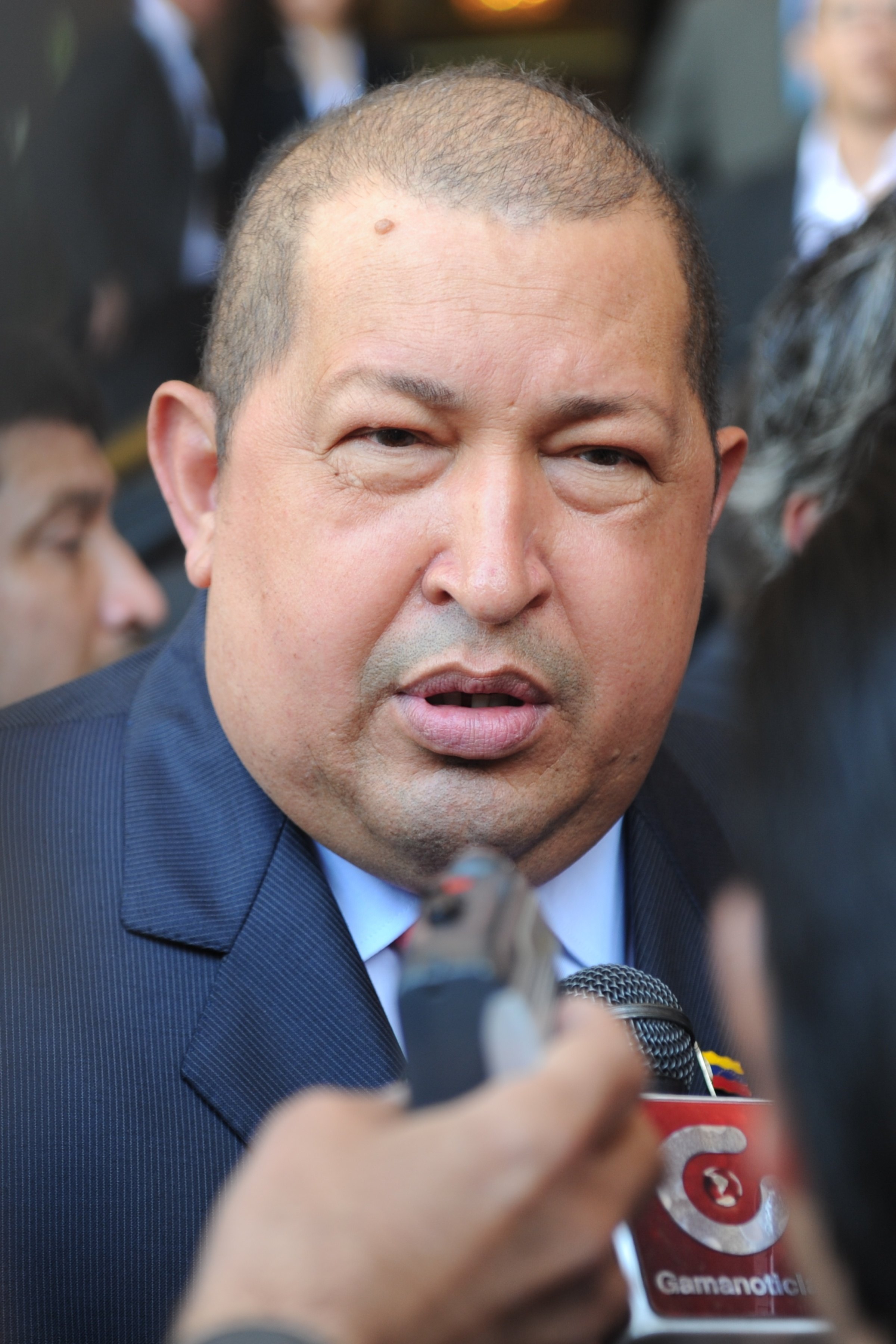
hugochavez ICYMI: Chavez run government holds total power: rights group

Courtesy of: Marcello Casal Jr.

Venezuela’s government, headed by ailing and absent President Hugo Chavez, holds “total” power while the country’s Supreme Court lacks all credibility, Human Rights Watch said Thursday.

“In Venezuela, there is what one would call a total concentration of power,” Jose Miguel Vivanco, HRW’s America’s director told reporters at the presentation of the group’s annual global rights report.

“What should constitute a democratic regime with separation of powers does not exist,” Vivanco said, adding that the state’s Supreme Court has lacked “the absolute minimum credibility” since it was “captured” by the Chavez government in 2004.

The Supreme Court played a central role recently in upholding the constitutionality of the government’s decision to indefinitely delay Chavez’s swearing in to a new term six year term on January 10.

Chavez, who is convalescing from a fourth round of cancer surgery in Cuba, was too sick to make it back for the inauguration. But the delay allows him and his government to stay in office until he is well enough to take the oath.

Meanwhile, Chavez, who won reelection in October, has not been seen in public since December 10, the day before he underwent surgery.

Vivanco called the Supreme Court’s decision “quite surprising,” saying it left Venezuela in a “very abnormal situation” where “the former government still rules.”

“This is very revealing and an excellent example… of what it means to not have an independent judiciary that can preserve and uphold democratic principles and the very constitution devised by President Chavez.”

HRW said in its latest report that during Chavez’s presidency, “the accumulation of power in the executive branch and the erosion of human rights guarantees have enabled his government to intimidate, censor, and prosecute Venezuelans who criticize the president or thwart his political agenda.”

It added that Venezuelans who criticize the government face reprisals and, among other things, “has undercut the ability of judges to adjudicate politically sensitive cases.”

While the Chavez government has “abused its powers to regulate the media,” its prisons are among the most violent in the region.

Earlier this month, a riot at a prison in the country’s northwest left 58 dead and twice as many wounded.

The Venezuelan government regularly dismisses HRW’s reports.

To read this article on Global Post, please click here.

 
Jan
25
2013
Posted by
admin
Comments

In Case You Missed It… Articles Roundup Week of 1/25/13

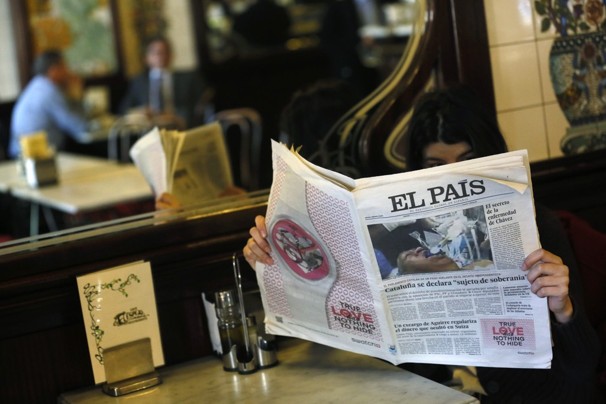
el pais newspaper In Case You Missed It… Articles Roundup Week of 1/25/13

Courtesy of: Reuters

This week: With Hugo Chávez still absent, Venezuela considers a US proposal to return DEA agents kicked out of the country eight years ago; Venezuelan state-run oil company PDSVA’s debt spikes 150% in five years; Venezuela’s high court dismisses request for medical board to assess Chávez’s health condition; and allies and adversaries of Chávez hold separate rallies to mark the anniversary of Venezuela’s democracy. Venezuelan Vice President Nicolás Maduro travels again to Cuba to visit ailing Chávez; amidst uncertainty over Chávez’s health, dozens of nations with favorable oil ties to Venezuela worry about their future; leading Spanish newspaper El País withdraws front-page exclusive photo of Chávez in Cuba saying it’s fake; and Maduro claims to be the target of an assassination plot, but fails to provide proof of the claim. Lastly, trying to fill the void of Chávez’s 45-day absence, the government churns out images, slogans and sound bites of the president; Foreign Minister Elías Jaua admits that Chávez still faces the most complex phase of his recovery after cancer surgery; the Venezuelan government tries to crack down on used cars, one of the last refuges against its growing inflation; and the IMF forecasts a drop in Venezuela’s oil revenue and a reduction of its economic growth.

Envoy says Venezuela open to better ties with U.S., Reuters

Venezuela’s government is open to improving troubled ties with Washington and is considering a U.S. proposal for the return of anti-drug agents kicked out of the country eight years ago by President Hugo Chavez, a senior official said.

Pdvsa’s debt spikes 150% in five years, El Universal

Venezuelan state-run oil company Pdvsa is under significant pressure, amidst its obligations with the central Government and the need to invest in core activities, which has translated into higher debt.

High court president dismisses request for a medical board, El Universal

“We have standing information about the health condition of the Venezuelan president,” Luisa Estella Morales, the president of the Venezuelan Supreme Tribunal of Justice (TSJ), told state-run TV channel Venezolana de Televisión (VTV) on Monday evening during an interview.

Allies and adversaries of Chavez hold separate rallies to mark Venezuela democracy anniversary, Associated Press

Allies of President Hugo Chavez took to the streets of Venezuela’s capital by the thousands on Wednesday to commemorate the anniversary of Venezuela’s democracy amid uncertainty about the president’s health more than six weeks after he underwent cancer surgery in Cuba.

Venezuela VP Maduro Arrives in Havana to Visit Ailing Chavez, Businessweek

Venezuelan Vice President Nicolas Maduro arrived in Havana yesterday to receive instructions from cancer-stricken President Hugo Chavez on a regional summit taking place this week.

Venezuela oil deals: Poor nations worry about future, BBC News

As Venezuela’s President Hugo Chavez continues to receive medical care in Cuba after a fourth cancer operation, many small countries across the region have their own reasons for carefully monitoring his health.

Leading Spanish newspaper El Pais pulls back edition with fake photo of Chavez, Associated Press

Leading Spanish newspaper El Pais says it withdrew and reprinted Thursday’s edition after discovering its front-page exclusive photograph supposedly showing ailing Venezuelan President Hugo Chavez being treated in Cuba was a fake.

Venezuela’s vice president says he’s target of assassination plot, Reuters

Venezuelan Vice President Nicolas Maduro said unidentified groups had entered the country with the aim of assassinating him and the head of the National Assembly as President Hugo Chavez recovers from cancer in Cuba.

Hugo Chavez a potent symbol in Venezuela as cult of personality flourishes during long absence, Associated Press

While Venezuela’s sick president recuperates from surgery behind closed doors in Cuba, at home he is more visible than ever.

Chavez Faces Most Complex Phase of Cancer Recovery, Businessweek

Venezuelan President Hugo Chavez still faces the “most complex” phase of his recovery after cancer surgery last month in Cuba, Foreign Minister Elias Jaua said yesterday after returning from a trip to Havana.

Venezuela Ready to Crack Down on Clunker Car Inflation Refuge, Bloomberg

Venezuela’s government is preparing to crack down on one of the last refuges against the fastest inflation in Latin America — used cars.

IMF forecasts drop in Venezuela’s oil revenues, El Universal

In its World Economic Outlook Update report for 2013, the International Monetary Fund (IMF) cut by 0.3% its growth projection for Latin America and the Caribbean, and estimated growth in the region at 3.6%, AP cited.