Apr
10
2013
Posted by
admin
Comments

ICYMI: Draft Law in Venezuela Is the Private Sector’s Death Knell

Joel Hirst is a democracy activist and a Principal at Cordoba Group International. He is a regular What’s Next Venezuela contributor.
741686 525 380 w e1365617072329 ICYMI: Draft Law in Venezuela Is the Private Sectors Death Knell

Courtesy of: The New York Times

The Huffington Post
April 8, 2013
By Joel Hirst

On April 4, acting Venezuelan President Nicolas Maduro announced he had uncovered a “conspiracy” to destabilize the government in order to lend support to his opponent in the upcoming elections, Miranda Governor Henrique Capriles Radonski.

Maduro told supporters the plot was undertaken by Empresas Polar, a global food and beverage manufacturer and processor that happens to be one of the largest and best known brands in Venezuela. Maduro alleged that Polar has plotted to create a situation of “unrest, shortages, hoarding and speculation.”

He ended his comments with an overt threat, telling Polar that “everything in life has its time.”

For Venezuelans, this is just a typical day of anti-capitalist bombast from a leader working hard to channel recently deceased President Chávez. But a new legislative proposal quickly moving through that country’s National Assembly gives new force to that country’s ‘socialist’ government’s war on the private sector.

Venezuela’s proposed Law Against Monopolies and Other Similar Practices grants the government the broad discretion and unchecked power to single out and nationalize the few remaining large companies in the country — a sanction for what the Venezuelan government calls anti-competitive behavior. Assembly leaders have announced the law will move through the assembly with “parliamentary urgency.” A procedural vote was already held and the common committee review will be expedited.

While the world remains fixated on President Hugo Chávez’s recent death, and the upcoming presidential election to chose his successor, this so-called monopoly law continues to progress slowly through the Assembly. Passage would legitimize the government’s extensive and arbitrary power over the Venezuelan private sector.

The bill departs from internationally accepted terms for anti-competitive behavior focused on market share, instead calling for a vague definition of an entity’s “economic space,” an amorphous term whose meaning the government will then define according to their own agenda. If passed, Chávez’s successor will be granted unprecedented power over the private sector — even more than was wielded by President Chavez and his arbitrary nationalizations.

The proposed law creates a new commission, the National Superintendent Against Monopolies and Similar Practices (SUNAM), to be chaired by a presidential appointee. SUNAM would have the power to confiscate resources and materials at will. Moreover, it states that any company in violation of the new law can be expropriated. Because the SUNAM would lack oversight, this law would subject so-called “illegal” businesses to an arbitrary state takeover with no chance for appeal or independent review. Any attempt to challenge expropriations would die inside Venezuela’s judiciary, which is completely controlled by the executive.

Though the bill has progressed largely under the radar, experts and the political opposition have taken notice and are denouncing the law. Vestalia Sampedro, a Deputy in the Venezuelan National Assembly,states that the law will only further extend the government’s control over the economy, extending the socialism that has not worked. Jorge Botti, the President of the Venezuelan Federation of Chambers of Commerce notes that the bill’s broad language means that even small businesses who succeeded by developing quality products and successful marketing strategies may not escape the government’s reach.

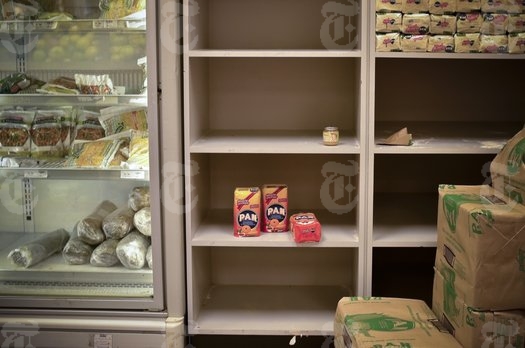
And all the while, the Venezuelan economy continues to worsen. The number of private companies in Venezuela has already declined by 36 percent from 1998. Price controls and the recent currency devaluation have worsened already-high unemployment, crippled Venezuelans’ purchasing power and exacerbated the shortages that now plague the country. Venezuelans already struggle to find basic necessities like chicken and corn. These economic policies have crippled vital industries like medical care as well. As of January, pharmaceutical shortages stood at 40 percent — a number which will only rise if the government acts on proposals to enforce price controls on medications as well. And with legislation like this monopoly law in the pipeline, few private investors would even consider bringing their capital to Venezuela.

While expropriations in Venezuela have become so common that they rarely even make news, in point of fact they are still illegal and unconstitutional. With the passage of this legislation, while remaining unconstitutional they would become ‘legal’ (a paradox that only those who follow Venezuela closely understand). Should acting President Maduro win, this would leave the country’s private sector in danger of extinction. Venezuela’s companies are already needlessly harassed and intimidated by the government, and the country’s economy has suffered as a result. This law, which the Assembly hopes to pass while the world looks the other way, would make matters far worse.

To read this article at the Huffington Post, please click here.
 
Feb
28
2013
Posted by
admin
Comments

ICYMI: Venezuela’s Economic Troubles Continue

Joel Hirst is a democracy activist and a Principal at Cordoba Group International. He is a regular What’s Next Venezuela contributor.

35176escasez22 e1362071656126 ICYMI: Venezuelas Economic Troubles Continue

Courtesy of: TalCual

Huffington Post
February 28, 2013
By Joel D. Hirst

For the past few months, the eyes of Latin America have been fixed on the ailing Venezuelan President Hugo Chávez. As news regarding his health does not improve, speculation has swirled about whether the three-term president will ever recover. For average Venezuelans, however, the more important debate concerns not whether the man himself will live out his fourth term in office, but whether the economic malpractice he has subjected on Venezuela — and which has wrought so much economic pain on the country — will be allowed to endure.

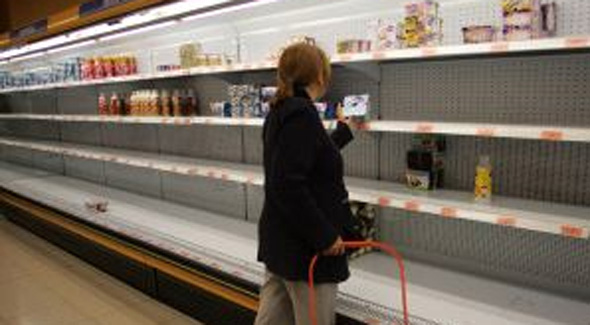
Chávez, first elected in 1999, proclaimed that his new political/economic doctrine of “21st Century Socialism” would provide a more equitable distribution of wealth for Venezuela’s poorest. After fourteen years of economic experiments; the economic model has been demonstrated as self-defeating. More than a decade of expropriations, government harassment of the private sector, and price and currency controls in fact proved disastrous for Venezuela’s economy and its people. Venezuelans have spent that decade struggling under the yoke of high unemployment, rampant inflation and crippling shortages of everything from rice to flour to coffee. It has left Chávez in the awkward position of blaming Venezuela’s hobbled private sector for the failure of his own socialist policies.

As the situation in Venezuela has deteriorated, Chávez has used private enterprise as a scapegoat — reinforced by Chavez’s near-total control of the country’s media — to maintain his hold on power. Yet there is no escaping the fact that the private sector in Venezuela is in a bad way, and it is only getting worse.

Expropriations have long been Chávez’s favorite tool to suppress the private sector. The government has seized almost a thousand companies over the past decade, in industries as varied as agriculture to tourism. Most of them are now state-owned and unproductive. Since Chávez was first elected, the number of private companies in Venezuela has dropped from 14,000 to 9,000 in 2011.

Chávez insisted such measures were necessary because private companies were “hoarding” their products to intentionally reduce supply. He claimed that seizures would boost productivity and reduce Venezuela’s dependence on imports. Not surprisingly, as has become evident in other countries that decide to nationalize large swaths their economy, the opposite has happened. Dramatic declines in productivity, shortages and inflation have ensued. With general shortages at an alarming 16.3 percent — the highest level in five years — the government’s excuses are simply no longer credible.

Those businesses that have escaped expropriation are subject to government threats and an ever-tighter regulatory environment. Widespread and arbitrary price controls govern nearly all goods and services sold to the public, including imports. The government has no methodology when determining whether a company’s earning is, according to them, “excessive,” giving them the power to subjectively decide prices.

Pharmaceuticals will soon become the latest target of price regulations. The government has ordered the country’s price controls agency to establish maximum prices for all medications. As the agency finalizes its decision, pharmacies will have to report their current selling prices to the authorities. The reports issued by pharmaceutical companies and laboratories illustrate the troubling fact that drug shortages in January stood at 40 percent. Once the new price controls come into force, that number will likely continue to rise.

Such stringent controls force many companies to operate at a loss, discouraging investment and bankrupting more of Venezuela’s remaining businesses. Companies that reduce their inventories in order to remain in business are threatened with expropriation or may see their wares confiscated on charges of “boycotting”, exacerbating the shortages of goods. Indeed, Venezuelan authorities seized 3,088 metric tons of food in January alone. According to AP, “Over the weekend, National Guard troops entered one market in downtown Caracas and confiscated 20 tons of beef, 15 tons of corn and four tons of garlic that allegedly violated price controls.”

Compounding the impact of price controls are equally stringent restrictions on foreign currency. As Chávez’s domestic policies crippled purchasing power and caused inflation to skyrocket, businesses turned to foreign reserve currencies, like U.S. dollars, to remain viable. But the Venezuelan government severely limits the supply of dollars, depreciating the value of private currency reserves and preventing companies from importing the goods that Venezuelans need. It typically takes between 180 and 250 days for foreign currency to be delivered, putting an additional strain on the balance sheets of both Venezuelan businesses and private citizens.

Add in the effects of a recent labor law, which forbids employers from laying off any worker who does not agree to resign, and the situation for business in Venezuela is indeed bleak. Chávez has succeeded in marginalizing the free market in Venezuela. The socialist utopia that he promised would follow, however, has failed to materialize.

Even as the rest of the world slowly emerged from the global recession of 2008, Venezuela’s economy decelerated. Unemployment tops eight percent (even after counting informal workers such as street venders). Inflation, currently at 22 percent, has soared. Venezuela sits atop the world’s largest proven oil reserves, yet the state-owned oil company PDVSA continually operates under capacity and in the red. An election-year spending binge has left the government drowning in debt, and without adequate resources to update Venezuela’s crumbling infrastructure.

In a tacit acknowledgement of its own failure, the government recently announced that it would devalue Venezuela’s national currency, the Bolivar, by nearly a third. After hearing the news, regular citizens raced to the streets to purchase anything they could find before the devaluation crippled their purchasing power still further. Private businesses quickly did the numbers as well, predicting even more losses in 2013. For example, Colgate-Palmolive expects an after-tax loss of approximately $120 million, while Halliburton anticipates a $30 million related charge.

The government announced the devaluation without warning, clearly hoping it would go unnoticed by a nation still fixated upon their president’s illness. Try as they may to scapegoat the private sector, the fact remains that this is precisely the society that the revolutionaries betted on. Their top lieutenants can no more ignore the consequences of their own actions than wish their ailing president back to health.

Recent reports indicate that Chávez has now returned to Venezuela, where his condition has not improved. No one knows for sure what will become of Chávez. His country, however, stands at a crossroads. And the eyes of the world will be watching.

To read this article at the Huffington Post, please click here.

 
Jun
14
2012
Posted by
admin
Comments

Venezuela’s Election Campaign Begins

screenshot1 Venezuela’s Election Campaign Begins

Joel D. Hirst

Joel D. Hirst is a democracy activist and a Principal at Cordoba Group International. He tweets @joelhirst.

The differences could not have been starker. On Sunday Governor Henrique Capriles Radonski registered his candidacy for the Presidency of Venezuela. The energetic 39 year old ran for six kilometers to the National Electoral Council (CNE); accompanied by a multi-color volunteer tide which numbered in the hundreds of thousands (if not a million). Capriles (as he is known by the people) gave a speech about hope and the future. The event felt like a celebration.

On Monday, President Hugo Chavez, Venezuela’s most familiar face, registered his candidacy for a term that would finish with him having been in office for 19 years. Due to a debilitating fight with a rare form of cancer, Chavez was ferried to the CNE on a truck, taking a few painful steps to the podium where he delivered a three hour message which, as Venezuelans have come to expect, was laced with threats, insults and attacks. Chavez was also accompanied by a large crowd, a red tide that flowed alongside his carnival truck. Using the anonymous mechanism of social media, not-so-revolutionary public servants began to fill the twittosphere with copies of letters sent by the government demanding that public servants be forced to march alongside their comandante. The mood was somber; a clearly aging and swollen Chavez seemed to personify the revolution that he is so keen to protect, though it may cost him his life.

This election campaign, which culminates in the October 7th general election, could not offer up a more divergent set of ideas. On the one side have marshaled the forces of representative democracy, a hard nucleus of civil and political rights, the pre-eminence of private property and entrepreneurship and free market capitalism as the means to advance personally while delivering the best quality, most affordable services to the greatest majority. On the other side are the forces of 21st century socialism: of communes, economic and social rights given in exchange only for total loyalty to a caudillo, the centralization of power in the executive and the eternal government of one man.

It would seem a fool’s choice; save that the perennial poor have come to accept the role of their government as a service provider and expect from their executive the handouts that President Chavez has been so successful in delivering. This is not the time to challenge these now-ingrained ideas. For this reason, Governor Radonski has been walking a fine line, comparing a potential Capriles administration to Brazil’s wildly popular and generally successful “Lula” administration. It seems to be working; polls show him tied with President Chavez.

To be sure, as in any election cycle there are wild cards, and Venezuela is no different. Speculation continues around President Chavez’s health. A formidable campaigner, his disease has kept him out of the public eye and has unleashed tremendous speculation about his potential successor. Should he not make it to the October 7th date, the United Socialist Party (PSUV) would have to choose a different candidate which could postpone the elections.

Another wild card is the role that fraud will have in this election. The Government of Venezuela has perfected 21st century electoral fraud. Instead of ballot stuffing, so popular in authoritarian regimes of the past, they use a more sophisticated system. The issuing of voter IDs to millions of ghost voters; the crushing use of state propaganda in favor of Chavez; the use of state oil resources in favor of the government’s candidates; the open threats to the over 5 million people who depend directly on the government that their votes are not secret; the migration of opposition voters to other voting centers far from their homes; and most recently the closure of the consulate in Miami in order to disenfranchise hundreds of thousands of potential voters. Will the people, the same who filled the airwaves with silent protests against forced marches, choose to risk a vote against their comandante?

These are the questions, for the government’s fraud is not foolproof. It is overcome through massive voter turnout and the vigilance of organized poll watchers present in every single voting booth. This is the challenge of the Venezuelan democrats; to transform the excitement for change into an organization which leads to action at the polls on Election Day. For them, and for those who come after, this is the most important election in history.