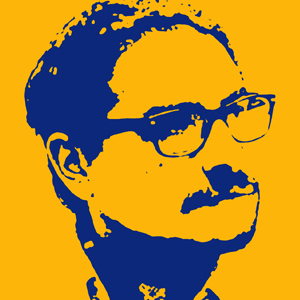
 What’s Next Venezuela is proud to re-introduce our Venezuelan guest blogger — el Petardo de Petare. In the coming months Petardo will offer his thoughts on Venezuelan political, economic and social issues with his characteristic wit and insightful analysis. In this first installment of the election season, Petardo offers his opinion on the ongoing saga regarding Hugo Chávez’s health.
Much has changed in Venezuela since my last commentary — yet much, as the proverb would have it, has stayed the same. The economy remains in bad shape, despite the government’s highly publicized attempts to prop it up with borrowed money. Indeed, our prices continue to inflate so quickly that even Chávez’s massive increase in the minimum wage will scarcely boost the purchasing power of the average Venezuelan. It is as much a struggle today to buy necessities for one’s family as it was before this heralded wage hike. That is, if you can even find the necessities. Shortages of the most basic goods — corn, coffee, rice, the staples of our very lifestyle — are widespread and affect Venezuelans of every stripe and political leaning.
Another grim subject, however, has lately displaced such issues in the media. The government, so skillful at controlling its image, has done its best to keep chatter of President Chávez’s cancer out of the news. Yet our entire country remains consumed, spellbound, and hungry for the truth. The PSUV’s relentless effort to suppress information means that we know only a few things for sure. Among those certainties: President Chávez is severely ill; preferring Cuba’s medical facilities to his own country’s, as he has continually traveled to Havana for treatment; he now intends to formally swear in the six-member “Council of State,” which will serve as a sort of proxy government until the president “recovers his strength”; Chávez himself claimed in a phone call this week that he will register and run in this October’s presidential election.
Between those scant facts, however, arise troubling questions. Just how serious is Chávez’s cancer? Has it spread to other areas of his body, as some journalists have reported? Will the disease claim his life? And, if it does, who will take his place in October’s election? Worse, what if he dies shortly afterwards? Who then are we really voting for? Try as it might, the PSUV cannot prevent media from asking these questions. Neither can it stop journalists and commentators from seeking to answer them.
The International media coverage (much of which appears on this website) has also focused on the spectacle — and with good reason. I have read speculative articles that seek to unearth the facts about Chávez’s health; I have also seen reports that simply presume the president will soon be dead, and go on to envision the future of Venezuela “after chavismo.”
Despite the morbid subject matter, I remain gratified that so many continue to report on the affairs of Venezuela. I am sure the drama of President Chávez’s battle with cancer will continue attracting attention–especially if the news takes a turn for the worse. I do not propose to add my own views to the equation; that is best left to the experts. I ask only that those reporting the story remember why it matters.
The most urgent story does not concern the fate of chavismo, nor of the man himself; it is the future of my country that matters most. So I beg of all media, in Venezuela and the world, that they do not attend so much to the titanic struggle between Hugo Chávez and his cancer that they neglect the less dramatic–but much more important–struggles of so many Venezuelans to live lives of dignity and security.
It is these stories I will share with you in the coming months. Venezuela faces challenges on many fronts, from infrastructure to crime to shortages of food and electricity. I believe my country can overcome these hurdles, but only if our leaders change course. If they don’t, the health of our president will be the least of our worries.