Sep
4
2013
Posted by
admin
Comments

ICYMI: Blackouts Hit Nearly Half of Venezuela

Wall Street Journal
September 3, 2013
By Kejal Vyas
ALeqM5jqwUQc1j zylZx6VRZj8nU HvGvQ e1378316807289 ICYMI: Blackouts Hit Nearly Half of Venezuela

Courtesy of: AFP

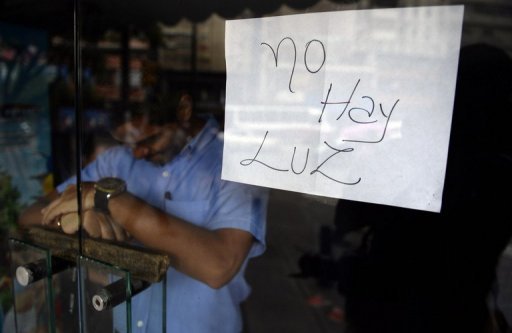
CARACAS—A failure in a transmission line cut power across much of Venezuela on Tuesday, leading the government to blame unidentified saboteurs for the widespread disruption.

Electricity outages struck parts of at least 11 of Venezuela’s 23 states in the early afternoon, mostly in the central and western regions, as well as the capital city, Electricity Development Vice Minister Franco Silva said in comments carried on state television.

Information Minister Delcy Rodríguez said in an address about five hours after the initial outage that power had been restored to several states, adding electricity was in the process of coming back online in the oil-rich western states of Zulia and Táchira, and the greater Caracas area.

A shaky power grid remains a thorn in the side of energy-rich Venezuela, leading critics of the current government to point the finger at mismanagement at state-run utility companies. Authorities have periodically turned to power rationing and levied additional surcharges and penalties on heavy electricity users.

Ms. Rodríguez said “complete restoration of this important service will be done in a progressive manner” without specifying how long it would take.

Messages posted on the Twitter account of President Nicolás Maduro said that the power grid was attacked by unnamed enemies of the government.

“It’s evident that behind [the blackout] is the hand of those that want to weaken our country,” said one post. Mr. Maduro didn’t offer evidence to back up his allegations. Calls seeking further comment from officials weren’t immediately returned.

While the government’s detractors accuse authorities of misappropriating investments into the country’s electricity network and falling behind growing consumer demand, the late leader Hugo Chávez often blamed conspirators against his self-styled socialist “Bolivarian revolution.” Mr. Chávez died in March following a nearly two year battle with cancer. Mr. Chávez nationalized much of the electricity sector in 2007.

In recent weeks, his successor Mr. Maduro has disclosed details of various other alleged plots against Venezuela, including several alleged assassination attempts against his life supposedly masterminded by agents of the U.S. and Colombian governments. Critics accuse him of fabricating plots in a bid to boost support.

Venezuela opposition leader Henrique Capriles, who lost April elections to replace Mr. Chávez, said the power failure underscored mismanagement at state companies. “The blackout today demonstrates one more time the terrible incapacity of this government,” Mr. Capriles said in a post on his official Twitter account. “Now they’ll come up with another story to try to cover up the failure.”

In Caracas, the blackouts briefly hit some key government buildings, including the Energy Ministry, which is also the headquarters of state oil company Petróleos de Venezuela, or PdVSA.

In a statement, Oil Minister Rafael Ramírez said refining and production operations in Venezuela’s vital oil industry were unaffected.

The sprawling capital city was furthered tangled by knotted traffic, disrupted subway service and severed water supplies, as several treatment plants went down, authorities said. Power shortfalls and outages are more common in the interior of the country of 29 million residents, while more rarely reaching Caracas.

Between 2009 and 2010, a drought cut production at Venezuela’s hydroelectric facilities that accounted for some 70% of the country’s power. The country has since had to divert more of its crude oil production and imports gas from Colombia to fulfill its own domestic power needs.

To read this article at The Wall Street Journal, please click here.
 
Mar
1
2013
Posted by
admin
Comments

In Case You Missed It…Articles Roundup Week of 3/1/13

protestaap123.jpg.940.600.thumb  e1362172682790 In Case You Missed It...Articles Roundup Week of 3/1/13

Courtesy of: Associated Press

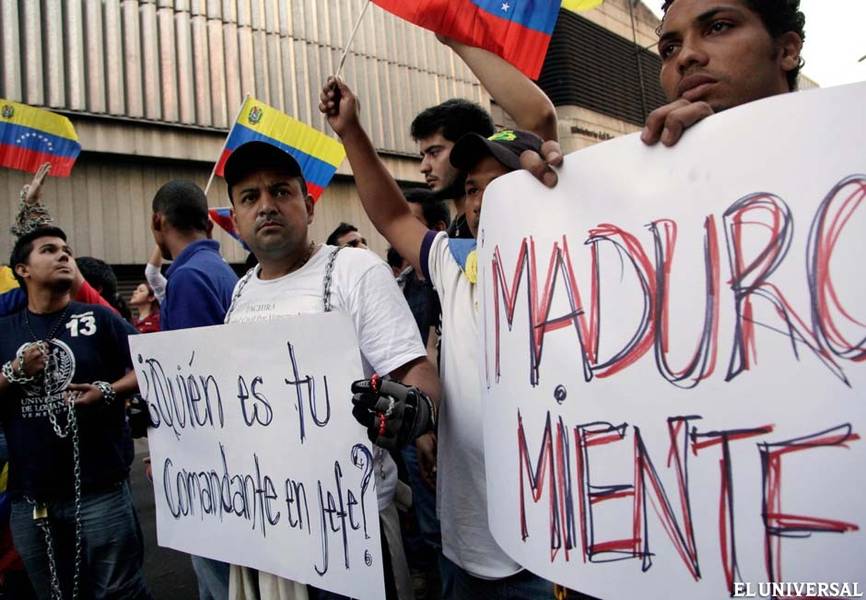
This week: Since his secretive return to Venezuela, confusion and uncertainty have surrounded Chávez’s health; while Chávez remains hidden from the public eye, the possibility of a new presidential election looms; members of the opposition march to demand answers on the president’s health; and vice president Nicolás Maduro admits on national television that Chávez is “is fighting for his health, for his life.” Price and currency controls cause pharmacy drug shortages to reach 40 percent; an electricity crisis and constant power cuts stir anger towards the Venezuelan government; price hikes continue in Venezuela, with the black market price of the dollar now at four times its official value; reports surface that 27.5 percent of Venezuelan imports reported by the government in 2012 in fact never happened; and Venezuela’s comptroller finds multiple administrative irregularities in two state-owned TV networks. Lastly, the Inter-American Commission on Human Rights urges Venezuela to reconsider its withdrawal from the respected human rights commission; authorities violently disperse student demonstrations demanding answers on Chavez’s health; US officials believe the US will have to play a role in any forthcoming transition of power in Venezuela; and opposition leader Leopoldo López is arrested as part of what he calls a “political persecution” by  the Chávez government.

Confusion reigns over Chávez’s condition, Financial Times

There has been no sign of Hugo Chávez since the stealthy pre-dawn return to Caracas of Venezuela’s ailing leader a week ago, but at least one person is confident of his wellbeing.

As Chávez’s silence persists, Venezuela mulls new elections, Miami Herald

President Hugo Chávez spent his first week back in Venezuela too frail to be seen in public and too weak to receive well wishers. But despite his precarious health, few doubt Chávez’s prowess at the ballot box.

Opponents to Hugo Chavez Continue to Demand Answers, Fox News Latino

Hundreds of opponents to the government of Hugo Chávez demonstrated Saturday to demand answers about the condition of the Venezuelan president while he remains out of the public eye.

Venezuela’s Chavez clings to life, vice president says, NBC News

Venezuelan President Hugo Chavez is clinging to life, according to the country’s vice president. “The commander is fighting for his health, for his life,” Nicolas Maduro said on national TV Thursday.

Drugs shortage in Venezuela accounts for 40%, El Universal

Through letters and conversations with the Government, the Venezuelan pharmaceutical sector has warned it is “choking” as medicine shortage is reaching a critical level.

Venezuela: power cuts stir resentment, Financial Times

The problem may have gone largely unnoticed in Caracas, where everyone is fixated by the ongoing Hugo Chávez drama, but Venezuelans living in the provinces are getting fed up with blackouts that inconvenience their everyday life.

Price hikes in Venezuela, Al Jazeera

Scores of Venezuelans descended from the hillside slums of Caracas 24 years ago on this day, burning cars and looting to protest a hike in gasoline prices, the last straw in a series of austerity measures.

An estimated 27.4% of Venezuelan gov’t imports never happened, El Universal

Ten years after forex restrictions were put in place in Venezuela, distortion accentuates. Imports at a low exchange rate seem to be increasingly encouraging overbilling and other procedural practices.

Venezuela’s comptroller finds irregularities in state-run TV networks, El Universal

Lack of internal controls and supervision of budget and assets, absence of personnel management manuals and award of no-bid contracts without justification whatsoever are just some of the administrative irregularities found by the Controller’s Office of Venezuela in state-owned TV networks Ávila TV and Vive TV.

IACHR hopes Venezuela to rethink withdrawal, El Universal

The president of the Inter-American Commission on Human Rights (IACHR), José de Jesús Orozco Henríquez, said he hoped “respectfully” that the Venezuelan state reconsiders its intention to leave the American Convention on Human Rights.

Student demonstration dispersed by authorities in Venezuela, El Universal

One more time, the student opposition movement Operation Sovereignty took the streets, a week after a protest at the Cuban Embassy in Caracas.

Venezuela Charges Opposition Leader With Misuse of Funds in 1998, Bloomberg

Venezuelan opposition politician Leopoldo Lopez faces as much as four years in prison for alleged misuse of public funds more than a decade ago as President Hugo Chavez’s health prompts speculation about new elections.

US says it has a role to play in transition in Venezuela, El Universal

Roberta Jacobson said the aim is to convey to “Venezuelans of all political stripes” the message that it is important to hold elections on an equal footing.

 
Oct
5
2012
Posted by
admin
Comments

Tune in to What’s Next for Election Developments

Venezuela will hold its general elections this Sunday, October 7. President Hugo Chávez, seeking re-election to a third term, faces a strong challenge from the energetic opposition candidate Henrique Capriles. The run-up to the election has already been intriguing, with concerns about the president’s health, unexpected events on the campaign trail and an innovative and impressive strategy by the opposition. Thanks to his tireless campaign efforts, Capriles has surged into the lead in the polls in the last weeks and finds himself in a good position to defeat Chávez.

The results of the election will reverberate substantially, both in Latin America and around the world. It will serve as a referendum on Chávez’s socialist policies, which still have a following in the region. It will affect global oil markets, as Venezuela controls the largest proven reserves of oil in the world. And it will impact diplomatic relations with the United States, which have been strained since the beginning of the Chávez era. Most of all, the election matters to the Venezuelan people, who continue to struggle though blackouts, food shortages, insecurity and rampant inflation.

Check out WhatsNextVenezuela.com for the latest news over the weekend, as we will be reporting on the events leading up to and during the vote this Sunday.