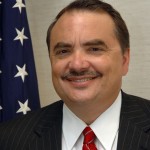
José R. Cárdenas
José R. Cárdenas served in several foreign policy positions during the George W. Bush administration (2004-2009), including on the National Security Council staff. He is a consultant with Vision Americas in Washington, DC.
The recent explosions at the Amuay oil refinery in Punto Fijo that killed some 41 people could not have come at a worse time for Hugo Chávez, as it has drawn intense scrutiny on what has become of the state oil company PDVSA since Chávez imposed total state control over its operations in 2002.
It is not a pretty sight. In fact, the company stands at the center of a cautionary tale about the destructive impact of Chávez’s politically-motivated policies. For today, PDVSA represents less a modern oil company than it does a political operation designed only to boot the political fortunes of the President.
One would think that a company sitting atop what is believed to be the world’s largest oil reserves at a time of record prices could absorb some measure of short-sighted policies and still function ably. That PDVSA is not is a measure of how disastrously Chávez has ignored critical re-investments in maintenance, safety, and the development of new means of production.
Instead, the company’s last ten years have been marked by decreasing production, safety mishaps, politicization of management, inflated payrolls, and corruption. All the while, Chávez has directed PDVSA to take an ever-larger role in activities that have little or nothing to do with extracting and refining oil.
First, production. The government claims it is producing 2.9 million barrels per day (b/d), but experts claim that with refineries today operating at 69 percent capacity the actual output is more like 2.4 million b/d. In 1997, the year before Chávez was first elected, output was around 3.6 million b/d, one-third more than today. Experts say that given Venezuela’s prospects, it should be producing 5 million b/d. So far, high international prices have masked the impact of the declining cash flow, but that mirage will not last forever.
Secondly, those with knowledge of the Venezuelan oil industry say there has been a critical lack of re-investment into maintenance and production. They say investment in oil related activities has averaged $9 to $10 billion per year over the last four years — half of what is necessary to maintain production and just one quarter of what PDVSA needs to expand production and build new facilities.
So where is the money going? Into an account controlled directly by Hugo Chávez, bypassing the Central Bank and the National Assembly, meaning there is no accountability and no transparency of how the funds are dispersed. We do know, however, that earlier this year Finance Minister Jorge Giordani said that the government had invested more than $500 billion in social programs.
Now, there is certainly nothing wrong in using oil revenues to boost the social sector; the critical question is whether those revenues are being used efficiently and with an eye towards the long-term health of PDVSA and Venezuela. But it seems all that is lost on Hugo Chávez. The political goal of – getting re-elected – is all encompassing and trumps concerns of productivity and safety.
Today, PDVSA is involved in activities wholly outside its competence: including managing food imports and distribution, building houses, mining, agriculture, and meat production. Indeed, the list is being constantly expanded according to Chávez’s whims. As such, the number of PDVSA employees has expanded from some 40,000 in 2002 to around 115,000 today. The results have been predictably slap-dash.
Clearly, poor re-investment, declining production, diversion to non-oil related activities, bloated payroll, and skyrocketing debt are taking their toll on PDVSA. With no indication Chávez has any intention to change his policies, it’s an open question how long the company can maintain its present course. But PDVSA’s fate is intricately linked to Chávez’s populist political project. He came to power claiming to the masses that for decades “others” (elites, foreign interests) had plundered Venezuela’s national patrimony at their expense. He was to be their avenger, making up for years of neglect by squeezing every last ounce of Venezuelan crude out of the ground for the people’s benefit — even if he effectively kills Venezuela’s ability to secure oil revenues in the process. Populism may have been a great way to get elected, but it is a terrible way to govern.