Jun
20
2012
Posted by
admin
Comments

Chávez Furthers Military Partnerships with Iran, Russia

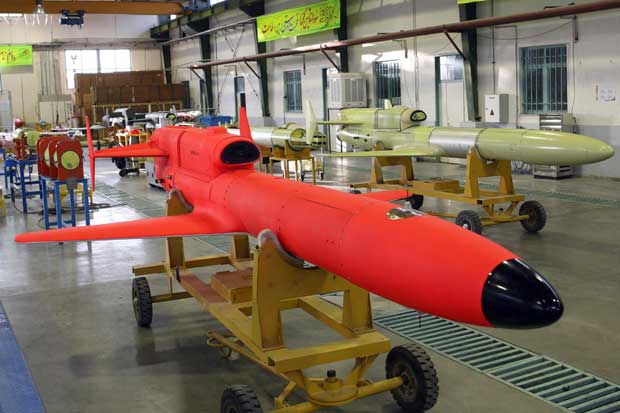
drones chavez 478x270 1 Chávez Furthers Military Partnerships with Iran, Russia

Courtesy of: AFP

Hugo Chávez is making major investments into Venezuela’s military capacity, and it is raising new questions about his choice of allies and the aims of his military stockpiling. Last week, he announced the production of assault rifles in a joint venture with Russia, which comes on the heels of the revelation that he is building unmanned aerial vehicles with help from Iran.

Always the showman, Chávez made the announcement of a joint venture with Russia in a three-hour television broadcast from the factory where they are being assembled, proudly displaying the new weapons. He said they are for “internal defense,” but the announcement will likely increase U.S. concerns about his government and its role in the South America.

A Spanish daily newspaper has reported that U.S. prosecutors in New York are investigating Iran’s sale of unmanned aircraft to Venezuela. The report details the convoluted payments that kept the deal hidden as well as increased collaboration between the two countries’ militaries. Officials are investigating to ensure that Iran is not using these arms deals to set up a military command in Latin America.

Though the vehicles involved are not advanced enough to pose a threat to the United States, the transaction is another chapter in the close relationship between Venezuela and Iran. Iranian president Mahmoud Ahmadinejad recently announced plans to visit Venezuela after the upcoming Rio +20 conference, and just last month Venezuela and Iran signed a joint agreement to build an off-shore oil platform. Moreover, Venezuela continues to buy oil tankers from Iran. And while most of the West has trade sanctions on the Middle-Eastern nation, Venezuela carries on sending supplies to and signing business deals with Iran.

Venezuela’s military agreement with Russia is not new either. The country’s imports from Russia are on the rise, mostly because of increased military purchases. In global matters, President Hugo Chávez has stood with Russia on many of its most controversial decisions. Recently, he announced his solidarity with Russia in support of the current Syrian government, who Venezuela has continued to supply with oil, despite the recent violence that has taken place.

Regardless of the military capacity that this deal provides, it is another clear rejection of American diplomatic goals. Chávez continues to show that his foreign policy is predicated on showing the world that he can, and will, do business with countries regardless of their ideology, human rights record, or political system. Moreover, he’s shown a special affinity for nations that the United States views warily.
 
Mar
8
2012
Posted by
admin
Comments

ICYMI: Iran, Terror Groups, and South America?

Southern Exposure: Iran, Terror Groups Setting Up Shop in South America
U.S. News & World Report
March 7, 2012

Iran and Middle East-based extremist groups are stepping up their activities in South America, aiming to make friends and score cash, a senior U.S. military official says.

Tehran intends to build military drones in Washington’s backyard for the Venezuelan military led by Hugo Chavez, U.S. Southern Command chief Gen. Douglas Fraser told reporters Wednesday during a breakfast meeting in Washington.

Iran Drones 120307 01 ICYMI: Iran, Terror Groups, and South America?
Source: U.S. News & World Report

Pressed by DOTMIL about the unmanned aerial vehicles’ capabilities, Fraser dubbed it “a fairly limited-capacity UAV.”

“I would put it in the Scan Eagle class of UAV,” Fraser said. “It’s not up into the Predator class.”

The Southern Command chief was referring to two U.S.-made drone aircraft used by the American military. The Scan Eagle is about 10 feet long and is used for surveillance while the MQ-1B Predator drone can be armed with air-to-ground Hellfire missiles and is about 27 feet long.

Fraser said it’s unclear what kinds of missions Venezuelan officials will send the Iranian drones.

His best guess? “I assume it’s for internal defense.”

In, 2006, Israeli officials said they shot down at least three Iran-backed Hezbollah drones during a war in Lebanon.

In December, Tehran said one of its electronic warfare units downed an American military RQ-170 spy drone, known as the “Beast of Kandahar.” It remains unclear whether Iran has fitted that kind of technology on the drones sold to Venezuela.

U.S. officials do know production of the Iranian drones has been delayed due a recent fire at the manufacturing plant, Fraser said.

Teal Group analyst Phillip Finnegan says the drone deal “is one of these intangible signs of the relationship between Iran and Venezuela.”

“If they can get a UAV that appears to be a cutting-edge symbol of that relationship,” they can frame it as a loss for the United States, Finnegan says. “Although it’s likely the end result might not be cutting-edge — generally Iran is not mentioned as being in the forefront of countries developing this capability.”

Tehran also has doubled the number of official embassies it maintains across South America from five to 10. Iran also has erected “cultural centers” in some countries, Fraser said. This is part of a broader increase in diplomatic efforts on the continent, he added.

So what is Tehran up to?

“They are working to build diplomatic relations [and] international support to counter the sanctions” imposed by Washington and Europe as a means toward pressuring Iran to scuttle its nuclear arms program, Fraser said.

U.S. officials are also closely monitoring the activities in South America by two of Iran’s allies, the Hamas and Hezbollah groups. The State Department has long considered both terrorist organizations.

So far, those groups have been involved in the kinds of “illicit activities,” as Fraser put it, that are familiar in South America: the trafficking of drugs, weapons and people. The goal for Hamas and Hezbollah is to use these activities to generate funds to send back to their leaders in the Middle East.

“I’ve seen no indications of al Qaeda” establishing a foothold on the southern continent, Fraser told DOTMIL.

To read this article on U.S. News & World Report please click here.