Mar
8
2012
Posted by
admin
Comments

ICYMI: Iran, Terror Groups, and South America?

Southern Exposure: Iran, Terror Groups Setting Up Shop in South America
U.S. News & World Report
March 7, 2012

Iran and Middle East-based extremist groups are stepping up their activities in South America, aiming to make friends and score cash, a senior U.S. military official says.

Tehran intends to build military drones in Washington’s backyard for the Venezuelan military led by Hugo Chavez, U.S. Southern Command chief Gen. Douglas Fraser told reporters Wednesday during a breakfast meeting in Washington.
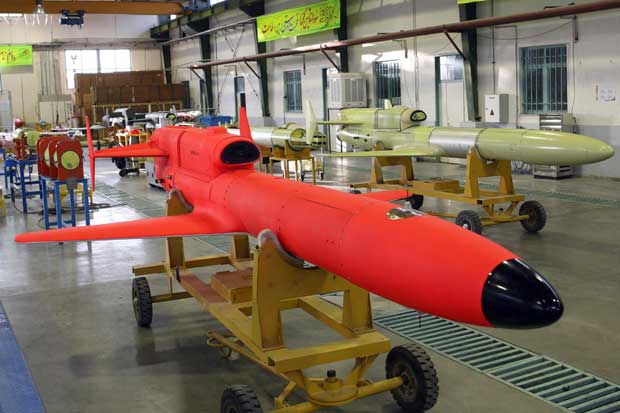
Iran Drones 120307 01 ICYMI: Iran, Terror Groups, and South America?
Source: U.S. News & World Report

Pressed by DOTMIL about the unmanned aerial vehicles’ capabilities, Fraser dubbed it “a fairly limited-capacity UAV.”

“I would put it in the Scan Eagle class of UAV,” Fraser said. “It’s not up into the Predator class.”

The Southern Command chief was referring to two U.S.-made drone aircraft used by the American military. The Scan Eagle is about 10 feet long and is used for surveillance while the MQ-1B Predator drone can be armed with air-to-ground Hellfire missiles and is about 27 feet long.

Fraser said it’s unclear what kinds of missions Venezuelan officials will send the Iranian drones.

His best guess? “I assume it’s for internal defense.”

In, 2006, Israeli officials said they shot down at least three Iran-backed Hezbollah drones during a war in Lebanon.

In December, Tehran said one of its electronic warfare units downed an American military RQ-170 spy drone, known as the “Beast of Kandahar.” It remains unclear whether Iran has fitted that kind of technology on the drones sold to Venezuela.

U.S. officials do know production of the Iranian drones has been delayed due a recent fire at the manufacturing plant, Fraser said.

Teal Group analyst Phillip Finnegan says the drone deal “is one of these intangible signs of the relationship between Iran and Venezuela.”

“If they can get a UAV that appears to be a cutting-edge symbol of that relationship,” they can frame it as a loss for the United States, Finnegan says. “Although it’s likely the end result might not be cutting-edge — generally Iran is not mentioned as being in the forefront of countries developing this capability.”

Tehran also has doubled the number of official embassies it maintains across South America from five to 10. Iran also has erected “cultural centers” in some countries, Fraser said. This is part of a broader increase in diplomatic efforts on the continent, he added.

So what is Tehran up to?

“They are working to build diplomatic relations [and] international support to counter the sanctions” imposed by Washington and Europe as a means toward pressuring Iran to scuttle its nuclear arms program, Fraser said.

U.S. officials are also closely monitoring the activities in South America by two of Iran’s allies, the Hamas and Hezbollah groups. The State Department has long considered both terrorist organizations.

So far, those groups have been involved in the kinds of “illicit activities,” as Fraser put it, that are familiar in South America: the trafficking of drugs, weapons and people. The goal for Hamas and Hezbollah is to use these activities to generate funds to send back to their leaders in the Middle East.

“I’ve seen no indications of al Qaeda” establishing a foothold on the southern continent, Fraser told DOTMIL.

To read this article on U.S. News & World Report please click here.
 
Feb
21
2012
Posted by
admin
Comments

ICYMI: Chavez faces an Uprising at the Ballot Box

Venezuela’s Hugo Chavez faces an uprising at the ballot box
The Washington Post
By Jackson Diehl
February 19, 2011

On Feb. 12, Henrique Capriles Radonski, a 39-year-old Venezuelan state governor, won a primary election to become the opposition’s candidate against Hugo Chavez in October’s presidential election. He won 1.8 million of an astonishing 3 million votes – double the turnout predicted by most analysts.

The next day, Capriles, a devout Catholic, was greeted by a commentary on the government-run Web site of Venezuelan National Radio titled “The Enemy Is Zionism.” Capriles, it explained, is the descendant of Jews. (In fact, his grandmother was a Holocaust survivor who emigrated from Poland to Venezuela.)

“In order to understand the interests embodied” by Capriles, the commentary declared, “it’s important to know what is Zionism, the Israeli ideology that he sneakily represents. . . . It is, without doubt, an ideology of terror, of the most putrefied sentiments of humanity; its supposedly patriotic impetus is based in greed.” And so on.

“Zionism,” it concludes, “is owner of the majority of the financial institutions of the planet, controls almost 80 percent of the world economy and virtually all of the communications industry, in addition to maintaining decision-making positions within the U.S. Department of State and European powers.”

Thus began the latest – and what will surely be the ugliest – political campaign by Chavez, a ruler who has served as a friend in need to Moammar Gaddafi, Bashar al-Assad and Mahmoud Ahmadinejad – and who now is facing his own homegrown democratic uprising. But Venezuela’s spring differs from those of Libya, Syria or Iran: Instead of pouring into the streets, Venezuelans – fed up with the chaos and violence of Chavez’s 13 years in power – are marching to the polls and trying to restore the country’s crippled and compromised institutions.

The opposition Capriles now heads has learned lessons that might benefit some of the revolutionaries of the Middle East. It tried and failed to oust Chavez with mass demonstrations and strikes; it foolishly boycotted elections it believed would be unfair; it indulged in endless internal quarrels. The result was the entrenchment of a strongman who has thoroughly wrecked what was once Latin America’s richest country and who now presides over the highest inflation and murder rates in the Western Hemisphere, shortages of basic goods and power, and a drug-trafficking industry whose kingpins include the defense minister.

Click here to read more.

 
Feb
7
2012
Posted by
admin
Comments

Game Changer in U.S.-Venezuela Relations

DSC 0754 150x150 Game Changer in U.S. Venezuela RelationsJosé R. Cárdenas served in several foreign policy positions during the George W. Bush administration (2004-2009), including on the National Security Council staff. He is a consultant with Vision Americas in Washington, DC.

Bombshell testimony on Capitol Hill last week by U.S. Director of National Intelligence James Clapper has dramatically altered the stakes in Washington’s relations with the Hugo Chávez regime in Venezuela. Speaking before the Senate Select Committee on Intelligence for the annual Worldwide Threat Assessment, Clapper said that Iranian leaders had changed their calculus and are now prepared to respond to perceived threats with terrorist attacks inside the United States.

Clapper said: “The 2011 plot to assassinate the Saudi ambassador to the United States shows that some Iranian officials — probably including Supreme Leader Ali Khamenei — have changed their calculus and are now more willing to conduct an attack in the United States in response to real or perceived U.S. actions that threaten the regime. We are also concerned about Iranian plotting against U.S. or allied interests overseas. Iran’s willingness to sponsor future attacks in the United States or against our interests abroad probably will be shaped by Tehran’s evaluation of the costs it bears for the plot against the ambassador as well as Iranian leaders’ perceptions of U.S. threats against the regime.”

The implications for U.S.-Venezuela relations are clear. Now that it has been assessed that Iran is prepared to attack the U.S. homeland, focus must now be placed on its capabilities and means to do so. That Hugo Chávez has made Venezuela — less than a three-hour flight from Florida — one of Iran’s most important international allies is now a paramount concern to U.S. security agencies.

Indeed, Chávez’s deep-seated economic, military, and intelligence relationship with Iran, running into the tens of billions of dollars, provides an enormous cover for covert operations and other destabilizing activities. That relationship runs from establishing Venezuela’s Margarita Island as a center for Iranian and Hezbollah operations in the Americas and facilitating Iran’s development of a nuclear capability by helping it obtain uranium, to blunting  sanctions by providing Iran’s access to Venezuela’s banking system and jointly trafficking in weapons (here and here) and narcotics. The DEA believes a weekly flight between Iran and Caracas is used for, among other nefarious purposes, smuggling South American cocaine to the Middle East.

Moreover, we know already that a member of the terrorist network plotting to detonate fuel tanks at JFK International Airport in New York in 2007 was arrested on the run to Venezuela, where he planned to board a Venezuelan flight to Tehran.

Lastly, the explosive documentary aired last month on Univisión, “The Iranian Threat,” included not only incriminating information on Venezuelan and Iranian diplomats discussing cyberattacks on sensitive U.S. computer systems (The State Department subsequently expelled the Venezuelan diplomat from the United States, where she had been re-posted), but also compelling evidence on how young Latinos are targeted for recruitment and paramilitary training in Iranian and Venezuelan camps visited by Hezbollah, Hamas, and the Colombian FARC.

As the Chairman of the House Foreign Affairs Committee, Congresswoman Ileana Ros-Lehtinen, put it succinctly in another hearing last week, “The Iranian regime has formed alliances with Chávez, Ortega, Castro, and Correa that many believe can destabilize the hemisphere. These alliances can pose an immediate threat by giving Iran – directly through the IRGC, the Qods force, or its proxies like Hezbollah – a platform in the region to carry out attacks against the United States, our interests, and allies.”

In addition, Clapper told the Senate that the intelligence community remains concerned about Iran’s ties to governments in the region and was tracking the issue closely, adding, specific to Iran’s activities in the region, “there is more to unfold here.”

Clearly, Clapper’s testimony reflects a substantial change in the U.S. government’s own calculus about Iran, Venezuela, and the Western Hemisphere.  If Iran is now prepared to strike the U.S. homeland, then all actions need to be pursued to debilitate its capability to do so, and that means targeting its presence in Venezuela. Hugo Chávez made a very dangerous bet when he introduced Iran to the Western Hemisphere. Now, he should be made to pay the price.