Mar
7
2013
Posted by
admin
Comments

ICYMI: Venezuela’s Economy Under Chavez, by the Numbers

Wall Street Journal
March 6, 2013
By Charles Roth
 ICYMI: Venezuela’s Economy Under Chavez, by the Numbers

Courtesy of: TalCual

Many Venezuelans, mainly among the poor, are intensely mourning the passing Tuesday of President Hugo Chávez, whom they viewed as their “champion”, a father figure who after 14 years in power is taking on near saint-like meaning for them.

In their name, the charismatic Mr. Chávez implemented what he called “21-Century Socialism,” which in practice involved nationalization of broad swaths of the economy, especially in “strategic sectors” such as all the important oil industry — Venezuela sits atop the world’s largest oil deposits — telecommunications and power. He expropriated more than 1,000 businesses, sundry farmlands and urban properties, often without compensation, arguing that the seizures were justified either because the owners were in various ways corrupt or the seizures would improve the lots of the poor, usually both. In the process, he engaged in class warfare, demonizing the country’s middle- and upper classes as the “Squalid Ones.”

In his push to build a socialist system Mr. Chávez — who had Venezuela’s armed forces adopt the motto, “Country, Socialism or Death” — greatly ramped up government spending off the back of historically high oil revenues and a massive increase in national external debt, which went from around $28 billion during his first year in power to around $90 billion currently. Much spending has gone into subsidized food, housing, health, education and other welfare programs that have no doubt to varying degrees benefited the poor.

But a look at the available data — and it’s limited, as Venezuela hasn’t held an Article IV consultation with the International Monetary Fund in 87 months and has stopped reporting a number of standard indicators — the economy hasn’t exactly produced a socialist paradise.

Heavy government spending has fueled rampant inflation, which averaged an annual 22% during Mr. Chávez’s tenure. Its anticapitalist rhetoric and broad state intervention into the economy have led to a dearth of investment. Gross fixed capital formation declined to 18% of gross domestic product in 2011, from 24% in 1999, according to the World Bank. Net inflows of foreign direct investment stood at 2.9% of GDP during that same year, his first in office, nearly double the 1.7% in 2011. Capital flight from Venezuela intensified as Mr. Chávez pursued more interventionist policies, including capital controls and a fixed official exchange rate that — if you can get it — offers dollars at a quarter of the exchange rate that the greenback fetches in the black market. Stock market capitalization of companies listed on the Caracas Stock Exchange has gone from a paltry 7.6% of GDP in 1999 to a minuscule 1.6%.

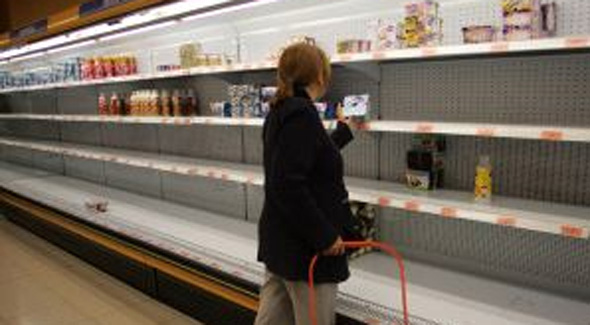
Rather than pursue policies that might stimulate investment, the government’s response to shrinking productive capacity and high inflation has been price caps. The result? Shortages of food and other basic necessities, periodic electric brown- and blackouts, and far fewer jobs: the labor force participation rate has dropped from 52% to 46% in the Chávez era.

In countries less blessed with natural resources, Mr. Chávez might have been forced to be more welcoming of private-sector investment. But Venezuela’s oil bounty permitted his pursuit of highly unorthodox policies and inefficient use of resources. Yet not without cost to its oil industry.

Venezuela’s oil production has fallen to around 2.5 million barrels a day from about 3.2 million, according to most industry estimates. Downstream refinery accidents have increased sharply amid a lack of investment and upkeep, with one last year at the Amuay complex proving among the most deadly the energy industry has seen. Energy-rich Venezuela has since been importing more fuels. Still, prices for the country’s crude have risen about 10-fold during Mr. Chávez’s time in office, enabling him to borrow and spend aggressively.

That has helped the economy grow, albeit at a lackluster annual average of 3% since 1999. GDP per capita rose to an estimated $11,131 last year, from $4,132 in 1999, according to the IMF, but there are no data available on income distribution, which by all accounts still displays high disparities among the population. Venezuela is also now far more dependent on oil revenues that it was when Chávez first took office: Oil now accounts for about 95% of all exports, compared to about 80% in 1999, and represents nearly two-thirds of fiscal revenue, versus about half 14 years ago.

It’s well known that inflation and basic necessity shortages hit the poor the hardest, as does crime, which has skyrocketed in Venezuela. According to InSight Crime, an American University-sponsored think tank in Washington DC, the country has seen a sharp rise in violence, “with murder rates doubling or tripling over a decade, according to different figures.” For the first time in several years, the government reported homicide data, noting over 16,000 murders last year. But the Venezuelan Observatory of Violence, a local non-government organization that tracks crime, put the number at nearly 21,700, for a national homicide rate of 73 per 100,000, more than double the 31 per 100,000 in Colombia, which is fighting two guerilla insurgencies.

It remains to be seen whether the next government will be able to manage the economic distortions and social problems that continue to plague Venezuelans. Snap elections must be called within a month, Mr. Chávez’s vice president, Nicolás Maduro, is expected to win.

“Vice-President Maduro is perceived as close to the Cuban regime and committed to the revolutionary ideals spearheaded by President Chávez,” wrote Goldman Sachs economist Alberto Ramos in a research note. “However, like virtually every other senior figure of Chavismo, Mr. Maduro lacks the charisma and broad popular support enjoyed by President Chávez.”

Mr. Maduro has vowed to maintain the “revolutionary” policies of Mr. Chávez. Given the many economic and social challenges facing Venezuela’s poor, it remains to be seen whether populism alone will, from now on, be enough.

To read this article at the Wall Street Journal, please click here.
 
Feb
28
2013
Posted by
admin
Comments

ICYMI: Venezuela’s Economic Troubles Continue

Joel Hirst is a democracy activist and a Principal at Cordoba Group International. He is a regular What’s Next Venezuela contributor.

35176escasez22 e1362071656126 ICYMI: Venezuelas Economic Troubles Continue

Courtesy of: TalCual

Huffington Post
February 28, 2013
By Joel D. Hirst

For the past few months, the eyes of Latin America have been fixed on the ailing Venezuelan President Hugo Chávez. As news regarding his health does not improve, speculation has swirled about whether the three-term president will ever recover. For average Venezuelans, however, the more important debate concerns not whether the man himself will live out his fourth term in office, but whether the economic malpractice he has subjected on Venezuela — and which has wrought so much economic pain on the country — will be allowed to endure.

Chávez, first elected in 1999, proclaimed that his new political/economic doctrine of “21st Century Socialism” would provide a more equitable distribution of wealth for Venezuela’s poorest. After fourteen years of economic experiments; the economic model has been demonstrated as self-defeating. More than a decade of expropriations, government harassment of the private sector, and price and currency controls in fact proved disastrous for Venezuela’s economy and its people. Venezuelans have spent that decade struggling under the yoke of high unemployment, rampant inflation and crippling shortages of everything from rice to flour to coffee. It has left Chávez in the awkward position of blaming Venezuela’s hobbled private sector for the failure of his own socialist policies.

As the situation in Venezuela has deteriorated, Chávez has used private enterprise as a scapegoat — reinforced by Chavez’s near-total control of the country’s media — to maintain his hold on power. Yet there is no escaping the fact that the private sector in Venezuela is in a bad way, and it is only getting worse.

Expropriations have long been Chávez’s favorite tool to suppress the private sector. The government has seized almost a thousand companies over the past decade, in industries as varied as agriculture to tourism. Most of them are now state-owned and unproductive. Since Chávez was first elected, the number of private companies in Venezuela has dropped from 14,000 to 9,000 in 2011.

Chávez insisted such measures were necessary because private companies were “hoarding” their products to intentionally reduce supply. He claimed that seizures would boost productivity and reduce Venezuela’s dependence on imports. Not surprisingly, as has become evident in other countries that decide to nationalize large swaths their economy, the opposite has happened. Dramatic declines in productivity, shortages and inflation have ensued. With general shortages at an alarming 16.3 percent — the highest level in five years — the government’s excuses are simply no longer credible.

Those businesses that have escaped expropriation are subject to government threats and an ever-tighter regulatory environment. Widespread and arbitrary price controls govern nearly all goods and services sold to the public, including imports. The government has no methodology when determining whether a company’s earning is, according to them, “excessive,” giving them the power to subjectively decide prices.

Pharmaceuticals will soon become the latest target of price regulations. The government has ordered the country’s price controls agency to establish maximum prices for all medications. As the agency finalizes its decision, pharmacies will have to report their current selling prices to the authorities. The reports issued by pharmaceutical companies and laboratories illustrate the troubling fact that drug shortages in January stood at 40 percent. Once the new price controls come into force, that number will likely continue to rise.

Such stringent controls force many companies to operate at a loss, discouraging investment and bankrupting more of Venezuela’s remaining businesses. Companies that reduce their inventories in order to remain in business are threatened with expropriation or may see their wares confiscated on charges of “boycotting”, exacerbating the shortages of goods. Indeed, Venezuelan authorities seized 3,088 metric tons of food in January alone. According to AP, “Over the weekend, National Guard troops entered one market in downtown Caracas and confiscated 20 tons of beef, 15 tons of corn and four tons of garlic that allegedly violated price controls.”

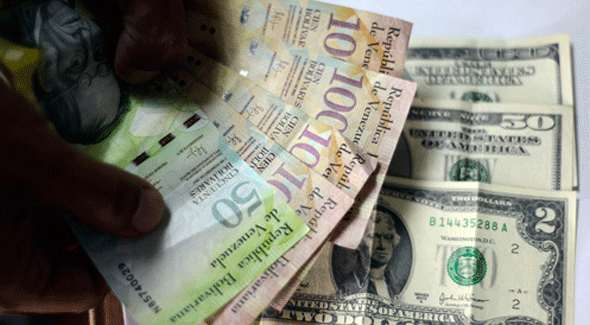
Compounding the impact of price controls are equally stringent restrictions on foreign currency. As Chávez’s domestic policies crippled purchasing power and caused inflation to skyrocket, businesses turned to foreign reserve currencies, like U.S. dollars, to remain viable. But the Venezuelan government severely limits the supply of dollars, depreciating the value of private currency reserves and preventing companies from importing the goods that Venezuelans need. It typically takes between 180 and 250 days for foreign currency to be delivered, putting an additional strain on the balance sheets of both Venezuelan businesses and private citizens.

Add in the effects of a recent labor law, which forbids employers from laying off any worker who does not agree to resign, and the situation for business in Venezuela is indeed bleak. Chávez has succeeded in marginalizing the free market in Venezuela. The socialist utopia that he promised would follow, however, has failed to materialize.

Even as the rest of the world slowly emerged from the global recession of 2008, Venezuela’s economy decelerated. Unemployment tops eight percent (even after counting informal workers such as street venders). Inflation, currently at 22 percent, has soared. Venezuela sits atop the world’s largest proven oil reserves, yet the state-owned oil company PDVSA continually operates under capacity and in the red. An election-year spending binge has left the government drowning in debt, and without adequate resources to update Venezuela’s crumbling infrastructure.

In a tacit acknowledgement of its own failure, the government recently announced that it would devalue Venezuela’s national currency, the Bolivar, by nearly a third. After hearing the news, regular citizens raced to the streets to purchase anything they could find before the devaluation crippled their purchasing power still further. Private businesses quickly did the numbers as well, predicting even more losses in 2013. For example, Colgate-Palmolive expects an after-tax loss of approximately $120 million, while Halliburton anticipates a $30 million related charge.

The government announced the devaluation without warning, clearly hoping it would go unnoticed by a nation still fixated upon their president’s illness. Try as they may to scapegoat the private sector, the fact remains that this is precisely the society that the revolutionaries betted on. Their top lieutenants can no more ignore the consequences of their own actions than wish their ailing president back to health.

Recent reports indicate that Chávez has now returned to Venezuela, where his condition has not improved. No one knows for sure what will become of Chávez. His country, however, stands at a crossroads. And the eyes of the world will be watching.

To read this article at the Huffington Post, please click here.

 
Jan
18
2013
Posted by
admin
Comments

ICYMI: 5 Ways Hugo Chavez has Destroyed the Venezuelan Economy

ABC News
January 17, 2013
By Stephen Keppel

ap chavez military uniform wg ICYMI: 5 Ways Hugo Chavez has Destroyed the Venezuelan Economy

Courtesy of: Associated Press

It is unclear if Venezuelan president Hugo Chavez will make a full recovery from his most recent surgery in Cuba. Whatever happens, he always stirs a lot of passions. Certainly that is the case when thinking of what his lasting legacy in Venezuela will be.

On the left he is seen as a socialist hero who broke the Venezuelan “oligarchy” and defended the country against the “American Empire.” On the right he is the socialist anti-Christ who “brought Afghanistan to South America.” But perhaps one of the simplest ways to judge his reign, is to remove the politics and look closely at his economic record.

Take gross domestic product, or GDP. In that case the record is certainly mixed. There was strong economic growth from 2004 to 2008 but GDP fell in 1999, 2002, 2003, 2009 and 2010. From the time Chávez took office in 1999 to 2011 Venezuela’s economy grew by an average of 2.8% per year. During this same period Latin America as a whole grew by 3.3% per year and Brazil grew by 3.4% per year.

Others will argue that we must judge Chavez on his record of reducing poverty and inequality. According to the UN’s Economic Commission for Latin America, the percentage of the population living under the poverty line in Venezuela fell from 49.4% in 1999 to 27.8% in 2010. That is a pretty good record but there were similar trends across Latin America. In the region as a whole poverty dropped from 43.8% in 1999 to 31.8% in 2010. A few countries, like Peru, Brazil and Panama, faired even better than Venezuela. Poverty rates in Peru dropped sharply from 54.7% in 2000 to 31.3% in 2010—all three have solidly capitalistic economies.

Inequality has declined in Venezuela but it has across other parts of Latin America as well particularly in Brazil, Chile and Colombia.

When you take a closer look at the entire economy, and where Venezuela is headed, the record is not a good one. Here are five major ways that Chavez has really undone the Venezuelan economy:

1. Venezuela has gone from being dependent on oil to being extremely dependent on oil.

Former minister Gerver Torres points out that in 1998 oil represented 77 percent of Venezuela’s exports but by 2011 oil represented 96 percent of exports. That means today only around 4 percent of the goods that Venezuela exports are non-oil products! The Venezuelan economy relies almost exclusively on the price of oil and the ability of the government to spend oil revenues. This will take years to reverse because of item two below.

2. The Chavez government has crippled private businesses and national industry through expropriations and nationalizations.

The Chavez government has expropriated or nationalized numerous companies (no one seems to be able to count them all) involved in various sectors including aluminum, cement, gold, iron, steel, farming, transportation, electricity, food production, banking, paper and the media. The number of private companies in industry has dropped from 14,000 in 1998 to only 9,000 in 2011, according to Torres.

Companies need investment to grow and hire new workers. One of the biggest failures of the Chavez government has been to drive away both domestic and foreign investors. In 2011 Latin America enjoyed a record of more than $150 billion in foreign investment with Brazil receiving $67 billion. Venezuela’s neighbor Colombia received $13 billion while Venezuela received only $5 billion. To avoid expropriation and find investment a number of Venezuelan companies have moved to Colombia, Panama and the United States.

3. The Venezuelan currency is a mess.

The new currency, the Bolivar fuerte, is anything but strong. The Bolivar fuerte has lost nearly two-thirds of its value since it was launched in 2008. Many analysts expect Venezuela will have to go through a painful devaluation sometime this year or next. This will further reduce the value of wages and sharply increase the costs of imports of basic staple goods. Life will get tougher for most Venezuelans but Chavez probably won’t be around to see it.

4. Prices in Venezuela have gone up by 23 percent a year for more than ten years.

Inflation in Venezuela has averaged 23 percent during 1999-2011 compared to a Latin American average of 4.6 percent. Imagine what life would be like if the price of groceries went up 23 percent every year. This craziness combined with stringent price controls has completely distorted the economy, creating black markets and shortages. In 2012 Venezuela will again have one of the highest inflation rates in the world.

5.Under Chavez Venezuela has become one of the most violent countries on the planet.

The murder rate per 100,000 citizens has risen from 25 in 1999 to 45.1 in 2011. This is not an economic stat per se but violence has an economic impact. It is more challenging and dangerous than ever to do business and go to work in Venezuela. When you consider these points, it’s hard to call the economic legacy of Chavez and his band of 21st Century Socialists a good one.

To read this article on ABC News, please click here.