Jun
11
2013
Posted by
admin
Comments

ICYMI: Looking for toilet paper in Venezuela? There’s an app for that

Financial Times
June 10, 2013
By Benedict Mander

venezuela toilet paper reuters 1200 ICYMI: Looking for toilet paper in Venezuela? There’s an app for that

Courtesy of: Reuters

It turns out that President Nicolas Maduro thinks that the plan to introduce food rationing in Zulia, Venezuela’s most populous state, is “crazy”.

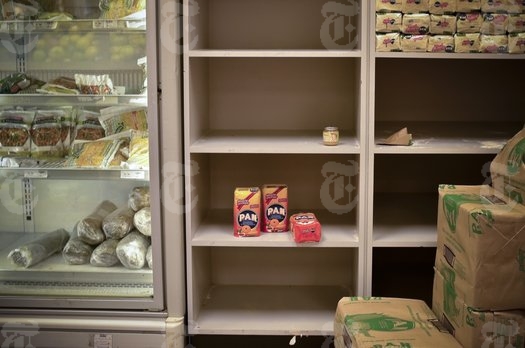
Regardless of whether he always thought that, or whether, perhaps, the increasingly unpopular president was responding to widespread rejection of the plan, he’s right – it is not the way to put an end to the problem of shortages that has become so acute that someone has even invented an app to help Venezuelans locate specific goods they are having difficulty finding.

Maduro was also right when he said that “the answer to our problems is to produce more”.

Let’s just forget for the moment that in saying this he was rather undermining the Zulia governor, Francisco Arias Cardenas, who had denied that the scheme even amounted to rationing in the first place, and that in fact it was aimed at preventing smuggling (if you wanted to do something about that, you probably wouldn’t produce more, but instead perhaps try and do something about the irresistible arbitrage opportunities in Colombia thanks to Venezuela’s price controls, or at the very least introduce stronger controls on the border).

Let’s also ignore the fact that the government has already put in place another rationing scheme in Zulia, for petrol, which by Maduro’s logic ought probably be pretty “crazy” too. Again, officials insist the idea is to prevent gasoline contraband, which is indeed rife in Zulia since it is magnificently profitable – some suggest it is an even bigger business in Venezuela than the cocaine trade.

In any case, increased production would certainly go a long way to solving Venezuela’s shortages problem. Ideally it would be an increase in the production of the goods that are scarce, especially food, but increased oil production might do too, as crude exports could provide the dollars needed to import more. This would probably be more practical in the shorter term, given the problems Venezuela has producing just about anything that is not oil (although that is not to say state oil company PDVSA does not have serious challenges of its own).

The problem is that, in the current conditions, Venezuelan businesses are unlikely to start producing much more. In order for this to happen, a lot needs to change: for starters, the business climate must improve, and that includes doing something about price and currency controls, something which Maduro has shown no signs of doing. And don’t expect state companies to pick up the slack – the government is even said to have seriously considered the offer of Venezuela’s largest private company, Polar, to help run underperforming state-owned food processing plants.

The app that aims to help Venezuela’s long-suffering shoppers, known as Abasteceme (or Supply Me) and which uses Google Maps and “crowdsourcing” to enable users to notify one another where a certain product is for sale, has so far only been downloaded 12,000 times. It is a scheme that promises to be infinitely more successful than Zulia’s still-born rationing plans.

To read this article at Financial Times, please click here.
 
May
13
2013
Posted by
admin
Comments

With the Economy in Dire Straits, Maduro Scapegoats a Beloved Venezuelan Company

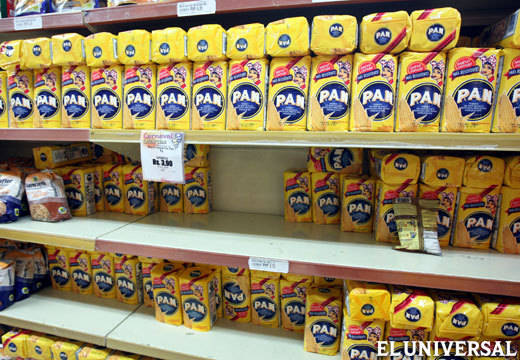
pan0.jpg.520.360.thumb  e1368469039817 With the Economy in Dire Straits, Maduro Scapegoats a Beloved Venezuelan Company

Courtesy of: El Universal

Nicolás Maduro and his socialist government cannot claim that they were not warned. Economists have long predicted that a Venezuelan economy propped up by excessive borrowing and an unsustainably high oil market would collapse spectacularly. Hugo Chávez, his cancer kept at bay just long enough to secure reelection, spent enough borrowed money in his final months to postpone the crash until Maduro had taken control. But the reckoning was inevitable. Now Maduro, eager for a scapegoat, is intensifying his attacks on the private sector, taking aim at Venezuelans’ most beloved company: Empresas Polar.

Polar is a pillar of the Venezuelan economy, producing staple goods from cornflour to household supplies and the nation’s most popular beer. Maduro issued his latest threat against the company on Saturday, when he accused the company of economic “sabotage” and demanded company President Lorenzo Mendoza to appear before the government to “explain the situation.” It was the latest in a series of escalating rhetoric against Polar, and a disturbing sign that Maduro refuses to learn the lessons inflicted on Venezuelans by years of failed socialist policies. Mendoza is scheduled meet with Vice-president Jorge Arreaza on Monday and with Maduro on Tuesday.

In a press conference held on Monday before the scheduled meetings, Mendoza addressed Maduro’s statements. He noted that Polar’s cornflour brand, PAN, operates at 100 percent capacity, but has only a 48 percent stake in the Venezuelan market, making it impossible to meet the country’s full demand. Thus far this year, Polar has produced 10 percent – 15,000 tons – more than last year. The remaining 52 percent of the market is comprised primarily of government-owned businesses, which are producing at less than 40 percent of their capacity. In response to Maduro’s accusation of “hoarding,” Mendoza stressed that Polar simply cannot hoard products to begin with since every step of the production and distribution process is regulated by government overseers.

As economists have noted, the shortages and inflation Maduro blames on the private sector are in fact caused by the government’s own policies. Rampant expropriations, price controls and other heavy-handed policies have harmed business and left farmland idle, sapping more than 11 percent from the country’s gross domestic product between 2005 and 2010.

Inflation is soaring, the nation’s debt continues to mount, and a currency devaluation has crippled Venezuelan’s purchasing power. As What’s Next contributor Joel Hirst observed, the economic crisis has left Maduro in the “awkward position of blaming Venezuela’s hobbled private sector for the failure of his own socialist policies.” The Central Bank’s scarcity index for Venezuela, which measures the percentage of goods unavailable in the market, rose to its highest number since it began tracking in April, 2009.

The facts, of course, could not be clearer. The company persevered under the yoke of Chávez’s policies, and continues to provide the goods Venezuelans need even as government controls force Polar and other companies to operate at a loss. These private companies are Venezuela’s best hope for brighter economic days; Maduro, in a desperate bid to save his own political skin, has chosen to marginalize them even further. It is ordinary Venezuelans, however, who will suffer the consequences.

 
Apr
10
2013
Posted by
admin
Comments

ICYMI: Draft Law in Venezuela Is the Private Sector’s Death Knell

Joel Hirst is a democracy activist and a Principal at Cordoba Group International. He is a regular What’s Next Venezuela contributor.

741686 525 380 w e1365617072329 ICYMI: Draft Law in Venezuela Is the Private Sectors Death Knell

Courtesy of: The New York Times

The Huffington Post
April 8, 2013
By Joel Hirst

On April 4, acting Venezuelan President Nicolas Maduro announced he had uncovered a “conspiracy” to destabilize the government in order to lend support to his opponent in the upcoming elections, Miranda Governor Henrique Capriles Radonski.

Maduro told supporters the plot was undertaken by Empresas Polar, a global food and beverage manufacturer and processor that happens to be one of the largest and best known brands in Venezuela. Maduro alleged that Polar has plotted to create a situation of “unrest, shortages, hoarding and speculation.”

He ended his comments with an overt threat, telling Polar that “everything in life has its time.”

For Venezuelans, this is just a typical day of anti-capitalist bombast from a leader working hard to channel recently deceased President Chávez. But a new legislative proposal quickly moving through that country’s National Assembly gives new force to that country’s ‘socialist’ government’s war on the private sector.

Venezuela’s proposed Law Against Monopolies and Other Similar Practices grants the government the broad discretion and unchecked power to single out and nationalize the few remaining large companies in the country — a sanction for what the Venezuelan government calls anti-competitive behavior. Assembly leaders have announced the law will move through the assembly with “parliamentary urgency.” A procedural vote was already held and the common committee review will be expedited.

While the world remains fixated on President Hugo Chávez’s recent death, and the upcoming presidential election to chose his successor, this so-called monopoly law continues to progress slowly through the Assembly. Passage would legitimize the government’s extensive and arbitrary power over the Venezuelan private sector.

The bill departs from internationally accepted terms for anti-competitive behavior focused on market share, instead calling for a vague definition of an entity’s “economic space,” an amorphous term whose meaning the government will then define according to their own agenda. If passed, Chávez’s successor will be granted unprecedented power over the private sector — even more than was wielded by President Chavez and his arbitrary nationalizations.

The proposed law creates a new commission, the National Superintendent Against Monopolies and Similar Practices (SUNAM), to be chaired by a presidential appointee. SUNAM would have the power to confiscate resources and materials at will. Moreover, it states that any company in violation of the new law can be expropriated. Because the SUNAM would lack oversight, this law would subject so-called “illegal” businesses to an arbitrary state takeover with no chance for appeal or independent review. Any attempt to challenge expropriations would die inside Venezuela’s judiciary, which is completely controlled by the executive.

Though the bill has progressed largely under the radar, experts and the political opposition have taken notice and are denouncing the law. Vestalia Sampedro, a Deputy in the Venezuelan National Assembly,states that the law will only further extend the government’s control over the economy, extending the socialism that has not worked. Jorge Botti, the President of the Venezuelan Federation of Chambers of Commerce notes that the bill’s broad language means that even small businesses who succeeded by developing quality products and successful marketing strategies may not escape the government’s reach.

And all the while, the Venezuelan economy continues to worsen. The number of private companies in Venezuela has already declined by 36 percent from 1998. Price controls and the recent currency devaluation have worsened already-high unemployment, crippled Venezuelans’ purchasing power and exacerbated the shortages that now plague the country. Venezuelans already struggle to find basic necessities like chicken and corn. These economic policies have crippled vital industries like medical care as well. As of January, pharmaceutical shortages stood at 40 percent — a number which will only rise if the government acts on proposals to enforce price controls on medications as well. And with legislation like this monopoly law in the pipeline, few private investors would even consider bringing their capital to Venezuela.

While expropriations in Venezuela have become so common that they rarely even make news, in point of fact they are still illegal and unconstitutional. With the passage of this legislation, while remaining unconstitutional they would become ‘legal’ (a paradox that only those who follow Venezuela closely understand). Should acting President Maduro win, this would leave the country’s private sector in danger of extinction. Venezuela’s companies are already needlessly harassed and intimidated by the government, and the country’s economy has suffered as a result. This law, which the Assembly hopes to pass while the world looks the other way, would make matters far worse.

To read this article at the Huffington Post, please click here.