Feb
13
2013
Posted by
admin
Comments

ICYMI: Venezuela’s Devaluation has China written all over it

Foreign Policy
February 12, 2013
By Juan Nagel

xin 36203042716504212722961 e1360786862231 ICYMI: Venezuelas Devaluation has China written all over it

Courtesy of: Getty Images

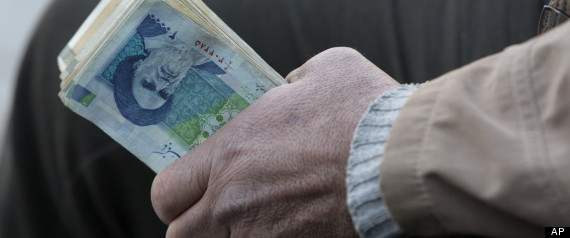
In a widely expected move, the Venezuelan government announced last Friday that it would devalue its currency by 32 percent. The Venezuela Bolívar (BsF) will now trade at 6.3 BsF per U.S. dollar, up from 4.3 BsF per dollar. This costly move was probably influenced by events that took place halfway around the world, in Beijing.

The first question a casual observer might ask is why the government needed to devalue. The answer is simple, and it relates to the peculiar role the state plays in Venezuela’s economy.

The government-owned oil monopoly is the only significant exporter in the country, and thus is also the only supplier of hard currency into the market. Since 2003 (and following a long tradition that dates to Chávez’s predecessors), the Venezuelan state has set the price of the dollar far below the market price as a way of subsidizing everything the country imports, which includes pretty much everything. Since most of its spending is in the local currency, the price at which it sells its petro-dollars determines much of the government’s income. In effect, Venezuela’s currency regime and its fiscal policy are one and the same.

Selling dollars at below-market prices is tremendously costly for the state, which last year ran a record-setting deficit of 15 percent of GDP. Even though it cut spending immediately after the October presidential elections in order to reduce the deficit, further cuts may prove politically costly, considering Venezuela will likely hold another presidential election in the coming months, pending Chávez’s health.

A more pressing problem the government is facing is the scarcity of basic food staples, as evidenced by a recent video showing consumers scrambling for chicken in a supermarket that quickly went viral.

Importers realized that cheap dollars were on their way out. Currently, dollars are being sold on the black market at 21BsF per dollar. Therefore, if you are a businessman or a government bureaucrat lucky enough to nab a few greenbacks, you have every incentive to sell them in the black market instead of using them to import the goods you were supposed to be importing. This creates a situation whereby dollars assigned to import basic staples are used for financial arbitrage — causing a shortage of everyday items. Ordinary Venezuelans also instinctively understand the relationship between the dollar and their personal economics, and demand for dollars typically shoots up when they suspect that a devaluation is in the pipes. As if on cue, immediately after this latest devaluation, Venezuelans flocked to electronics stores and airlines agencies to buy whatever they could that was still priced at the old dollar rate.

By devaluing, the government is lowering the budget deficit, which still lies at a hefty 5.3 percent of GDP, according to estimations by the Bank of America. Narrowing the gap between the official and black market exchange rate lessens the incentive to engage in arbitrage instead of importing goods, which may ameliorate the scarcity problem.

However, the move will prove costly. This measure alone means Venezuelan real wages have fallen, in terms of dollars, and inflation is sure to shoot up. One is left wondering what other options the government had but failed to enact.

This is where the Chinese angle comes in.

In the last few weeks, reports have surfaced that the Chinese, the main underwriters of last year´s enormous fiscal deficit, are growing frustrated with their Venezuelan counterpart; they are in no mood to continue lending to the government, and felt that Venezuela sacrificed productive investments for cheap pre-electoral spending. In spite of this, reports surfaced that Venezuela is asking China for more cash.

Last week, newly-appointed Foreign Minister Elías Jaua traveled to Beijing, returning with a vague statement that the Chinese ratified their interest “in continuing to cooperate with Venezuela” and that President Xi Jinping sent “a hug” to Hugo Chávez.

Too bad, because he wasn’t sent to Beijing to fetch “hugs.” What Jaua did not say is that he failed to secure new funding from China — and this may have triggered the move to devalue.

As I have already argued, Venezuela is like a Ponzi scheme: Continued returns to lenders rely on getting fresh new funding. Once the funding dries up, the losses begin to accumulate.

After last week’s devaluation, it looks like the loss is borne on the backs of ordinary Venezuelans, who woke up earning less and paying more for practically everything.

To read this article at Foreign Policy, please click here.
 
Feb
8
2013
Posted by
admin
Comments

In Case You Missed It…Articles Roundup Week of 2/8/13

92073vencemos e1360359042638 In Case You Missed It...Articles Roundup Week of 2/8/13

Courtesy of: TalCual

This week: Questions emerge as a former Iranian official is caught in Germany with an undeclared check worth around $70 million in Venezuelan currency; oddly, the Venezuelan government then accuses the opposition of corruption, as doubts grow that “chavismo” will survive without President Hugo Chávez; the anniversary of Chávez’s failed coup in 1992 calls into question who is actually in control of Venezuela; and foreign minister Elías Jaua visits China seeking further loans as shortages continue to frustrate consumers. The Economist Intelligence Unit considers Caracas, Venezuela the most expensive city in the Americas by; in the two months since Chávez’s last public appearance, shortages of staple foods continue to pile up throughout Venezuela; and the state-owned oil company Pdvsa receives more money from the Central Bank, adding more bolivars into circulation and thus boosting inflation. Lastly, after slamming the idea of spending cuts during election season, Chávez’s government moves to enact spending cuts to delay a currency devaluation; the increasing political and economic uncertainties facing Venezuela continue to impact global markets; and Venezuelan officials find over 100 firearms and 8,000 rounds of ammunition inside the Uribana prison, where a deadly riot last month killed 58.

Iran Official Probed on Undeclared Check, The Wall Street Journal

Germany is investigating a former head of the Iranian Central Bank for smuggling after customs officials seized what they said was an undeclared $70 million check he was holding from a Venezuelan state-run bank.

Venezuela rivals trade blows on corruption, Financial Times

The Venezuelan government has accelerated a mud-slinging campaign to discredit the opposition, accusing it of corruption, as doubts grow that the socialist revolution can survive without President Hugo Chávez to lead it.

On Venezuela’s coup anniversary, the big question: Who’s in control?, The Dallas Morning News

Today is the anniversary of Hugo Chavez’s failed 1992 coup attempt against then-President Carlos Andres Perez. Chavez was an army lieutenant colonel at the time of the coup, and he was responsible for deaths and blood spilled in his attempt to subvert democracy and seize power by force.

Venezuela Foreign Minister Jaua in China For More Loans as Shortages Bite at Home, Latin American Herald Tribune

Venezuela Foreign Minister Elías Jaua Milano is in Beijing holding meetings with his counterpart of the People’s Republic of China, Yang Jiechi, as well as Senior Communist Party of China (CPC) leader Yu Zhengsheng, seeking further loans as shortages of goods caused by a lack of foreign currency as well as price controls continue to frustrate consumers in the oil rich Latin American nation.

Caracas, Venezuela Is Most Expensive City In The Americas, Says Economist Intelligence Unit, The Huffington Post

Caracas, Venezuela is the most expensive city in the Americas and the 9th-most expensive in the world, according to the Economist Intelligence Unit. The Venezuelan capital jumped 25 spots from last year, according to CNN.

Venezuela’s economy: Out of stock, The Economist

IT IS now two months since Venezuelans last saw or heard from their president, Hugo Chávez, who remains in intensive care in a high-security Havana hospital, battling what seems to be terminal cancer. But it is an absence of a different kind that is uppermost in many people’s minds

Pdvsa’s higher funding to central bank spurs inflation, El Universal

In a forum organized by the Venezuelan-American Chamber of Commerce (VenAmCham), Pedro Palma, an economist and a professor at the Higher Business Studies Institute (IESA), remarked that since Venezuela’s state-owned oil company Pdvsa receives more funds from the Central Bank of Venezuela (BCV), there are more bolivars in circulation, thus boosting inflation.

Chavez Enacts Cuts He Once Slammed to Delay Devaluing, Bloomberg News

Hugo Chavez coasted to re-election last year warning Venezuelans that a victory for the opposition would lead to a “giant package” of spending cuts.

Venezuela faces increasing political and economic uncertainty, FTSE Global Markets

Due to Venezuela’s President Hugo Chavez being unable to attend the inauguration for his next presidential term originally scheduled to take place on Thursday, January 10 because of his seemingly terminal cancer, Venezuela faces a period of heightened political and economic uncertainty.

Uribana Prison Arsenal: Guns, Ammo Found In Venezuela After Deadly Riot, Official Says, The Huffington Post

Venezuelan officials found 106 firearms and more than 8,000 rounds of ammunition inside a prison following a riot last month that killed 58 people, nearly all of them inmates, the country’s top prison authority said Thursday.

 
Feb
7
2013
Posted by
admin
Comments

Mysterious Check Reignites Controversy over Iran-Venezuela Relationship

r TAHMASB MAZAHER CHECK large570 e1360253117979 Mysterious Check Reignites Controversy over Iran Venezuela Relationship

Courtesy of: Associated Press

Controversial ties between two countries hostile to the United States reemerged on Saturday when a former Iranian official was caught in Germany with a sizable check from a Venezuelan bank. The German newspaper Bild am Sonntag first reported that German officials are investigating Tahmasb Mazaheri, Iran’s former central bank chief and economy minister, for smuggling after he was caught with an undeclared check worth approximately $70 million.

Upon his arrival from Turkey on January 21, Mazaheri was stopped and searched by German customs officials at the Dusseldorf airport. A check for 300 million Venezuelan Bolivars issued by the state-run Bank of Venezuela was found in his luggage.

According to customs authorities, visitors entering any of the European Union countries must declare incoming amounts above $13,580. Failure to disclose the funds is a civil offense punishable by a fine of up to $1 million. German authorities have not yet disclosed to whom the check was directed and are expected to decide later this month whether to press charges. In the meantime, local and international concern has emerged, sparking questions about how a former Iranian official ended up with a check of such a significant amount – in Venezuelan currency.

Iran’s ambassador to Venezuela, Hojattolah Soltani, told the Venezuelan media that the check was going to pay the expenses of the Kayson Company, an Iranian construction business that builds public housing for the Venezuelan government. According to the ambassador, Kayson has a contract to build approximately 10,000 low-income housing units. However, it remains unclear why Mazaheri misled German officials; declaring he was traveling with less than $13,580. When questioned by customs authorities, he failed to provide adequate explanation of the purpose and recipient of the funds, leading to further skepticism. Soltani claimed Mazaheri did not declare it because the check was not for him and was not destined for a German bank.

Reports confirm that Mazaheri has returned to Tehran, as officials launch an inquiry into possible impropriety and determine whether to return the check. But the controversy has given rise to the possibility that Venezuelan banks are helping Iran evade the economic sanctions imposed against it as a result of its nuclear development program. According to sources, the discovery has prompted a further investigation by the international community into the ties between the Venezuelan financial system and Tehran.

Such actions mirror the ongoing U.S. investigations into some of the largest European banks for violating sanctions against Iran. The investigations resulted in billions in fines between 2010 and 2012.

Members of the Venezuelan opposition alleged that the Kayson Company is on Canada and the United Kingdom’s list of undesirable companies, largely due to its links with illegal businesses.

United by their public condemnation of the U.S., Iran and Venezuela have built a strong alliance since Iranian President Mahmoud Ahmadinejad assumed office in 2005. They have reportedly signed over 70 joint venture agreements in housing, agriculture and energy, among other areas. The deals are valued at up to $17 billion, though neither country has much to show in terms of progress.

Mazaheri was personally involved in one of those projects back in 2008, when he became president of the International Development Bank (IDB), opened in Caracas as an independent subsidiary of the Export Development Bank of Iran (EDBI). Nine months after its opening, the U.S. Treasury Department imposed economic sanctions on both entities for financing Iran’s nuclear programs.

Citing the irresponsible handling of funds money by the Venezuelan government, the country’s opposition is demanding an explanation. Venezuelan officials have yet to comment on the matter. And with Hugo Chávez’s condition unknown to any except his Cuban medical team – now two months after his cancer surgery – the world remains wanting for answers.