Nov
12
2012
Posted by
admin
Comments

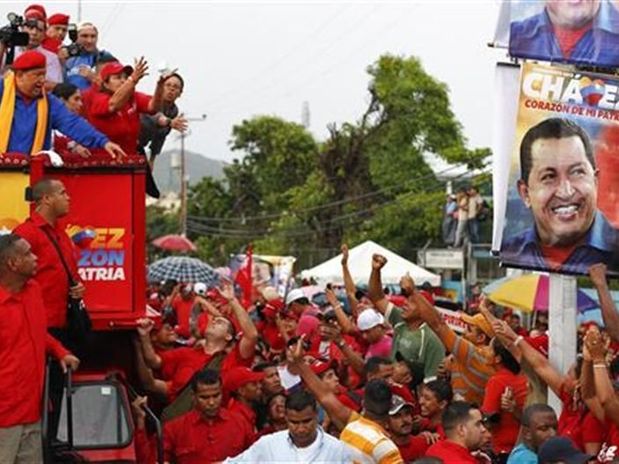
Having Secured a Third Term, Chávez pushes Commune System

chavez Having Secured a Third Term, Chávez pushes Commune System

Courtesy of: Reuters

On the night of his reelection, Hugo Chávez said in his acceptance speech that he planned to advance his vision of “21st century socialism” in the next term of his presidency. Now, just one month later, it has become clear that the plan involves the massive expansion of the “commune” system, which experts say is a plot to diminish the power of the opposition.

Communes are a standard feature of the socialist model of government. Chávez touts them as essential to his agenda, as he claims they will give people the power to manage their own resources. But many believe that his renewed interest in them – following an election in which he was victorious by a narrower margin than ever before – is not as ideological as he claims. Instead, many characterize the push for communes as motivated by a desire to reclaim power for his own party on the state and local levels.

To date, Chávez has attempted to weaken the power of state and municipal authorities merely by withholding the share of the national budget they are guaranteed by the constitution. He’s effectively accomplished this by significantly underreporting oil revenue, which limits the amount paid to municipal leaders, many of which are his political foes. But the commune proposal now on the table has been criticized as an offensive to further destabilize the country’s pluralist constitution and decimate any remaining shreds of capitalism.

The implementation of communes could prove disastrous for the opposition by absorbing and ultimately diminishing much of the power of mayors and governors. Already, as part of its most recent budget proposal, Chávez’s party proposed a far greater increase (37 percent) in the amount of funding going to the communes than to either the state or municipal governments (22 and 23 percent, respectively). A logical next step could potentially involve the assignment of the few remaining political responsibilities from local authorities to the communes.

In 2007, the people of Venezuela rejected an amendment to the constitution that would have provided for the legal establishment of the communes. However, in December of 2010 the National Assembly passed the Enabling Law, which granted the president broad authority to mandate by decree following the flooding that left approximately 100,000 Venezuelans homeless. The law gave Chávez unchecked power for eighteen months, through which he created a ministry charged with setting up the communes. However, creation of communes had stalled until October 20 – just 13 days after his reelection – when he urged the National Assembly to implement of the Communes Law.

But implementation has been slow because the act is unconstitutional. It illegally changes the very nature of Venezuela’s government by shifting responsibilities from democratically-elected local officials to a central authority. According to the constitution, the deadline has passed for making such dramatic changes this year.

If realized, millions of Venezuelans would be affected by these changes. By the numbers, Chávez is looking to grow the communes at a record-breaking pace: 3,000 between 2013 and 2019 at the rate of 450 per year. Ultimately this will incorporate more than 21 million citizens – nearly 68 percent of the country’s population. By consolidating local power into the communes, the president is ensuring that these Venezuelans are largely controlled by the central government – not their locally elected officials.
 
Oct
25
2012
Posted by
admin
Comments

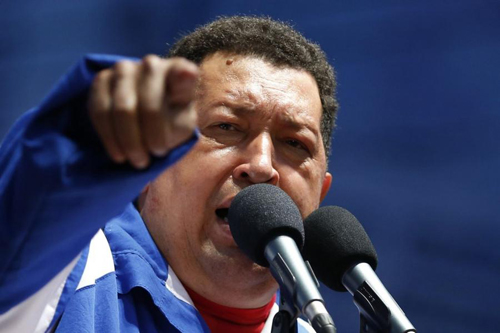
Venezuelan Assembly Considers New Media-Control Law

hugo chavez Venezuelan Assembly Considers New Media Control Law

Courtesy of: Reuters

Having secured reelection, Hugo Chávez has signaled his intention to pivot back to his most extreme socialist policies. After presenting a more moderate face as a candidate, Chávez has pledged to deepen his socialist revolution as president. The pace of expropriations slowed in the politically crucial months before Oct. 7, but now the administration promises to begin nationalizing private companies with renewed vigor. Just weeks after his victory, even the remaining trace of Venezuela’s independent media, already one of the most harassed, has been put on notice.

The Chávez-friendly National Assembly appears set to approve legislation that extends the government’s strictest information-control requirements to cable TV. Previously the most severe restrictions – enshrined in the Ley Resorte law – applied only to broadcast television stations. These entities were required to abide by content requirements and to air Chávez’s “cadena” addresses at a moment’s notice. The Assembly’s proposed law would extend these restrictions to Venezuela’s private cable stations as well.

This legislation, which includes the Orwellian proposal to ensure “the enforcement of cultural information,” could deal a blow to Venezuela’s scant remaining free media. In addition to forcing stations to broadcast cadenas, the law would also limit the amount of “foreign” content aired on Venezuelan cable stations, infringing on Venezuelan TV viewers’ ability to get news or commentary from sources outside the country. Carabobo state Rep. Miguel Cocchiola, a member of the opposition, calls the law “a tool [for the government] to enhance communication hegemony.”

During the election, Chávez’s abuse of his cadena power was well documented, as it allowed him to saturate Venezuela with campaign propaganda and interrupt coverage of Capriles campaign events. Meanwhile, the Capriles campaign was forced to pay for airtime, while many noted that compiling the resources needed to match the reach of the state media would have been an impossible task. According to the watchdog group Transparency International, Chávez used cadenas for more than 87 hours during the campaign.

Such attacks on free media are nothing new for Chávez’s “21st Century Socialism,” which militates against the free economy and free media alike. From the closure of the popular network RCTV to the constant fines and sanctions levied against Globovision, Chávez has systematically censored, harassed or otherwise silenced privately-owned media outlets he deems critical of his persona or government.

Multiple watchdog groups have affirmed that independent media remain an endangered species in the country. Since 2005, defamation of the president has been punishable by six to 30 months in prison. Mr. Chávez has revoked the broadcast license of at least 240 radio stations – nearly 50 percent of all radio stations in the country – perceived as critical of the government. Today, Chávez controls at least two national radio networks, six television channels, 72 regional television stations, four newspapers and over 600 radio stations across the country.

As expected, news coverage on government-owned television is far from balanced. According to a report from the Wall Street Journal, during the last week of September – just days before the Oct. 7 election – government news channel VTV dedicated 18 hours of coverage to Chávez. Its tally for Mr. Capriles was 30 minutes.

 
May
29
2012
Posted by
admin
Comments

ICYMI: Venezuela’s PDVSA oil company is bloated, ‘falling apart’

USA Today
May 28, 2012
By Peter Wilson

Venezuela oil company bloated falling apart MB1I24FL x ICYMI: Venezuelas PDVSA oil company is bloated, falling apart

La Victoria, Venezuela — Beatriz Rodriguez sits in a long line under a sweltering sun, waiting for state oil company Petróleos de Venezuela to deliver cylinders of natural gas she uses to cook her family’s meals.

She and her neighbors haven’t had gas for two weeks, and her patience is running out.

“I complained, and they told me I should use firewood,” Rodriguez, a mother of three, fumes. “Firewood, they told me. And we’re supposedly an oil power.”

Venezuelan President Hugo Chávez points to the state takeover of his country’s oil industry as one of his revolution’s great successes. He boasts that his renegotiation of oil agreements made by his predecessors has improved oil production and allowed Venezuelans to guide the direction of its major export.

New discoveries have pushed Venezuela, which was the USA’s fifth-largest crude supplier last year, to No. 1 in the world for proven oil reserves.

Exploration of Venezuela’s 21,000-square-mile Orinoco belt shows that its oil deposits exceed the proven reserves of even Saudi Arabia. But critics claim that the there’s no telling much of the oil will ever make it out of the ground. They say Chávez is diverting profits toward social spending rather than investing in Venezuela’s energy production.

Chávez’s “Socialism for the 21st century” policies have included the confiscation of foreign-owned facilities and the bloating of state oil company Petróleos de Venezuela S.A., or PDVSA, with patronage hires. As his election approaches, some experts believe mismanagement of Venezuela’s oil could be the issue that derails Chávez’s hold on power.

“The lack of direction, investment and maintenance are wrecking the oil and natural gas industries,” says Jose Bodas, secretary general of the FUTPV, one of the country’s largest oil unions. “PDVSA is falling apart.”

Oil and petroleum products account for about 95% of Venezuela’s exports and contribute more than a third of its GDP. Petrodollars also fuel Chávez’s socialist spending.

But reliance on oil revenue has led to the abandonment of other economic sectors. Much tillable farmland remains idle amid attempts by Chávez to increase food output, and Venezuela continues to import two-thirds of its food. Chávez uses oil revenue to subsidize the cost of the imported food, but shortages of basic goods are not unusual .

Chávez has also used the oil wealth to underwrite artificially low domestic gasoline prices of 11 cents a gallon, which is among the cheapest in the world.

Chávez, who has been undergoing cancer treatments in Cuba, says PDVSA is running better than ever. Upon the recent drilling of a new well, he posted an online message May 3 to Oil Minister Rafael Ramirez: “Venezuela, an oil power! Doing well, Rafael and PDVSA. Congratulations and onward.”

Critics charge that the president is destroying the company by packing it with loyalists rather than qualified personnel. PDVSA’s payroll has more than doubled to 115,000 employees since Chávez took office in 1999, and debt has risen 10-fold since 2006 to $34 billion.

Those increases have seemingly accomplished little: Venezuela’s oil production has dropped more than 25% since 1998 to its current 2.4 million barrels a day, according to OPEC.

Accidents plague the company’s operations as well, causing frequent shutdowns of PDVSA’s four domestic refineries and blamed in the deaths of 67 workers since 2004.

Oil spills increased about 70% to 4,052 incidents in 2011, according to the PDVSA annual report released in April. A major oil spill, one of several, cut off drinking water to the eastern city of Maturin for more than six weeks earlier this spring. Venezuela now finds itself importing components for production for natural gas and gasoline.

Ramirez, the oil minister who also heads PDVSA, did not respond to requests for an interview about the charges. Venezuela’s inability to develop its energy resources is the result of Chávez shifting PDVSA’s focus from petroleum and natural gas to politics. Instead of investing at home, the firm has poured resources into energy projects in countries that are Chávez’s international allies, such as Cuba, Bolivia and Nicaragua.

At home, the firm has been put to work implementing Chávez’s many social programs. Last year, PDVSA said in a preliminary report that it invested an estimated $27 billion in social programs, compared with $15 billion in energy projects. Plans to build natural gas complexes, new refineries and boost production have been pushed aside.

“Chávez has used PDVSA to implement government’s policies,” says Luis Oliveros, an oil professor at the Central University in Caracas. “It’s now engaged in housing construction and pig farming. Not surprisingly, the company has lost its vigor.”

Making matters worse, PDVSA’s social contributions aren’t open to public scrutiny, and may be wracked by corruption.

“PDVSA is running on autopilot right now,” says Pietro Pitts, an analyst at Caracas-based Latin Petroleum. “I have no idea where they are spending their money.”

Development of the country’s extra-heavy-oil belt, or Faja, is symbolic of the problems Chávez has caused. The belt has an estimated 235 billion barrels of crude the consistency of tar that needs to be refined to lighter blends before being exported. Five years ago, Chávez seized four joint ventures in the Faja, a decision that led ExxonMobil and ConocoPhillips to pull their operations out of the country.

Since then, production in the Faja has stalled, and new projects have been slow to get off the ground. Part of the problem is that PDVSA needs to build refineries to upgrade the oil. Each upgrade costs billions of dollars, and PDVSA’s new partners — including state oil companies from Cuba, Belarus, Vietnam and Uruguay — don’t have the capital or expertise.

Chávez’s opponent in October elections, Miranda state governor Henrique Capriles Radonski, has made Venezuela’s oil industry an issue.

Capriles Radonski, who trailed Chávez by about 13 percentage points in recent polls, has promised to make the company more efficient and return it to its core oil and natural gas businesses. He has also pledged to revise alleged sweetheart deals between PDVSA and Cuba, China and others.

“Petróleos de Venezuela can’t be used as a political institution,” he said after winning a primary to become the opposition candidate. “We have to have a more efficient management.”

That call resonates with many in the country, including Rodriguez. Tired of waiting for deliveries of natural gas, she finally bought an electric hot plate. Three days later she couldn’t use it when the state power company began programmed blackouts in her neighborhood as part of electricity rationing.

“I can’t win,” she said. “What good is being rich in oil if we have to go through this?”

To read this article on USA Today, please click here.