Oct
26
2012
Posted by
admin
Comments

In Case You Missed It… Articles Roundup Week of 10/26/12

gold In Case You Missed It… Articles Roundup Week of 10/26/12

Courtesy of: El Universal

Last Sunday, former Venezuelan Vice President Elias Jaua visited Fidel Castro in Cuba, stating he “is doing very well” amidst speculation over his health. Despite Venezuela’s withdrawal from the Inter-American Court on Human Rights, it continues to hear human rights cases against the government; now that the Venezuelan presidential race is over, the pace of housing construction has slowed remarkably in Caracas. Meanwhile, Venezuela’s crime rate soars as Caracas has become one of the hemisphere’s most violent cities amid declining poverty; NGOs call for a debate on the government’s proposed cable TV regulation, which would restrict content and limit government criticism on cable networks in Venezuela. Recently, the World Bank’s “Doing Business” report ranked Venezuela 180 out of 185 countries among those most difficult for investment; the IMF confirms gold sales made by Venezuela’s central bank in August, leaving bullion reserves at 362.05 tons; the opposition criticized electoral authorities for allowing pro-Chávez candidates to switch voting districts to run in different states in the December gubernatorial elections. Lastly, a resolution by the Venezuelan Ministry of Education establishes education councils charged with bringing up “a new citizenship” in Venezuela’s youth. The councils have been criticized as being used by representatives of Chávez’s party to deepen his socialist revolution within the educational system.

Castro ‘doing very well,’ Venezuelan politician says, CNN

Havana (CNN) — Fidel Castro “is doing very well,” Venezuela’s former vice president said Sunday, showing reporters a snapshot of the former Cuban leader that he said was taken the day before. Speculation has surged over Castro’s health in recent weeks.

Despite Venezuela’s withdrawal, IACHR still hears cases against it, El Universal

If the government was under the impression that by initiating its withdrawal from the Inter-American Court on Human Rights that organization would cease their probes into cases involving Venezuela, it was wrong, as evidenced by the fifteenth ruling against the nation.

Sluggishness of housing works, El Universal

The frenzied pace of most government works is now in the past after the presidential election, as verified in a tour by El Universal. The construction pace plunged in a complex of more than one thousand dwellings on the Los Leones bridge, La Paz, west Caracas.

Venezuela crime soars amid declining poverty, Al Jazeera

Caracas, Venezuela – With some 19,336 murders last year, Caracas has become one of the western hemisphere’s most violent cities and one particular criminology expert had a front row seat the other day, experiencing the overwhelming insecurity first-hand when robbers stuck a gun in his face as he rode home on the bus.

NGO calls for debate on cable TV regulation in Venezuela, El Universal

Representatives from several organizations belonging to the NGO Monitor Legislativo (Legislative Monitor) discussed the upcoming Venezuelan legislative agenda.

Spending Jumps 33% in Venezuela’s 2013 Budget Proposal, Fox Business

Mr. Giordani presented to Venezuela’s national parliament the annual budget proposal, which set expenditures at VEF396.4 billion bolivars, or just over $92 billion at the official exchange rate.

Venezuela among the countries with more obstacles to investments, El Universal

Venezuela is among the countries featuring more obstacles for opening a business, according to a study prepared by the World Bank entitled “Doing Business 2013.”

IMF confirms gold sales made by Venezuela’s central bank in August, El Universal

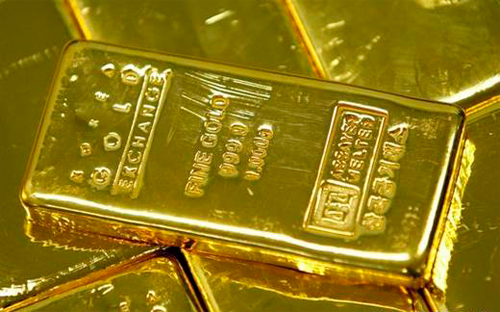
Venezuela sold 3.73 tons of gold bars in August, thus leaving its bullion reserves at 362.05 tons, according to figures disclosed by the International Monetary Fund (IMF), Reuters reported on Thursday.

Venezuela opposition criticizes movement of pro-Chavez candidates between voting districts, Fox News

CARACAS, Venezuela – Venezuelan opposition leaders complained Thursday that electoral authorities allowed some candidates allied with President Hugo Chavez to switch voting districts and run in different states in December’s gubernatorial elections.

Minister: education councils aim to bring up “the new citizen” in Venezuela, El Universal

Resolution 058 of the Venezuelan Ministry of Education provides for the establishment of education councils in the basic education subsystem. Such councils intend to bring up “a new citizenship,” which involves providing “integral education for the new man and woman, for the new republican,” according to Venezuelan Minister of Education Maryann Hanson.

 
Sep
13
2011
Posted by
admin
Comments

ICYMI: Chávez Exiting Global Forum?

Chávez Takes Steps to Exit Global Forum
The Wall Street Journal
By José De Córdoba

President Hugo Chávez of Venezuela has taken steps to pull out of the global forum most used to settle investor disputes, where Caracas faces more than $40 billion in claims for nationalized properties.

Documents show that Mr. Chávez, shown in August, is moving to avoid financial sanctions from abroad.

Venezuelan officials have drawn up plans, at Mr. Chávez’s order, to withdraw from the International Centre for the Settlement of Investment Disputes, or ICSID, a unit of the World Bank in Washington, according to recent documents reviewed by The Wall Street Journal.

A withdrawal would be the latest in a series of actions Mr. Chávez has taken to protect Venezuela’s international assets from possible seizure by foreign governments and now, perhaps, creditors. Last month, Caracas announced it would transfer $6 billion in cash reserves held in European and U.S. banks to Russian, Chinese and Brazilian banks. Mr. Chávez also said he would move some 211 tons of gold valued at $11 billion held in foreign banks to Venezuela’s Central Bank vault in Caracas.

Venezuelan government documents say the main reason for those actions was to avoid financial sanctions by the international community, such as those that have frozen billions of dollars of Libyan government funds under Moammar Gadhafi’s Libyan regime.

Analysts peg Mr. Chávez’s fears to the possibility Venezuela could have to pay billions of dollars in compensation from companies that have had assets expropriated, or that future unrest in Venezuela could lead to international sanctions.

Venezuela’s withdrawal from the ICSID also would fit well the nationalistic bent that has led Mr. Chávez to expropriate 988 companies, 401 so far this year, according to Conindustria, a Venezuela industry chamber.

“It’s pure demagogy,” said Roberto Dañino, a former head of the ICSID. “Venezuela would like investors to submit themselves to national tribunals where there are no guarantees or due process.”

The Venezuelan Embassy in Washington declined to comment. Lawyers at Arnold & Porter LLP and Curtis, Mallet-Prevost, Colt & Mosle LLP, the two principal firms that Venezuela uses to defend itself from claimants at the ICSID, declined to comment.

A Venezuelan foreign ministry official said the country wasn’t considering withdrawing from ICSID now, though he acknowledged meetings on the subject had been held. Another Venezuelan official countered that the move was, in fact, now being debated by high-ranking officials.

Lawyers familiar with ICSID procedures say a Venezuelan withdrawal wouldn’t have any impact on the 18 claims that Venezuela now faces at the World Bank unit. For starters, it would only take effect six months after notice is given to the center, said Dietmar W. Prager, a lawyer with the New York firm of Debevoise & Plimpton LLP who has represented investors with ICSID disputes with Venezuela.

Further, bilateral investment treaties bind Venezuela to ICSID arbitration for a period, depending on the treaty, from between 10 to 15 years after the cancellation of an agreement, according to lawyers and Venezuela’s own documents.

“The Venezuelans can’t say I’m taking my marbles and going home,” said Michael Nolan, a lawyer at the Washington office of Milbank, Tweed, Hadley & McCloy LLP, who has represented clients with Venezuelan claims at the ICSID.

Eventually, the government papers say, Venezuela’s goal is to replace ICSID with a dispute-settlement mechanism that would fit within the framework of Latin American integration groups such as the Bolivarian Alliance for the Americas or the Union of South American Nations, which were either founded by or heavily influenced by Caracas.

“It may be a combination to play to the balcony and make Chávez appear as a regional leader leading an attempt to gut the international investment protection system,” said James Lloyd Loftis, who heads law firm Vinson & Elkins’s international dispute resolution practice.

A withdrawal would send an unfriendly signal about Venezuela’s policy towards foreign investment, Mr. Prager said. To be sure, foreign investors have already gotten the message, as foreign companies have been taking more assets out of the country than they have been putting in it. Foreign direct investment was a negative $3.1 billion in 2009 and a negative $1.4 billion in 2010, according to the United Nations Conference on Trade and Development.

At ICSID, companies lining up to seek compensation from Venezuela range from oil giants to gold mining companies, and include some of the world’s largest cement manufacturers. ConocoPhillips by far has the largest claim. The oil company wants to recover $30 billion in compensation for stakes in two projects in the Orinoco heavy oil fields, according to Reuters. Another oil giant, Exxon Mobil Corp., has cut its claim for compensation to $7 billion for Mr. Chávez’s 2007 seizure of a heavy crude project from an initial $12 billion, Venezuela said last year. An Exxon spokesman declined to comment.

Mexican cement maker Cemex and Swiss cement maker Holcim are seeking compensation for Mr. Chávez’ seizure of their plants in 2008 as part of the Venezuelan government nationalization of the country’s cement industry.

Holcim recently reached a $650 million settlement with Venezuela. The Swiss company has temporarily suspended its legal action depending on whether Venezuela complies with the terms of the settlement, said a person knowledgeable about the case. Cemex’s action is ongoing.

This year, Crystallex, a Canadian gold miner, filed an action seeking $3.8 billion in compensation for the government’s unilateral termination of a giant gold mining project. A spokesman for Crystallex said the company’s legal action wouldn’t be affected if Venezuela were to withdraw from ICSID.

Since 2007, Mr. Chávez has publicly contemplated a pullout from the ICSID. Some of his closest allies have already left. Bolivia pulled out in 2007 and Ecuador followed suit in 2009. Lawyers familiar with arbitration disputes say their withdrawal from ICSID pullout has not had any noticeable impact on claims against the two countries.

Venezuelan documents show that withdrawing from the ICSID would only start a complex and difficult process. Caracas would have to renegotiate bilateral investment protection treaties with 23 nations, including European countries to allies including Iran and Russia.

 
Apr
6
2011
Posted by
admin
Comments

In Anti-Business Venezuela, U.S. Companies Carry an Added Burden

By Francisco Toro of CaracasChronicles

Does Venezuela single out U.S. companies seeking to do business there for worse-than-usual treatment?

At first glance, it might seem like a churlish question. After all, Venezuela ranks 172nd out of 183 countries – and dead last in Latin America – in the World Bank’s Ease of Doing Business Report. Even Haiti, Zimbabwe and Uzbekistan ranked better than Venezuela in the Bank’s report. In terms of investor protection and easing access to credit, Chávez’s Venezuela does even worse, ranking 179th and 181st respectively. The same study finds that, in 2010, Venezuela boasted the most rapidly deteriorating business environment in the world.

Where standard treatment of businesses in general has fallen to such abysmal levels, it takes some doing to treat those from a given country even worse than the rest. Yet, that’s arguably what Venezuela has managed to do to U.S. investors.

In a political climate where the government blames most problems – real or imagined – on the evils of capitalism, no one’s property is safe. But, even among the prevailing hostility towards the private sector, U.S. firms are repeatedly singled out.

American businesses in Venezuela carry the burden of association with the government’s favorite bogeyman: U.S. capitalism. Stable brands, such as McDonald’s and Coca-Cola, are continuous targets of harassment and government intervention. In 2008, both U.S. companies faced 48-hour punitive shut-downs over alleged accounting irregularities that neither was given a chance to refute in a formal setting.

A State Department imposed ban on exports to Venezuela of U.S. weapons – in place since 2006, – has led Venezuela to seek weapons elsewhere. The measure eliminates a potential leverage point for U.S. diplomacy, which may come in handy in advocating for U.S. companies.

Venezuelan businessmen seeking protection from Mr. Chávez’s nationalization binge have been hurriedly exploring ways to register their companies as Spanish. Like Brazil, Canada, Peru and several other countries, Spain signed a bilateral investment protection treaty with Venezuela over a decade ago. The treaty gives Spanish firms a measure of diplomatic representation if and when they become targets of the Venezuelan government. Beyond that, Venezuela’s increasing reliance on Spanish firms for, among other things, naval procurement and electric plants has created a deep bond of interdependence that, at times, serves as somewhat of a “break” on the Venezuelan government’s excesses.

The tangible results of such cooperation are plain to see. For example, when the ownership stake of Spain’s Banco Santander in Banco de Venezuela was a target for forceful acquisition by the State, the Spanish owners were generously compensated, by about $1.05 billion. Moreover, this compensation figure was agreed to quickly, within a year of the takeover announcement, sparing Santander the uncertainty that has plagued similar negotiations with enterprises from other countries.

No sane Venezuelan businessman would consider registering in the United States for diplomatic advantage. Because there is no bilateral investment protection treaty between Caracas and Washington, American firms slated for a State takeover in Venezuela are left to fight their own battles against a deeply hostile government. In those cases, compensation is seldom generous and never agreed to quickly.

In the most well-known case – the government’s takeover of ExxonMobil and ConocoPhillips operations in the Orinoco Belt in 2006 are to this date under negotiation, dragging on for the better part of half a decade. The arbitrators from the World Bank’s International Center for the Settlement of Investment Disputes (ICSID) are not expected to hand down a final settlement agreement any time soon.

That said, a bilateral investment protection treaty does not entirely shield foreign investors in Venezuela, as Swiss cement maker Holcim found out in 2008 when its Venezuelan operations were taken over by the Chávez government despite a 1994 bilateral investment protection treaty. Unable to settle matters with Caracas, Holcim was forced to go to the ICSID. The Swiss company eventually settled its claim privately in 2010 for a relatively modest $650 million. Plenty of other firms from countries allegedly protected by investment protection deals – from Britain’s Vestey Group to Argentina’s Ternium – have faced long, uncertain compensation processes after rushed, unilaterally-decided State takeovers.

In final analysis, the Chávez government has gone out of its way to make Venezuela uncommonly hostile to foreign investors. From exceptionally cumbersome labor regulations to major hurdles in the foreign exchange of currency, Chávez’s policies have resulted in the near total collapse of foreign investment in Venezuela. Under such circumstances, businesses can hardly afford one more competitive disadvantage, but no enterprise is worse off than that with a “Made in USA” label.