Aug
26
2013
Posted by
admin
Comments

ICYMI: Chavez’s Inflation Bites His Successor

Wall Street Journal
August 25, 2013
By Mary O’Grady

OB YQ920 amcol0 G 20130825120857 e1377534741885 ICYMI: Chavez’s Inflation Bites His Successor

Courtesy of: European Pressphoto Agency

Hyperinflation and political witch hunts seem to go together. Just ask the Venezuelan opposition.

With the bolivar collapsing and prices spiraling higher, the government alleged this month that its No. 1 adversary, former presidential candidate Henrique Capriles, is linked to a prostitution ring that was using minors in the state of Miranda, where he is governor.

Lest that not be enough to turn Venezuela’s socially conservative working-classes against the popular Mr. Capriles, a leading congressman from the ruling United Socialist Party of Venezuela (PSUV) used gutter talk on the floor of the national assembly to accuse the governor of homosexuality.

Don’t suppose for a minute that this mudslinging is merely about destroying Mr. Capriles. The ruling chavistas, led by President Nicolás Maduro, need a circus because there is no bread—and that’s not a metaphor. At times in Venezuela, there really is no bread. Earlier this year there was, for a time, no toilet paper. Mr. Maduro knows he is in trouble.

The “proof” of the allegations against Mr. Capriles’s chief of staff, who is accused of running the sex ring, cannot be shown to the public, according to Mr. Maduro. He says that the “videos and photos” that the government confiscated in a raid are of “un-publishable orgies.” Venezuelans will have to use their imaginations while trusting the courts—now controlled by the military government—and the government itself to get to the bottom of it all. Developments will be reported on television, which is almost exclusively state-controlled and where most Venezuelans get their news.

Mr. Capriles has said that the allegations are an attempt to distract the population from the real problems in the country. The charges are certainly well timed. An official 46% devaluation in April took the bolivar-to-dollar exchange rate to 6.3 from 4.3. Those who actually need dollars are unlikely to get them at that rate. Instead they have to go to the black market, where one greenback costs as much as 38 bolivars, up from 22 in March.

The government forecasts that inflation will hit 40% this year. But Johns Hopkins University economist Steve Hanke, director of the Cato Institute’s Troubled Currency Project, says that the soaring cost for the bolivar in the market translates into an implied annual inflation rate of more than 250%.

Earlier this month Caracas-based economist José Manuel Puente described the perfect storm to the Los Angeles Times this way: “The slowdown in economic growth, high and persistent inflation and high levels of scarcities [of basic foodstuffs] will combine to make Venezuela’s the worst-performing economy on the continent, despite the extraordinary oil boom that the country is still benefiting from.”

A mid-July survey by the Venezuelan polling company IVAD, posted on the website lapatilla.com, suggests Mr. Maduro is having no luck dodging the blame like his predecessor Hugo Chávez did so deftly. Asked what are the principal problems facing the country, almost 82% of respondents named crime. More than 53% also pointed to shortages. The scarcity is caused by the price controls that the government is using to try to hold down inflation. Those controls could explain why only 31% named “the high cost of living.”

But more than 65% said the economic situation was worse or much worse than one year ago, and more than half blamed either the national government or Mr. Maduro for the country’s problems.

Because the allegations against Mr. Capriles by the PSUV included a pejorative term for a homosexual, gay-rights groups took offense. But Venezuela’s homosexuals needn’t feel special. Hate speech as a political tool has been common practice in Venezuela’s military government for more than a decade. Catholics, Jews, entrepreneurs and the bourgeoisie have all been on the receiving end.

Mr. Maduro, coached as he is by Fidel Castro, immediately recognized that gay rights are a priority for many members of the international left. So in the aftermath of the impolitic comments by his colleague in Congress, he quickly seized a gay-pride flag to wave while he continued his verbal assaults against Mr. Capriles.

Political nonconformists regularly singled out by chavista politicians for ridicule and acrimony won’t get off so easily. This week Mr. Maduro is expected to try again to force through congress an “enabling law” that will allow him to rule by decree.

Opposition Congressman Richard Mardo has already been stripped of his congressional immunity and is slated for trial on corruption charges. Other opponents are being investigated. The Venezuelan daily El Nacional reported this month that more than one third of congressional sessions in the first half of the year were spent “harassing the opposition,” including with physical violence.

The goal is to drum up mass hysteria against opponents. Apparently Mr. Maduro has decided that if inflation cannot be contained, Mr. Capriles and his allies will be.

To read this article at Wall Street Journal, please click here.
 
Nov
28
2012
Posted by
admin
Comments

ICYMI: Chavez’s return to Cuba for treatment rattles Venezuela

Reuters
November 28, 2012
By Andrew Cawthorne and Jeff Franks

chavez returns to cuba 300x200 ICYMI: Chavezs return to Cuba for treatment rattles Venezuela

Courtesy of: Reuters / Jorge Silva

Venezuelan President Hugo Chavez flew into Cuba on Wednesday for cancer-linked medical treatment that revived questions about the viability of his socialist rule and left Venezuelans again guessing about his exact condition.

After weeks of scarce public appearances, Chavez, 58, announced in a letter on Tuesday that he was going to Havana for therapy known as “hyperbaric oxygenation” – a method used to reduce bone decay caused by radiation therapy.

Communist Party daily Granma confirmed his arrival in Cuba.

In Havana, Chavez enjoys the friendship of past and present Cuban leaders Fidel and Raul Castro, plus guaranteed privacy on the tightly controlled Caribbean island.

Venezuelans, who have been endlessly speculating about Chavez’s cancer since it was discovered in mid-2011, were not sure what to make of the latest twist – debating whether it was normal post-radiation treatment or a serious downturn.

“I really don’t know what he has,” Chavez’s cousin, Guillermo Frias, told Reuters from the president’s rural hometown state Barinas. “But anyway, I always pray for him every night. I stop at a shrine on the corner and always remember him.

“I hope he recovers fine. I’m sure he will. The election campaign was tough for him. He went too far.”

Though he had declared himself cured, Chavez appeared exhausted at the end of his successful presidential re-election bid in October. He later admitted radiation had taken its toll.

“INVISIBLE MAN”

The normally garrulous and omnipresent leader has made only a few, relatively short public appearances, mainly on state TV, at his presidential palace since his October 7 win. One opposition newspaper dubbed him “The Invisible Man”.

Unlike multiple past trips to Cuba, during treatment for three operations on two tumors in his pelvic area, state TV did not show images of Chavez departing or arriving this time.

Chavez has an open-ended authorization from Congress to travel, but aims to be back at least for the January 10 start of his new term, if not for a couple of regional summits before.

His absence leaves newly appointed Vice President Nicolas Maduro, 49 – a former bus driver and union leader – in a prominent position amid speculation among Venezuelans over who could replace Chavez should he leave power.

Congress head Diosdado Cabello, a former military comrade of Chavez’s, also is frequently touted as a possible successor to lead the ruling Socialist Party. Under the constitution, an election would have to be held if Chavez leaves office within the first four years of his new six-year term.

Chavez’s return to Cuba overshadowed the buildup to state elections on December 16, where the opposition aims to overcome disappointment at the presidential loss to make inroads.

A prolonged absence could potentially postpone major policy decisions, such as a widely expected devaluation of the bolivar currency after heavy pre-election state spending.

After removal of a first cancerous tumor, Chavez wrongly declared himself cured in late 2011. He again pronounced himself cancer-free in mid-2012 after removal of a second tumor.

BONDS RISE

The hyperbaric oxygenation therapy, or HBOT, he was due to receive involves breathing pure oxygen in a pressurized chamber.

In addition to the bone-weakening side effects of radiation on cancer sufferers, experts say HBOT is used to treat conditions including infections, abscesses and decompression sickness – or the “bends” – that can afflict deep sea divers.

Nelson Bocaranda, a prominent pro-opposition journalist, said Chavez had been suffering intense pain in his bones and waist area of late, forcing him to rest and take pain-killers.

In his widely read “Rumors” column on Wednesday, Bocaranda published a supposed medical report from Havana’s Cimeq hospital, with a relatively uninflammatory diagnosis.

“It’s a matter of giving him therapy for pain and stabilization so he has a better quality of life,” said the report, which could not be confirmed.

“His physical state is normal; loss of weight reasonable; high tension constant; abdominal nausea and pains; good emotional state but with variable depression; tolerable pain thresholds and reaction to treatment applied. He’s rested in recent days and had little pressure from government functions.”

Venezuelan officials, who frequently decry Bocaranda as a gossip and liar, gave no details of Chavez’s health. One medical source with knowledge of Chavez’s treatment said the HBOT may last several months and was a common “palliative treatment.”

An opposition leader, Henry Ramos Allup, demanded transparency from the government. “The president’s illness is a matter of state. The country has the right to know how exactly how serious it is,” he said.

Given investor hopes for a more market-friendly government, Venezuela’s widely traded bonds not surprisingly have risen.

On the streets, there was both solidarity and skepticism concerning Chavez.

“He exploited this thing of going to Cuba during the election campaign,” motorbike taxi driver Omar Rivas, 55, said, noting the wave of sympathy Chavez received in the past.

“That man doesn’t have anything. He was never sick.”

Teacher Ana Maria Garcia, 26, had a kinder reading.

“I don’t understand what he has, but I hope he recovers quickly. He’s a winner,” she said.

(Additional reporting by Mario Naranjo and Diego Ore; Editing by Bill Trott)

To read this article on Reuters, please click here.

 
Oct
26
2012
Posted by
admin
Comments

In Case You Missed It… Articles Roundup Week of 10/26/12

gold In Case You Missed It… Articles Roundup Week of 10/26/12

Courtesy of: El Universal

Last Sunday, former Venezuelan Vice President Elias Jaua visited Fidel Castro in Cuba, stating he “is doing very well” amidst speculation over his health. Despite Venezuela’s withdrawal from the Inter-American Court on Human Rights, it continues to hear human rights cases against the government; now that the Venezuelan presidential race is over, the pace of housing construction has slowed remarkably in Caracas. Meanwhile, Venezuela’s crime rate soars as Caracas has become one of the hemisphere’s most violent cities amid declining poverty; NGOs call for a debate on the government’s proposed cable TV regulation, which would restrict content and limit government criticism on cable networks in Venezuela. Recently, the World Bank’s “Doing Business” report ranked Venezuela 180 out of 185 countries among those most difficult for investment; the IMF confirms gold sales made by Venezuela’s central bank in August, leaving bullion reserves at 362.05 tons; the opposition criticized electoral authorities for allowing pro-Chávez candidates to switch voting districts to run in different states in the December gubernatorial elections. Lastly, a resolution by the Venezuelan Ministry of Education establishes education councils charged with bringing up “a new citizenship” in Venezuela’s youth. The councils have been criticized as being used by representatives of Chávez’s party to deepen his socialist revolution within the educational system.

Castro ‘doing very well,’ Venezuelan politician says, CNN

Havana (CNN) — Fidel Castro “is doing very well,” Venezuela’s former vice president said Sunday, showing reporters a snapshot of the former Cuban leader that he said was taken the day before. Speculation has surged over Castro’s health in recent weeks.

Despite Venezuela’s withdrawal, IACHR still hears cases against it, El Universal

If the government was under the impression that by initiating its withdrawal from the Inter-American Court on Human Rights that organization would cease their probes into cases involving Venezuela, it was wrong, as evidenced by the fifteenth ruling against the nation.

Sluggishness of housing works, El Universal

The frenzied pace of most government works is now in the past after the presidential election, as verified in a tour by El Universal. The construction pace plunged in a complex of more than one thousand dwellings on the Los Leones bridge, La Paz, west Caracas.

Venezuela crime soars amid declining poverty, Al Jazeera

Caracas, Venezuela – With some 19,336 murders last year, Caracas has become one of the western hemisphere’s most violent cities and one particular criminology expert had a front row seat the other day, experiencing the overwhelming insecurity first-hand when robbers stuck a gun in his face as he rode home on the bus.

NGO calls for debate on cable TV regulation in Venezuela, El Universal

Representatives from several organizations belonging to the NGO Monitor Legislativo (Legislative Monitor) discussed the upcoming Venezuelan legislative agenda.

Spending Jumps 33% in Venezuela’s 2013 Budget Proposal, Fox Business

Mr. Giordani presented to Venezuela’s national parliament the annual budget proposal, which set expenditures at VEF396.4 billion bolivars, or just over $92 billion at the official exchange rate.

Venezuela among the countries with more obstacles to investments, El Universal

Venezuela is among the countries featuring more obstacles for opening a business, according to a study prepared by the World Bank entitled “Doing Business 2013.”

IMF confirms gold sales made by Venezuela’s central bank in August, El Universal

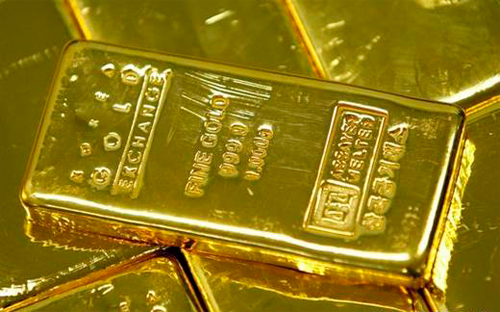
Venezuela sold 3.73 tons of gold bars in August, thus leaving its bullion reserves at 362.05 tons, according to figures disclosed by the International Monetary Fund (IMF), Reuters reported on Thursday.

Venezuela opposition criticizes movement of pro-Chavez candidates between voting districts, Fox News

CARACAS, Venezuela – Venezuelan opposition leaders complained Thursday that electoral authorities allowed some candidates allied with President Hugo Chavez to switch voting districts and run in different states in December’s gubernatorial elections.

Minister: education councils aim to bring up “the new citizen” in Venezuela, El Universal

Resolution 058 of the Venezuelan Ministry of Education provides for the establishment of education councils in the basic education subsystem. Such councils intend to bring up “a new citizenship,” which involves providing “integral education for the new man and woman, for the new republican,” according to Venezuelan Minister of Education Maryann Hanson.