Apr
29
2013
Posted by
admin
Comments

ICYMI: US Filmmaker Held in Venezuela Sought to Show Political Divide, Friends Say

The New York Times
April 26, 2013
By María Eugenia Díaz and William Neuman
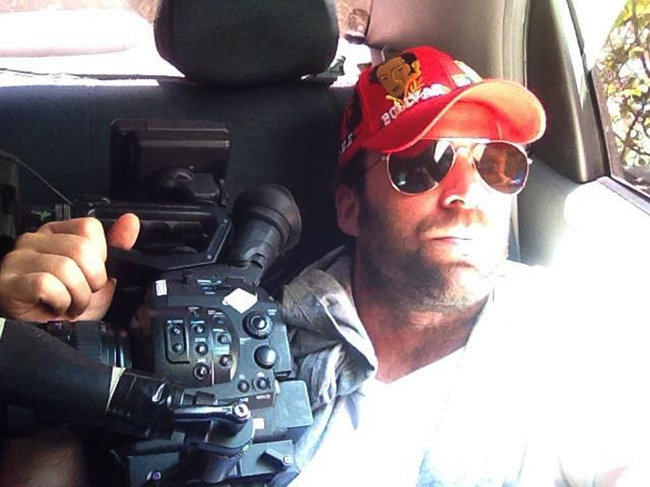
venezuela popup e1367259291482 ICYMI: US Filmmaker Held in Venezuela Sought to Show Political Divide, Friends Say

Courtesy of: Associated Press

CARACAS, Venezuela — Just a few weeks ago, Tim Tracy spoke of his time shooting a documentary in Venezuela as a rollicking adventure and a filmmaker’s dream. Now he is under arrest, accused by the Venezuelan government of a different kind of adventure: taking part in what officials here said was a plot to destabilize the country and incite a civil war.

The government said Friday that Mr. Tracy, an American citizen, would be charged with involvement in acts of violence after the April 14 presidential election. Mr. Tracy was arrested by the intelligence police on Wednesday at the international airport near Caracas as he was about to leave the country, the government said.

Mr. Tracy was originally identified in a report released by Venezuela’s Information Ministry as Timothy Hallett. Hallett is his middle name.

Interior Minister Miguel Rodríguez said Thursday that Mr. Tracy had training as a spy and was part of a conspiracy to set off a civil war.

But those who knew Mr. Tracy in Caracas and in the United States, including in Los Angeles, where he lived, described him as an innocent — or perhaps naïve — filmmaker who had sought to portray Venezuela’s bitter political divide, not take sides in it.

Mr. Tracy spent time with both opposition student protesters and hard-core supporters of former President Hugo Chávez “to show the two sides of the story he was filming,” said Tuki Jencquel, a Venezuelan filmmaker who became friends with Mr. Tracy.

“He always seemed to be very evenhanded in his work and neutral in relation to what was happening in Venezuela,” he said. “I don’t think there’s anything subversive about that.”

In a conversation with a New York Times reporter about a week after the March 5 death of Mr. Chávez, Mr. Tracy spoke enthusiastically about the months he had spent working on his film.

And he described himself as one of the most unlikely people to do so: an American with rudimentary Spanish who started out with virtually no knowledge of Venezuela or its politics. He seemed like a man on a lark.

Mr. Tracy said that he had made friends in one of the most pro-Chávez slums in Caracas, an area known as 23 de Enero, and in particular with a man who appeared often at rallies dressed up as the revolutionary Ché Guevara. He marveled at how he had won the man’s confidence, despite the government’s anti-American stance.

But he also sounded a note of concern, saying that the ersatz Ché stopped talking to him after Mr. Chávez’s death. The government expelled two military attachés from the American Embassy on the day Mr. Chávez died, claiming that they were trying to destabilize the country. Mr. Tracy said he wondered if the man had taken the government propaganda to heart and regretted their friendship.

He said he had also filmed opponents of the government, but he seemed most enthusiastic about his ability to break through the apparent barriers and get close to Chávez loyalists.

Mr. Jencquel said that Mr. Tracy had been detained twice before for filming, once at a Chávez rally and once at the presidential palace in Caracas. On Friday, after being allowed to visit Mr. Tracy, Mr. Jencquel said his friend told him he was innocent.

Mr. Tracy, 35, identified himself on LinkedIn, a professional networking Web site, as a director and producer who had been involved in a television series that appeared on the History Channel and a movie. He attended Georgetown University.

Mr. Rodríguez, the interior minister, said that Mr. Tracy had funneled money to student protesters who the government claimed were connected to postelection violence.

But student groups said on Friday that they had not received money from Mr. Tracy, and they denied involvement in violence. “It seems to me like a big farce on the part of the government to distract attention,” said Gaby Arellano, 26, who has taken part in the protests. She said that Mr. Tracy had interviewed her about her reasons for protesting.

Tensions in Venezuela have increased in the wake of the election, which Nicolás Maduro, Mr. Chávez’s heir, won by less than 2 percent. His opponent, Henrique Capriles Radonski, claims that Mr. Maduro stole the election, and he has demanded a recount.

After the election, Mr. Capriles urged his supporters to protest by marching in the streets and banging pots at home at night.

The government responded by claiming that Mr. Capriles was seeking to foment violence. It pointed to several people who were killed the day after the election, saying they were Maduro supporters murdered by members of the opposition.

But it has provided little hard evidence to back up the claims that the deaths were politically motivated. In one case, the father of a man who was shot dead said that his son was killed while taking part in a protest against Mr. Maduro’s victory, contradicting the government’s account.

It is typical of the government here to sometimes make wild claims about conspiracies without providing evidence. During the campaign, Mr. Maduro repeatedly warned of plots to kill him, and he said that foreign agents were entering the country to undermine the government.

In all of this, Mr. Maduro is sticking to the playbook of Mr. Chávez, who regularly warned of threats from the United States or suspected homegrown traitors.

Mr. Maduro has sent mixed signals in recent weeks about whether he hopes to improve his country’s rocky relationship with the United States, which is a major buyer of Venezuelan oil.

“We hope that many of these conspiracies and interventions by sectors of the C.I.A. and the Pentagon can finally be put behind us and we can have a relation with President Obama based on respect,” he said Thursday.

Patrick Ventrell, a State Department spokesman, said Friday that Mr. Tracy had no ties to any government agency. “The U.S. continues to categorically reject any allegations of U.S. government efforts to destabilize the Venezuelan government,” Mr. Ventrell said.

In a statement released Friday, Mr. Tracy’s parents said, “We believe a mistake has been made with the detention of our son Timothy by the Venezuelan authorities.”

To read this article at The New York Times, please click here.

 
Apr
12
2013
Posted by
admin
Comments

In Case You Missed It… Articles Roundup Week of 4/12/13

i6QvFtK66Hb8 e1365799638594 In Case You Missed It… Articles Roundup Week of 4/12/13

Courtesy of: Agence France Presse

This week: Interim president Nicolás Maduro, once ahead by double digits, takes a quickly narrowing lead into the presidential election weekend in Venezuela; though many thought he was a long shot, opposition candidate Henrique Capriles may indeed have what it takes to defeat Venezuela’s socialist establishment; this election presents the ultimate test for the late Hugo Chávez’s 21st century socialism, something that not lived up to its leaders’ promises; if elected, Capriles wants to improve ties with the United States and other nations. The campaign between Capriles and Maduro has been anything but boring; Maduro continues to churn out ridiculous conspiracy theories, in hopes they will deter attention away from the real issues Venezuela has faced under his and his predecessor’s leadership; Willie Colón, a Bronx-born salsa performer with Puerto Rico ties, releases a new song targeting Maduro; 40 student protestors participating in a hunger strike to promote a fair election were attacked by radical Chávez and Maduro supporters; to combat the increase of kidnapping cases, Venezuelans are banding together to create informal insurance societies to pay off ransoms; Capriles and Maduro end a hotly-contested yet short campaign season each with large rallies; a “reckoning” approaches for Venezuela, as the economy is set to suffer even more in the coming year; despite being one of the most oil rich countries on the planet, Venezuelans still struggle to find the most basic necessities; power shortages also remain a focus for Venezuelan voters, as many blame the current government for ignoring the problem and not taking the necessary steps to deal with the issue. Meanwhile, Maduro is poised to go after Venezuela’s most successful private company, Polar; the Venezuelan government continues to struggle against the inflation and shortages its economic policies have created; meanwhile, a new bill under consideration may increase expropriations and further marginalize Venezuela’s dwindling private sector.

Maduro Takes Narrowing Lead Into Sunday Vote, The Associated Press

Red-shirted backers of Hugo Chavez’s chosen heir transformed downtown Caracas into a raucous festival on the final day of campaigning for the weekend presidential election, flooding the streets Thursday in the hundreds of thousands to dance, drink beer and set off ear-splitting fireworks.

Can Henrique Capriles Defeat Venezuela’s Socialist Establishment?, ABC News

His presidential campaign has been viewed by many as a long shot, or described as an impossible dream. But on Sunday, as hundreds of thousands of people jammed the streets of Caracas to hear him speak, Venezuelan opposition candidate Henrique Capriles assured his ecstatic supporters that he would win the country’s upcoming election.

Venezuela election to test Chavez’s socialist legacy, Reuters

The late Hugo Chavez’s self-declared socialist revolution will be put to the test at a presidential election on Sunday that pits his chosen successor against a younger rival promising change in the nation he polarized.

Venezuela’s Capriles Wants Better Ties With U.S. If Elected President, Fox News Latino

Cutting off subsidized oil to Cuba, distancing his country from nations that disrespect human rights and shoring up the South American country’s own troubled economy with the billions it now sends abroad to socialist friends are some of the thing that Venezuelan presidential candidate Henrique Capriles has promised if elected.

Say again? Venezuela’s presidential candidates trade barbs, zingers in animated campaign, Fox News

Venezuela’s animated campaign ahead of its April 14 presidential election has seen its share of shake-your-head remarks by both candidates: Interim President Nicolas Maduro of the ruling party, and opposition candidate Henrique Capriles.

Plots and sabotage: Chavez candidate spins conspiracy theories ahead of Venezuelan election, The Washington Post

Salvadoran mercenaries are plotting with Venezuela’s opposition candidate to assassinate interim President Nicolas Maduro.

Star Hurls Musical Barbs Before Venezuela’s Vote, The New York Times

Political campaigns in Venezuela often can seem like a battle of the bands. Songs written for the campaigns blast from huge speakers at rallies and from the backs of trucks that drive around cities where candidates appear.

Radical Socialists Attack Student Protesters in Venezuela, ABC News

A group of 40 students that is currently on hunger strike to demand fair elections in Venezuela was attacked on Monday night by alleged supporters of Venezuelan interim president, Nicolas Maduro.

Venezuelan Ransom Funds Hedge Against Kidnaps as Candidates Spar, Bloomberg Businessweek

Venezuelans are banding together to create informal insurance societies to pay off criminals in case of kidnapping as violence soars and moves to the forefront of voters’ priorities before the April 14 presidential election.

Venezuela’s bitter campaign ends with big rallies, Global Post

Venezuela’s acting President Nicolas Maduro tearfully vowed to complete Hugo Chavez’s socialist revolution Thursday while rival Henrique Capriles promised change at emotional rallies to close their bitter campaign.

The reckoning after Venezuela’s election, The Washington Post

AN INTREPID Venezuelan tweeter has been keeping track of the number of times that Nicolas Maduro, the country’s interim president, has mentioned Hugo Chavez on television or radio since the caudillo’s death on March 5.

In Venezuelan election, food security – or lack thereof – can turn votes, USA Today

Venezuelans complain that what goes into their Sunday dinner plate comes from abroad: Steak, from Brazil; plantains, the Dominican Republic; rice, South Africa; Parmesan cheese, Uruguay; oats, Chile. Even coffee, in a country famed for it, often is Colombian.

Power Shortages Become a Hot Topic in Venezuela’s Presidential Race, ABC News

Venezuela’s interim president Nicolas Maduro launched his presidential campaign in Hugo Chavez’s home state of Barinas hoping that when voters head to the polls this Sunday they will identify him with the deceased socialist leader.

Venezuela goes after Polar, Financial Times

The Hugo Chávez years went well for Polar, Venezuela’s biggest privately owned company, which did solid business despite all the president’s radical socialist rhetoric.

Venezuela to Hold New Dollar Auction After Election This Month, Bloomberg

Venezuela will hold a second dollar auction on a complementary currency system created last month after presidential elections are held on April 14, Oil Minister Rafael Ramirez told reporters yesterday during an interview.

Draft Law in Venezuela Is the Private Sector’s Death Knell, The Huffington Post

On April 4, acting Venezuelan President Nicolas Maduro announced he had uncovered a “conspiracy” to destabilize the government in order to lend support to his opponent in the upcoming elections, Miranda Governor Henrique Capriles Radonski.