May
3
2013
Posted by
admin
Comments

In Case You Missed It… Articles Roundup Week of 5/03/13

ay 108972837 e1367612866751 In Case You Missed It… Articles Roundup Week of 5/03/13

Courtesy of: EPA

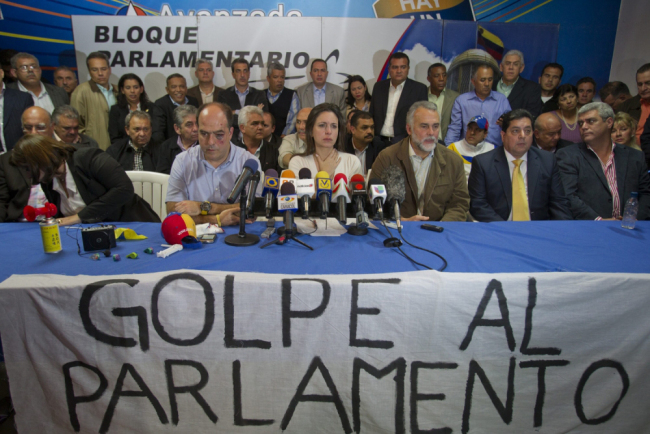
This week: Venezuela stumbles deeper into political chaos after a bloody brawl in Congress; Venezuela’s opposition asks for an investigation into the brawl on the floor of Congress that injured several of its lawmakers and caused at least one of them to undergo surgery; Venezuela’s government charges a US filmmaker for allegedly trying to incite anti-government violence and charges an ex-general for being critical of president Nicolás Maduro; and Maduro visits Cuba to meet with former leader Fidel Castro and re-pledge Venezuela’s allegiance to the island. The government begins a partial audit of the disputed election, though the opposition rejects the move as insufficient; unable to force a sweeping review of the disputed election, Venezuelan opposition supporters march on International Workers Day; opposition leader Henrique Capriles files a lawsuit in Venezuela’s Supreme Court to overturn the election, alleging fraud in the counting of ballots and voter intimidation; and Venezuelans become increasingly upset with daily power outages, growing food scarcities and a general fear of the government. Venezuelan debt remains severe as tensions continue to rise; homicides in Venezuela reach a record high in 2013, as nearly 58 are killed per day during the first four months of the year, highlighting a dire security situation amid political instability; and the sale of Globovisión, Venezuela’s sole television station critical of the government, hurts free speech in Venezuela even further.

Political Chaos Grips Venezuela After Legislative Brawl and Rival Marches, The New York Times

Venezuela stumbled deeper into political chaos this week as legislators brawled in the National Assembly and government supporters and opponents took to the streets for rival marches amid continuing tensions over the narrow election victory of President Nicolás Maduro.

Venezuela Opposition Wants Probe of Violence, The Associated Press

Venezuela’s opposition on Thursday asked prosecutors to investigate a brawl on the floor of congress that injured several of its lawmakers and forced at least one of them to undergo surgery.

Venezuela Charges U.S. Filmmaker, Arrests Ex-General, The Wall Street Journal

Venezuelan authorities brought criminal charges over the weekend against a U.S. filmmaker for allegedly trying to foment antigovernment violence, and arrested a retired Army general who has become a vocal critic of the government.

Venezuela’s New Leader Visits Cuba, Meets With Castro, The Wall Street Journal

Nicolás Maduro met with former Cuban President Fidel Castro in Havana on Saturday, an indication Venezuela’s new president will maintain the same close relations with the Communist island nation as that of his predecessor Hugo Chávez, who died last month after a battle with cancer.

Contentious Venezuela vote audit begins, AFP

Venezuela began a partial audit of the disputed election won by the late Hugo Chavez’s handpicked successor, as the opposition rejected the move as insufficient.

Venezuelan opposition protests vote, The Washington Post

Unable to force a sweeping review of last month’s disputed presidential election, opposition supporters marched in the streets Wednesday to demonstrate their fury at the ruling party’s efforts to blunt a recount.

Venezuelan Opposition Sues to Overturn Election, The Wall Street Journal

Venezuela opposition leader Henrique Capriles filed a lawsuit Thursday with the Supreme Court that seeks to overturn April’s presidential election, alleging fraud in the counting of ballots and pre-election voter intimidation.

Venezuelans on the Brink, Putting Up With Daily Outages, Growing Scarcity and Fear, Fox News Latino

There’s an old joke about the rabbi who explained to his congregants that Adam and Eve were the first communists, because they wore no clothes, had one apple between them, and thought they lived in paradise.

Venezuelan Debt Under Pressure As Tensions Rise, The Wall Street Journal

Abating a week ago, tensions in Venezuela are fast rising again, and it doesn’t bode well for the country’s debt.

Venezuelan Homicides Reach Record High In 2013, InSight Crime

Murders in Venezuela reached a record high of 58 per day during the first four months of the year, according to police figures contested by the government, highlighting a dire security situation amid political instability.

What the Sale of Venezuela’s Opposition TV Station Means for Free Speech, The Atlantic

Globovision is Venezuela’s last-remaining television station that is openly critical of the government of Hugo Chavez, (and his chosen puppet successor Nicolas Maduro) but on April 15, the majority shareholder Guillermo Zuloaga sold his portion to businessman Juan Domingo Cordero, sending both members of the opposition and some journalist rights groups into a frenzy.
 
Apr
29
2013
Posted by
admin
Comments

ICYMI: US Filmmaker Held in Venezuela Sought to Show Political Divide, Friends Say

The New York Times
April 26, 2013
By María Eugenia Díaz and William Neuman

venezuela popup e1367259291482 ICYMI: US Filmmaker Held in Venezuela Sought to Show Political Divide, Friends Say

Courtesy of: Associated Press

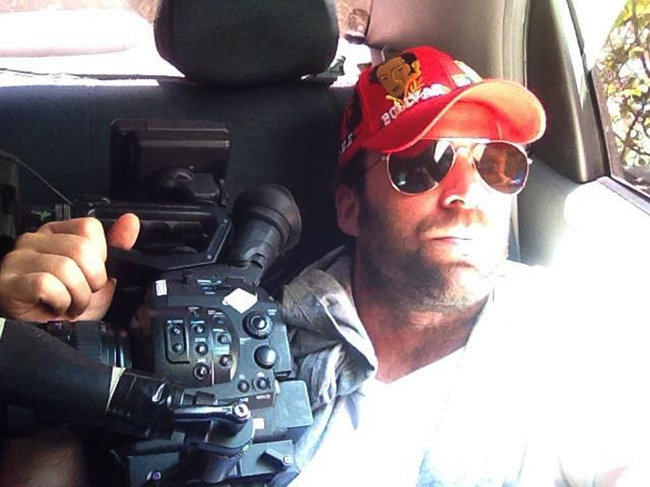
CARACAS, Venezuela — Just a few weeks ago, Tim Tracy spoke of his time shooting a documentary in Venezuela as a rollicking adventure and a filmmaker’s dream. Now he is under arrest, accused by the Venezuelan government of a different kind of adventure: taking part in what officials here said was a plot to destabilize the country and incite a civil war.

The government said Friday that Mr. Tracy, an American citizen, would be charged with involvement in acts of violence after the April 14 presidential election. Mr. Tracy was arrested by the intelligence police on Wednesday at the international airport near Caracas as he was about to leave the country, the government said.

Mr. Tracy was originally identified in a report released by Venezuela’s Information Ministry as Timothy Hallett. Hallett is his middle name.

Interior Minister Miguel Rodríguez said Thursday that Mr. Tracy had training as a spy and was part of a conspiracy to set off a civil war.

But those who knew Mr. Tracy in Caracas and in the United States, including in Los Angeles, where he lived, described him as an innocent — or perhaps naïve — filmmaker who had sought to portray Venezuela’s bitter political divide, not take sides in it.

Mr. Tracy spent time with both opposition student protesters and hard-core supporters of former President Hugo Chávez “to show the two sides of the story he was filming,” said Tuki Jencquel, a Venezuelan filmmaker who became friends with Mr. Tracy.

“He always seemed to be very evenhanded in his work and neutral in relation to what was happening in Venezuela,” he said. “I don’t think there’s anything subversive about that.”

In a conversation with a New York Times reporter about a week after the March 5 death of Mr. Chávez, Mr. Tracy spoke enthusiastically about the months he had spent working on his film.

And he described himself as one of the most unlikely people to do so: an American with rudimentary Spanish who started out with virtually no knowledge of Venezuela or its politics. He seemed like a man on a lark.

Mr. Tracy said that he had made friends in one of the most pro-Chávez slums in Caracas, an area known as 23 de Enero, and in particular with a man who appeared often at rallies dressed up as the revolutionary Ché Guevara. He marveled at how he had won the man’s confidence, despite the government’s anti-American stance.

But he also sounded a note of concern, saying that the ersatz Ché stopped talking to him after Mr. Chávez’s death. The government expelled two military attachés from the American Embassy on the day Mr. Chávez died, claiming that they were trying to destabilize the country. Mr. Tracy said he wondered if the man had taken the government propaganda to heart and regretted their friendship.

He said he had also filmed opponents of the government, but he seemed most enthusiastic about his ability to break through the apparent barriers and get close to Chávez loyalists.

Mr. Jencquel said that Mr. Tracy had been detained twice before for filming, once at a Chávez rally and once at the presidential palace in Caracas. On Friday, after being allowed to visit Mr. Tracy, Mr. Jencquel said his friend told him he was innocent.

Mr. Tracy, 35, identified himself on LinkedIn, a professional networking Web site, as a director and producer who had been involved in a television series that appeared on the History Channel and a movie. He attended Georgetown University.

Mr. Rodríguez, the interior minister, said that Mr. Tracy had funneled money to student protesters who the government claimed were connected to postelection violence.

But student groups said on Friday that they had not received money from Mr. Tracy, and they denied involvement in violence. “It seems to me like a big farce on the part of the government to distract attention,” said Gaby Arellano, 26, who has taken part in the protests. She said that Mr. Tracy had interviewed her about her reasons for protesting.

Tensions in Venezuela have increased in the wake of the election, which Nicolás Maduro, Mr. Chávez’s heir, won by less than 2 percent. His opponent, Henrique Capriles Radonski, claims that Mr. Maduro stole the election, and he has demanded a recount.

After the election, Mr. Capriles urged his supporters to protest by marching in the streets and banging pots at home at night.

The government responded by claiming that Mr. Capriles was seeking to foment violence. It pointed to several people who were killed the day after the election, saying they were Maduro supporters murdered by members of the opposition.

But it has provided little hard evidence to back up the claims that the deaths were politically motivated. In one case, the father of a man who was shot dead said that his son was killed while taking part in a protest against Mr. Maduro’s victory, contradicting the government’s account.

It is typical of the government here to sometimes make wild claims about conspiracies without providing evidence. During the campaign, Mr. Maduro repeatedly warned of plots to kill him, and he said that foreign agents were entering the country to undermine the government.

In all of this, Mr. Maduro is sticking to the playbook of Mr. Chávez, who regularly warned of threats from the United States or suspected homegrown traitors.

Mr. Maduro has sent mixed signals in recent weeks about whether he hopes to improve his country’s rocky relationship with the United States, which is a major buyer of Venezuelan oil.

“We hope that many of these conspiracies and interventions by sectors of the C.I.A. and the Pentagon can finally be put behind us and we can have a relation with President Obama based on respect,” he said Thursday.

Patrick Ventrell, a State Department spokesman, said Friday that Mr. Tracy had no ties to any government agency. “The U.S. continues to categorically reject any allegations of U.S. government efforts to destabilize the Venezuelan government,” Mr. Ventrell said.

In a statement released Friday, Mr. Tracy’s parents said, “We believe a mistake has been made with the detention of our son Timothy by the Venezuelan authorities.”

To read this article at The New York Times, please click here.