May
10
2013
Posted by
admin
Comments

In Case You Missed It… Articles Roundup Week of 5/10/13

Maduro In Case You Missed It… Articles Roundup Week of 5/10/13

Courtesy of Reuters

This week: The Venezuelan government starts an expanded audit of the disputed April 14 presidential election as Henrique Capriles files a legal challenge of the results; the Obama administration continues to monitor Venezuela’s crackdown on political opposition; Nicolás Maduro reacts angrily to Barack Obama’s comments about the political crisis in Venezuela; the family of Timothy Tracy, the American filmmaker held in Venezuela on charges of alleged espionage, calls the situation a “nightmare”; and U.S. diplomats are finally granted access to Tracy in Venezuela. Senior Venezuelan banking official is held on charges of accepting at least $5 million in bribes to funnel business to two Miami broker-dealers; the U.S. Treasury punishes Iran-Venezuela Binational Bank for helping the Iran government evade international sanctions; the Venezuelan government scrambles for answers to the country’s homicide rate, creating concerns about possible human rights abuses; and representatives of 130 countries believe Venezuela fails to meet the minimum democratic requirements. Venezuelan inflation soars toward 30 percent, the highest since August 2010, as the central bank’s scarcity index reaches a record high; according to mathematicians, the tally in Venezuela’s disputed election presents logical and numerical inconsistencies; Venezuela falls to seventh place in scientific research in Latin America, ranking below Cuba; and Venezuela’s only opposition TV station announces management changes after being taken over by the government.

Venezuela Starts Election Audit, The Wall Street Journal

Authorities on Monday began an expanded audit of the disputed April 14 presidential election even though the opposition candidate who called for the review has since withdrawn his support and instead filed a legal challenge of the results.

U.S. Monitoring Venezuela’s Political Crackdown On Opposition, Obama Says, Reuters

The United States is watching “crackdowns on the opposition” in Venezuela, President Barack Obama said in a television interview aired on Friday when asked if he considered newly elected Nicolas Maduro to be the country’s legitimate president.

Venezuela’s Government Condemns Obama’s Comments, The Associated Press

Venezuela’s government on Saturday angrily rejected comments made by U.S. President Barack Obama about the South American country’s political crisis and accused Washington of being behind violence that has followed its recent presidential election.

Family of American held in Venezuela says experience ‘a nightmare;’ embassy has had no access, The Associated Press

U.S. diplomats have been given no access to a California man held in Venezuela for nearly two weeks in what his family on Monday called a “nightmare” that unfolded after he was accused of being a spy fomenting postelection unrest.

US officials are granted access to American detained in Venezuela, Associated Press

Venezuela’s government has granted U.S. diplomats access to a California man who is being held while he awaits trial on charges of espionage and fomenting unrest.

Venezuelan banking official and 2 Miami broker dealers charged in $5 million NY bribery case, The Associated Press

A senior Venezuelan banking official is being held in Miami on charges that she accepted at least $5 million in bribes to funnel business to two Miami broker-dealers, federal authorities in Manhattan announced Tuesday.

US punishes Venezuelan-Iranian bank for helping Tehran, El Universal

The US Department of the Treasury punished on Thursday the Iran-Venezuela Binational Bank (IVBB) for helping the Iranian government to “sort out” international sanctions because of its controversial nuclear program.

Justice minister says Venezuela’s military to form part of anti-crime initiative, The Associated Press

Venezuela’s top security official announced Sunday the government of President Nicolas Maduro will use the military to fight rampant violent crime, raising concerns among activists who warned the initiative could lead to human rights violations.

No democracy in Venezuela, according to 130 countries, El Universal

Representatives of 130 Foreign Offices of countries viewed as democratic met last week in Mongolia, at the Summit of the Community of Democracies.

Venezuela Inflation Soars Toward 30% as Maduro Cuts Dollar Sales, Bloomberg

Venezuelan consumer prices soared the most in three years last month as President Nicolas Maduro’s government reduced dollar sales to importers and the central bank’s scarcity index reached the highest on record.

Mathematicians claim that election numbers in Venezuela do not match, El Universal

The results released by the board of the Venezuelan National Electoral Council (CNE) in several bulletins about the presidential election of April 14 exhibit “logic and numerical inconsistencies.”

Venezuela ranks below Cuba in scientific research, El Universal

Venezuela ranked seventh in scientific production in Latin America in 2011, according to international indicators such as SCImago Institutions Rankings (SIR).

Sole Opposition TV Channel in Venez Makes Changes, The Associated Press

Venezuela’s only opposition television channel says it is bringing in new management after its sale to new owners, but pledges to maintain its critical line against the government.
 
Apr
29
2013
Posted by
admin
Comments

ICYMI: US Filmmaker Held in Venezuela Sought to Show Political Divide, Friends Say

The New York Times
April 26, 2013
By María Eugenia Díaz and William Neuman

venezuela popup e1367259291482 ICYMI: US Filmmaker Held in Venezuela Sought to Show Political Divide, Friends Say

Courtesy of: Associated Press

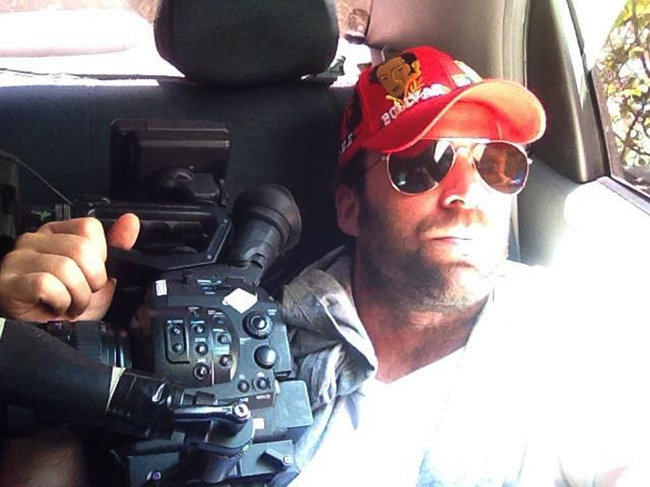
CARACAS, Venezuela — Just a few weeks ago, Tim Tracy spoke of his time shooting a documentary in Venezuela as a rollicking adventure and a filmmaker’s dream. Now he is under arrest, accused by the Venezuelan government of a different kind of adventure: taking part in what officials here said was a plot to destabilize the country and incite a civil war.

The government said Friday that Mr. Tracy, an American citizen, would be charged with involvement in acts of violence after the April 14 presidential election. Mr. Tracy was arrested by the intelligence police on Wednesday at the international airport near Caracas as he was about to leave the country, the government said.

Mr. Tracy was originally identified in a report released by Venezuela’s Information Ministry as Timothy Hallett. Hallett is his middle name.

Interior Minister Miguel Rodríguez said Thursday that Mr. Tracy had training as a spy and was part of a conspiracy to set off a civil war.

But those who knew Mr. Tracy in Caracas and in the United States, including in Los Angeles, where he lived, described him as an innocent — or perhaps naïve — filmmaker who had sought to portray Venezuela’s bitter political divide, not take sides in it.

Mr. Tracy spent time with both opposition student protesters and hard-core supporters of former President Hugo Chávez “to show the two sides of the story he was filming,” said Tuki Jencquel, a Venezuelan filmmaker who became friends with Mr. Tracy.

“He always seemed to be very evenhanded in his work and neutral in relation to what was happening in Venezuela,” he said. “I don’t think there’s anything subversive about that.”

In a conversation with a New York Times reporter about a week after the March 5 death of Mr. Chávez, Mr. Tracy spoke enthusiastically about the months he had spent working on his film.

And he described himself as one of the most unlikely people to do so: an American with rudimentary Spanish who started out with virtually no knowledge of Venezuela or its politics. He seemed like a man on a lark.

Mr. Tracy said that he had made friends in one of the most pro-Chávez slums in Caracas, an area known as 23 de Enero, and in particular with a man who appeared often at rallies dressed up as the revolutionary Ché Guevara. He marveled at how he had won the man’s confidence, despite the government’s anti-American stance.

But he also sounded a note of concern, saying that the ersatz Ché stopped talking to him after Mr. Chávez’s death. The government expelled two military attachés from the American Embassy on the day Mr. Chávez died, claiming that they were trying to destabilize the country. Mr. Tracy said he wondered if the man had taken the government propaganda to heart and regretted their friendship.

He said he had also filmed opponents of the government, but he seemed most enthusiastic about his ability to break through the apparent barriers and get close to Chávez loyalists.

Mr. Jencquel said that Mr. Tracy had been detained twice before for filming, once at a Chávez rally and once at the presidential palace in Caracas. On Friday, after being allowed to visit Mr. Tracy, Mr. Jencquel said his friend told him he was innocent.

Mr. Tracy, 35, identified himself on LinkedIn, a professional networking Web site, as a director and producer who had been involved in a television series that appeared on the History Channel and a movie. He attended Georgetown University.

Mr. Rodríguez, the interior minister, said that Mr. Tracy had funneled money to student protesters who the government claimed were connected to postelection violence.

But student groups said on Friday that they had not received money from Mr. Tracy, and they denied involvement in violence. “It seems to me like a big farce on the part of the government to distract attention,” said Gaby Arellano, 26, who has taken part in the protests. She said that Mr. Tracy had interviewed her about her reasons for protesting.

Tensions in Venezuela have increased in the wake of the election, which Nicolás Maduro, Mr. Chávez’s heir, won by less than 2 percent. His opponent, Henrique Capriles Radonski, claims that Mr. Maduro stole the election, and he has demanded a recount.

After the election, Mr. Capriles urged his supporters to protest by marching in the streets and banging pots at home at night.

The government responded by claiming that Mr. Capriles was seeking to foment violence. It pointed to several people who were killed the day after the election, saying they were Maduro supporters murdered by members of the opposition.

But it has provided little hard evidence to back up the claims that the deaths were politically motivated. In one case, the father of a man who was shot dead said that his son was killed while taking part in a protest against Mr. Maduro’s victory, contradicting the government’s account.

It is typical of the government here to sometimes make wild claims about conspiracies without providing evidence. During the campaign, Mr. Maduro repeatedly warned of plots to kill him, and he said that foreign agents were entering the country to undermine the government.

In all of this, Mr. Maduro is sticking to the playbook of Mr. Chávez, who regularly warned of threats from the United States or suspected homegrown traitors.

Mr. Maduro has sent mixed signals in recent weeks about whether he hopes to improve his country’s rocky relationship with the United States, which is a major buyer of Venezuelan oil.

“We hope that many of these conspiracies and interventions by sectors of the C.I.A. and the Pentagon can finally be put behind us and we can have a relation with President Obama based on respect,” he said Thursday.

Patrick Ventrell, a State Department spokesman, said Friday that Mr. Tracy had no ties to any government agency. “The U.S. continues to categorically reject any allegations of U.S. government efforts to destabilize the Venezuelan government,” Mr. Ventrell said.

In a statement released Friday, Mr. Tracy’s parents said, “We believe a mistake has been made with the detention of our son Timothy by the Venezuelan authorities.”

To read this article at The New York Times, please click here.

 
Apr
23
2013
Posted by
admin
Comments

Amid Accusations of Fraud, Venezuela’s Officials Allow Vote Audit

gty capriles vote wg e1366725586108 Amid Accusations of Fraud, Venezuela’s Officials Allow Vote Audit

Courtesy of: Getty Photos

Political uncertainty was reignited in Venezuela last week after electoral authorities stunned the country by announcing Hugo Chávez’s handpicked successor as the winner of the election, but with a razor-thin margin of victory. The underperformance of Nicolás Maduro – combined with daily protests, allegations of fraud, international pressure and the numerous economic and social problems within the country – have descended Venezuela into significant tension and uncertainty.

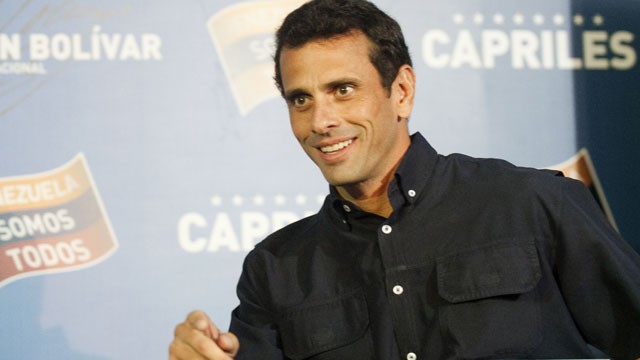
Citing irregularities in the election process, opposition leader Henrique Capriles refused to recognize the election’s validity, demanding a full manual recount of the votes. Numerous international actors, including the United States, Spain and the Organization of American States sided with the opposition, declaring the recount an important and necessary step to instill confidence in the results. Denied the recount at first, opposition supporters around the country banged pots and pans in a traditional sign of protest. A large march to the Election Council was canceled, however, after Maduro ominously vowed to come down with a “firm hand” on opposition supporters.

After days of protests – and just hours before Nicolás Maduro’s swearing-in – the government announced on Friday that it would allow a full “audit” of the vote. Venezuela uses electronic voting machines to record votes that provide a printed receipt which is placed into a sealed ballot box. As is protocol, electoral authorities initially audited 54 percent of the electronic votes. Now, they have conceded to audit the remaining 46 percent. Though the expanded audit is not a full manual recount as originally requested, Capriles accepted the election authority’s ruling. The audit will involve counting the paper ballots in 12,000 voting machines at random stations to ensure they are consistent with the machine-tallied results.

Capriles has cited significant evidence for why a full recount must be undertaken. The opposition has asserted that among the irregularities, there were 535 malfunctioning voting machines, election monitors were forcibly removed from 286 centers and 564 centers evidenced government-assisted voting. Even more peculiar was that Maduro received more votes than Chávez in 1,176 polling stations, with some precincts seeing Maduro surpass the beloved leader by nearly 1,000 percent. In addition, more than 100,000 Venezuelans who turned 18 in the past six months were not given an opportunity to register to vote, while more than 500,000 Venezuelans living in exile have been denied voter registration. Given that Capriles only lost by approximately 200,000 votes, verification of fraud in any of these instances could reveal information that may reverse the final results or necessitate a partial repeat of the election.

The audit is expected to begin sometime this week, but will likely take approximately one month to complete. However, despite the Election Council’s decision to review the results, Maduro was formally sworn in on Friday. Analysts compared the event to a rally held in January on the day Chávez was to be sworn in, but unable to attend. Despite their leader’s absence, tens of thousands of people showed up to take the oath of office on his behalf. Maduro did not enjoy such treatment, however. While thousands of people showed up on Friday to welcome their new president, the crowd was a far cry from the one in January – another clear example that he lacks the charisma and popularity of “el Comandante.”

On Sunday, Maduro went even further, announcing his new cabinet. He showed little variation from Chávez, recycling former ministers into new positions and bringing current and former military officers to top administrative jobs. The greatest surprise was the change in the leadership of the Finance Ministry. Jorge Giordani, a declared Marxist and Chávez long-time ally who is often credited as the architect of the socialist economic policies and controls, will retain his post as planning minister but will no longer oversee the Finance Ministry.

Though tensions simmered after the Election Committee vowed to audit the results, both camps have yet to agree on its true meaning. While Maduro builds his government and begins to instill orders, a near majority of the country hopefully awaits the recount, desperately hoping for a new day in Venezuela.