Jun
27
2012
Posted by
admin
Comments

Venezuela opposition presidential hopeful says Chavez’s on-air talks should be limited

The Washington Post via the Associated Press
June 27, 2012

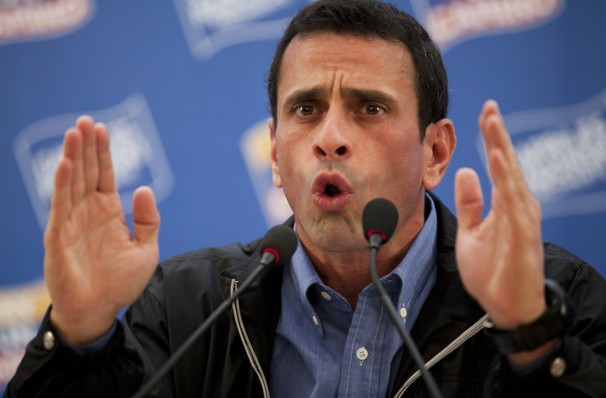
Venezuela Politics.JPEG 09b38 Venezuela opposition presidential hopeful says Chavez’s on air talks should be limited

Courtesy of: AP

CARACAS, Venezuela — Venezuelan presidential candidate Henrique Capriles is demanding election officials prevent President Hugo Chavez from taking over the airwaves of the nation’s TV and radio stations for lengthy speeches while campaigning for re-election.

Capriles criticized his adversary on Tuesday for attempting to take political advantage of special broadcasts ahead of Venezuela’s Oct. 7 presidential election, and he demanded the National Electoral Council intervene.

The council’s directors have approved campaign regulations that prohibit television and radio messages that favor a presidential candidate to run longer than three minutes.

The new rules take effect Sunday when the campaign officially starts. It’s unclear whether they will limit the president’s frequent and lengthy use of special broadcasts known as “cadenas,” which all networks are required to air.

“We are demanding that there by no cadenas starting on Sunday,” said Capriles at a news conference in Caracas. “He can lead his campaign on television, but without using cadenas.”

Chavez has not responded to Capriles’ remarks. He has been making frequent use of his ability to take over the airwaves in recent weeks, talking on television and radio for several hours a couple times a week.

The leftist president has frequently warned Venezuelans that Capriles would roll back his banner social programs for the poor. He’s also trumpeting his government’s plans to resolve pressing domestic problems such as widespread violent crime and soaring inflation.

In the past year, Chavez has undergone two surgeries that removed tumors from his pelvic region, most recently in February. That’s meant Chavez has appeared in public less frequently than in the past, a dramatic shift for his 13-year-old presidency.

Recently, however, he has been stepping up his public appearances and has mentioned his health less frequently.

“I’ve been recovering, doing exercise, walking, jogging,” Chavez said Tuesday after meeting with President Alexander Lukashenko of Belarus. “I’m not like the horse I was 20 years ago, but we’re moving along and we’re going to win these elections.”

Capriles has spent recent months traveling across the country to drum up support for his candidacy.

To read this article on The Washington Post, please click here.

 
Jun
13
2012
Posted by
admin
Comments

Venezuelans consider the unthinkable: a government without Chavez

The Washington Post
June 13, 2012
By Juan Forero

CAR02 RTRIDSP 3 VENEZUELA ELECTION 300x200 Venezuelans consider the unthinkable: a government without Chavez

Courtesy of: Reuters

But despite the brief appearance of the president of old, Hugo Chavez’s weeks of ruling via Twitter while recovering from his latest cancer surgery have left even some of his supporters wondering whether he will live through another six-year term.CARACAS, Venezuela — For more than three hours, he towered before the crowds — bombastic, fierce, funny, singing songs and promising that rigid socialism would upend the American-style capitalism he abhors.

The fiery leader who survived a coup attempt a decade ago is now facing a threat that could end Latin America’s most radical populist movement and remove an antagonist of the United States who built close ties with Syria, Iran and other despotic governments. His departure could also weaken Cuba, the region’s only communist state, which is led by a doddering gerontocracy heavily dependent on subsidized Venezuelan oil.

“We see him and we know he is sick,” said Evelyn Quevedo, a teacher who, at 57, is the same age as the president. “Something is happening to the president because if it weren’t that way, he would be on television every day. This is not his style.”

A year after Cuban doctors worked to remove a cancerous growth in a complicated surgery, a president who has run his country like a game-show host is rarely on the air while revealing only sketchy details about his condition. Chavez’s Sunday television program, “Hello Mr. President,” has been suspended for much of the year, and so have once-ubiquitous state tours of destinations as far away as Tehran that had been the staple of a state media apparatus.

In their place are smaller, but intricately staged events: a brief meeting with officials from Belarus, a halting walk through the presidential palace, cameras panning head to toe to assure viewers that he is still here, moving without assistance. There are calls from El Comandante to state television programs, and his ministers have even taken to reading his tweets at rallies, with the president frequently issuing 140-character missives that substitute for his usual proclamations.

Chavez, though, said the swirling speculation about his health is the work of a diabolical counterrevolution, intent on ousting him.

“They say that I cannot walk, that I walk with two walking sticks, that I have a wheelchair,” Chavez said Monday in a packed square in central Caracas. “Soon, we’ll be playing baseball.”

His jowls and body looked swollen, and he walked gingerly, but Chavez used his potent oratory skills and his cultlike status among his followers to try to erase doubts about his health.

He told a sea of fervent red-shirted followers: “Here I am, once more in front of you and, in your name and the name of the fatherland, registering as candidate for president.”

Such pronouncements — affirmations that the end is far from near — are consumed like gospel by his closest associates, who reveal nothing more about an illness considered a state secret. Chavez, who is the only one authorized to speak publicly about his cancer, has revealed that he has had three operations, as well as chemotherapy and radiation therapy treatments.

Asked whether Chavez could be sidelined by the recurring tumor, his campaign organizer, Jorge Rodriguez, quickly tried to dampen any hint that the president could be forced out of his race against a 39-year-old challenger, Henrique Capriles.

“Absolutely not,” Rodriguez, who maintained a tense smile, said in an interview last week. “If you like, we’ll see each other on Oct. 8 in the morning, and I’ll confirm what I’m saying now: Chavez is going to give the candidate of the right a tremendous beating.”

Oncologists who have been tracking Chavez’s health — and are familiar with the kind of treatments he describes — say he may be suffering from an aggressive tumor, possibly a sarcoma, resistant to chemotherapy.

“What that indicates to us is that the cancer has a relapse and that that cancer is very likely not a curable cancer,” said Julian Molina, an oncologist at the Mayo Clinic. “For these types of cancers, you know, the best chance is the first chance. That is when you have the best option to cure.”

‘Chavez transcends life’

Little by little, in a way that is increasingly felt across Venezuela, there are signs that inside Chavismo — the powerful populist movement named after Chavez — some are beginning to at least raise the possibility of a Venezuela without Chavez.

In the Popular Tribune, the Communist Party’s newspaper, a recent column said Chavez’s condition “puts over the carpet — like it or not” the possibility of his demise and how that would negatively impact Venezuela’s socialist transformation.

And in a meeting of Chavez’s campaign committee in late April, Wilmar Castro, who heads the planning commission for the campaign, openly spoke of the need to consider electoral scenarios. One included a campaign without Chavez as the ruling party’s candidate.

“The president has cancer,” Castro told other regional campaign chiefs. “It’s not just anything.”

Loyal allies such as Ramses Reyes, a former congressman and head of a leftist movement called Venezuelan Revolutionary Currents, said it has been hard to imagine the political arena absent Chavez.

“We could never fathom that this man of steel could be a human with defects, with the possibility of getting ill,” Reyes said. But Chavez’s followers, he said, now also believe that there is more to Chavez than his “physical presence,” that his philosophy would live on and unite his followers long after his departure.

“It could be that the man is replaced, but not the Chavez philosophy,” Reyes said. “What I mean is Chavez transcends life. Chavez is the symbol of the revolutionary process.”

Foreseeing a rocky transition

Lately, the talk of who would replace Chavez — if failing health forces him out before October or after the election, should he win — has become a central issue in Venezuelan public life. The fact that Chavez has been such a powerful omnipresent leader, with moderates having left government or been forced from service, makes the likelihood of a transition rocky.

“If Chavez is not in condition to be president, the leadership in his party is not well defined,” said Miguel Otero, editor of El Nacional, a Caracas newspaper that has aggressively explored the machinations inside Chavez’s movement. “It is not like Cuba, where Fidel has his brother. In North Korea, there is the son. Here there is no leader who can substitute for him.”

Analysts here say that if illness forces out Chavez before the election, the United Socialist Party would pick another candidate. If Chavez dies in the first four years of a second term, new elections would be called.

Those with political power include Adan Chavez, the president’s older brother, who introduced him to radical political thought and is close to Cuba’s leadership. There is also the vice president, Elias Jaua, who cut his teeth at university protests, and Foreign Minister Nicolas Maduro, a former bus driver and union organizer.

Another loyalist is Diosdado Cabello, a tough former military man who joined Chavez, then an officer in the Venezuelan army, in an ill-fated coup attempt in 1992.

Marbella Pineda, 46, a die-hard Chavez follower who wore the movement’s red shirt at Monday’s rally, called those men “serious, focused and having all the support of the people.”

But asked whether any could really replace Chavez, she let out a nervous laugh and said, “Not any of them.”

To read this article on The Washington Post, please click here.
 
Jun
13
2012
Posted by
admin
Comments

ICYMI: Venezuelans consider the unthinkable: a government without Chavez

The Washington Post
June 13, 2012
By Juan Forero

CAR02 RTRIDSP 3 VENEZUELA ELECTION ICYMI: Venezuelans consider the unthinkable: a government without Chavez

CARACAS, Venezuela — For more than three hours, he towered before the crowds — bombastic, fierce, funny, singing songs and promising that rigid socialism would upend the American-style capitalism he abhors.

But despite the brief appearance of the president of old, Hugo Chavez’s weeks of ruling via Twitter while recovering from his latest cancer surgery have left even some of his supporters wondering whether he will live through another six-year term.

The fiery leader who survived a coup attempt a decade ago is now facing a threat that could end Latin America’s most radical populist movement and remove an antagonist of the United States who built close ties with Syria, Iran and other despotic governments. His departure could also weaken Cuba, the region’s only communist state, which is led by a doddering gerontocracy heavily dependent on subsidized Venezuelan oil.

“We see him and we know he is sick,” said Evelyn Quevedo, a teacher who, at 57, is the same age as the president. “Something is happening to the president because if it weren’t that way, he would be on television every day. This is not his style.”

A year after Cuban doctors worked to remove a cancerous growth in a complicated surgery, a president who has run his country like a game-show host is rarely on the air while revealing only sketchy details about his condition. Chavez’s Sunday television program, “Hello Mr. President,” has been suspended for much of the year, and so have once-ubiquitous state tours of destinations as far away as Tehran that had been the staple of a state media apparatus.

In their place are smaller, but intricately staged events: a brief meeting with officials from Belarus, a halting walk through the presidential palace, cameras panning head to toe to assure viewers that he is still here, moving without assistance. There are calls from El Comandante to state television programs, and his ministers have even taken to reading his tweets at rallies, with the president frequently issuing 140-character missives that substitute for his usual proclamations.

Chavez, though, said the swirling speculation about his health is the work of a diabolical counterrevolution, intent on ousting him.

“They say that I cannot walk, that I walk with two walking sticks, that I have a wheelchair,” Chavez said Monday in a packed square in central Caracas. “Soon, we’ll be playing baseball.”

His jowls and body looked swollen, and he walked gingerly, but Chavez used his potent oratory skills and his cultlike status among his followers to try to erase doubts about his health.

He told a sea of fervent red-shirted followers: “Here I am, once more in front of you and, in your name and the name of the fatherland, registering as candidate for president.”

Such pronouncements — affirmations that the end is far from near — are consumed like gospel by his closest associates, who reveal nothing more about an illness considered a state secret. Chavez, who is the only one authorized to speak publicly about his cancer, has revealed that he has had three operations, as well as chemotherapy and radiation therapy treatments.

Asked whether Chavez could be sidelined by the recurring tumor, his campaign organizer, Jorge Rodriguez, quickly tried to dampen any hint that the president could be forced out of his race against a 39-year-old challenger, Henrique Capriles.

“Absolutely not,” Rodriguez, who maintained a tense smile, said in an interview last week. “If you like, we’ll see each other on Oct. 8 in the morning, and I’ll confirm what I’m saying now: Chavez is going to give the candidate of the right a tremendous beating.”

Oncologists who have been tracking Chavez’s health — and are familiar with the kind of treatments he describes — say he may be suffering from an aggressive tumor, possibly a sarcoma, resistant to chemotherapy.

“What that indicates to us is that the cancer has a relapse and that that cancer is very likely not a curable cancer,” said Julian Molina, an oncologist at the Mayo Clinic. “For these types of cancers, you know, the best chance is the first chance. That is when you have the best option to cure.”

‘Chavez transcends life’

Little by little, in a way that is increasingly felt across Venezuela, there are signs that inside Chavismo — the powerful populist movement named after Chavez — some are beginning to at least raise the possibility of a Venezuela without Chavez.

In the Popular Tribune, the Communist Party’s newspaper, a recent column said Chavez’s condition “puts over the carpet — like it or not” the possibility of his demise and how that would negatively impact Venezuela’s socialist transformation.

And in a meeting of Chavez’s campaign committee in late April, Wilmar Castro, who heads the planning commission for the campaign, openly spoke of the need to consider electoral scenarios. One included a campaign without Chavez as the ruling party’s candidate.

“The president has cancer,” Castro told other regional campaign chiefs. “It’s not just anything.”

Loyal allies such as Ramses Reyes, a former congressman and head of a leftist movement called Venezuelan Revolutionary Currents, said it has been hard to imagine the political arena absent Chavez.

“We could never fathom that this man of steel could be a human with defects, with the possibility of getting ill,” Reyes said. But Chavez’s followers, he said, now also believe that there is more to Chavez than his “physical presence,” that his philosophy would live on and unite his followers long after his departure.

“It could be that the man is replaced, but not the Chavez philosophy,” Reyes said. “What I mean is Chavez transcends life. Chavez is the symbol of the revolutionary process.”

Foreseeing a rocky transition

Lately, the talk of who would replace Chavez — if failing health forces him out before October or after the election, should he win — has become a central issue in Venezuelan public life. The fact that Chavez has been such a powerful omnipresent leader, with moderates having left government or been forced from service, makes the likelihood of a transition rocky.

“If Chavez is not in condition to be president, the leadership in his party is not well defined,” said Miguel Otero, editor of El Nacional, a Caracas newspaper that has aggressively explored the machinations inside Chavez’s movement. “It is not like Cuba, where Fidel has his brother. In North Korea, there is the son. Here there is no leader who can substitute for him.”

Analysts here say that if illness forces out Chavez before the election, the United Socialist Party would pick another candidate. If Chavez dies in the first four years of a second term, new elections would be called.

Those with political power include Adan Chavez, the president’s older brother, who introduced him to radical political thought and is close to Cuba’s leadership. There is also the vice president, Elias Jaua, who cut his teeth at university protests, and Foreign Minister Nicolas Maduro, a former bus driver and union organizer.

Another loyalist is Diosdado Cabello, a tough former military man who joined Chavez, then an officer in the Venezuelan army, in an ill-fated coup attempt in 1992.

Marbella Pineda, 46, a die-hard Chavez follower who wore the movement’s red shirt at Monday’s rally, called those men “serious, focused and having all the support of the people.”

But asked whether any could really replace Chavez, she let out a nervous laugh and said, “Not any of them.”

To read this article on The Washington Post, please click here.