Courtesy of: AVN
In the news this week, Venezuela won a seat on the United Nations Human Rights Council despite international criticism; regulators of the securities industry had tough questions for U.S. broker-dealers regarding practices used to mitigate money laundering and sanctions risks related to their involvement in a Venezuelan government-run exchange system; Venezuela’s crumbling infrastructure remains in the news as the electric energy minister admits the nation’s electrical system has been out of date for twenty years; and government takeovers continue as PDVSA seizes control of the Loma de Niquel mine from the Anglo American mining and natural resource company. Meanwhile, Chávez continues to lay the foundations for a communal state as forty communes await authorization by the Venezuelan government; Capriles looks to the regional December elections to legitimize the opposition coalition not only to a weary electorate but also to its own fractious members; problems persist in Venezuela’s industrial sector as the lack of raw materials reaches 83 percent; and the Venezuelan government continues to violate collective bargaining agreements, causing protests among workers. Lastly, the ADEN Competitiveness Institute ranks Venezuela among countries with the lowest competitiveness index, citing “problems of macroeconomic instability and institutional mishaps.”
Venezuela, the bane of human rights, The Washington Post
ON MONDAY, new members will be selected for the United Nations Human Rights Council, the top-level group for the protection and promotion of human rights. Its members have not always been paragons of respect for human dignity.
U.S. broker-dealers scrutinized for anti-laundering compliance in Venezuelan currency swaps, Reuters
NEW YORK, Nov. 13 (Thomson Reuters Accelus) -Securities industry regulators are beginning to ask U.S. broker-dealers tough questions about how they are mitigating money laundering and sanctions risks associated with their involvement in a 2-year-old currency exchange system run by the Venezuelan government, sources familiar with the issue said.
Some 71% of Venezuela’s electric energy system is outdated, El Universal
Venezuela’s Electric Energy Minister Héctor Navarro stated that 71% of the national electric system has been out of date for 20 years.
Venezuelan gov’t takes over Loma de Níquel mine, El Universal
Last Saturday, at 12 a.m., multinational Anglo American handed over to the Venezuelan State the control of Loma de Níquel mine, upon the expiration of the concession and failure to get a renewed term for the operation.
Communes await authorization by Venezuelan Government, El Universal
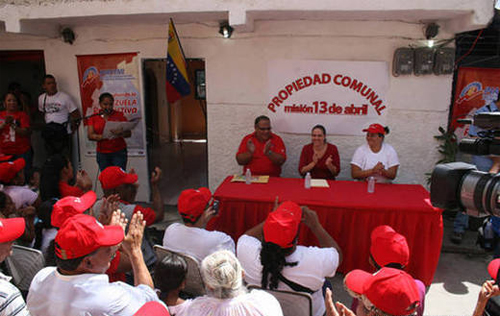
The Venezuelan National Assembly (AN) continues laying the foundations for the communal State. On October 20, during a meeting of ministers, President Hugo Chávez urged his cabinet to speed up the establishment of communes.
Capriles, Opposition Seek to Solidify Gains in Venezuela, World Politics Review
CARACAS — With campaigning for Venezuela’s December gubernatorial races now officially under way, the country’s political opposition finds itself in a tough spot. Still licking its wounds from its loss in October’s presidential election, the Democratic Unity Coalition (MUD) must get quickly off the mat to prove its credibility not only to a weary electorate but also to its own fractious members.
Lack of raw materials hits 83% of Venezuelan industries, El Universal
Obstacles are hitting the Venezuelan industrial sector, as lingering barriers continue to undermine their performance, according to data provided by the Venezuelan Confederation of Industries (Conindustria).
Government allegedly trying to uproot collective bargaining agreements, El Universal
In recent years, numerous labor protests by different sectors have sparked in Venezuela. Only in October, some 521 demonstrations were reported, 204 of which were labor-related, said the NGO Venezuelan Observatory of Social Unrest.
Venezuela among the countries with lower competitiveness index, El Universal
Chile is the leader of competitiveness among 18 Latin American countries, based on the Competitiveness Index established in October 2012 by the ADEN Competitiveness Institute. The information was disclosed by the higher studies institution based in Argentina, Efe quoted.