Apr
23
2013
Posted by
admin
Comments

Amid Accusations of Fraud, Venezuela’s Officials Allow Vote Audit

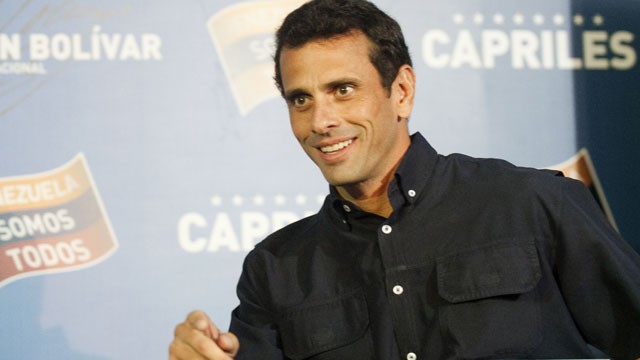
gty capriles vote wg e1366725586108 Amid Accusations of Fraud, Venezuela’s Officials Allow Vote Audit

Courtesy of: Getty Photos

Political uncertainty was reignited in Venezuela last week after electoral authorities stunned the country by announcing Hugo Chávez’s handpicked successor as the winner of the election, but with a razor-thin margin of victory. The underperformance of Nicolás Maduro – combined with daily protests, allegations of fraud, international pressure and the numerous economic and social problems within the country – have descended Venezuela into significant tension and uncertainty.

Citing irregularities in the election process, opposition leader Henrique Capriles refused to recognize the election’s validity, demanding a full manual recount of the votes. Numerous international actors, including the United States, Spain and the Organization of American States sided with the opposition, declaring the recount an important and necessary step to instill confidence in the results. Denied the recount at first, opposition supporters around the country banged pots and pans in a traditional sign of protest. A large march to the Election Council was canceled, however, after Maduro ominously vowed to come down with a “firm hand” on opposition supporters.

After days of protests – and just hours before Nicolás Maduro’s swearing-in – the government announced on Friday that it would allow a full “audit” of the vote. Venezuela uses electronic voting machines to record votes that provide a printed receipt which is placed into a sealed ballot box. As is protocol, electoral authorities initially audited 54 percent of the electronic votes. Now, they have conceded to audit the remaining 46 percent. Though the expanded audit is not a full manual recount as originally requested, Capriles accepted the election authority’s ruling. The audit will involve counting the paper ballots in 12,000 voting machines at random stations to ensure they are consistent with the machine-tallied results.

Capriles has cited significant evidence for why a full recount must be undertaken. The opposition has asserted that among the irregularities, there were 535 malfunctioning voting machines, election monitors were forcibly removed from 286 centers and 564 centers evidenced government-assisted voting. Even more peculiar was that Maduro received more votes than Chávez in 1,176 polling stations, with some precincts seeing Maduro surpass the beloved leader by nearly 1,000 percent. In addition, more than 100,000 Venezuelans who turned 18 in the past six months were not given an opportunity to register to vote, while more than 500,000 Venezuelans living in exile have been denied voter registration. Given that Capriles only lost by approximately 200,000 votes, verification of fraud in any of these instances could reveal information that may reverse the final results or necessitate a partial repeat of the election.

The audit is expected to begin sometime this week, but will likely take approximately one month to complete. However, despite the Election Council’s decision to review the results, Maduro was formally sworn in on Friday. Analysts compared the event to a rally held in January on the day Chávez was to be sworn in, but unable to attend. Despite their leader’s absence, tens of thousands of people showed up to take the oath of office on his behalf. Maduro did not enjoy such treatment, however. While thousands of people showed up on Friday to welcome their new president, the crowd was a far cry from the one in January – another clear example that he lacks the charisma and popularity of “el Comandante.”

On Sunday, Maduro went even further, announcing his new cabinet. He showed little variation from Chávez, recycling former ministers into new positions and bringing current and former military officers to top administrative jobs. The greatest surprise was the change in the leadership of the Finance Ministry. Jorge Giordani, a declared Marxist and Chávez long-time ally who is often credited as the architect of the socialist economic policies and controls, will retain his post as planning minister but will no longer oversee the Finance Ministry.

Though tensions simmered after the Election Committee vowed to audit the results, both camps have yet to agree on its true meaning. While Maduro builds his government and begins to instill orders, a near majority of the country hopefully awaits the recount, desperately hoping for a new day in Venezuela.

 
Apr
22
2013
Posted by
admin
Comments

ICYMI: Maduro’s Lousy Start

The Economist
April 20, 2013

179882148 e1366652149467 ICYMI: Maduro’s Lousy Start

Courtesy of: Agence France Presse

Hugo Chávez has been dead for more than a month, but visitors to Caracas could be forgiven for thinking that Venezuela’s bombastic former president was still alive and in power. His image plasters the streets; his speeches fill the airwaves. The blitz was ordered by his anointed successor, Nicolás Maduro, to harness Chávez’s popularity in order to win a landslide in an election on April 14th. The plan failed.

Six months ago Chávez romped to a third term with a cushion of 11 percentage points. Polls had predicted that Mr Maduro (pictured) would repeat the feat, riding a wave of chavista sympathy. Instead he won by less than 2%, and then only after flagrantly breaking electoral rules. The result demonstrates that, without Chávez at the helm, chavismo, a noxious cocktail of populism, incompetence and repression, is a far less potent force. That is the good news. The bad news is that Venezuela’s already polarised society is now split down the middle, and seething. The country could unravel unless Mr Maduro steers a responsible course. It is far from clear that he will.

Henrique Capriles, the centrist who came second in the polls, demands a recount. During the campaign Mr Maduro enjoyed untrammelled freedom to bore viewers rigid on state television. More serious alleged breaches of electoral rules include the use of fake IDs and intimidation at polling stations. Appeals are likely to fall on deaf ears, because the electoral authority is among the institutions that lost their independence during Chávez’s 14 years in power. As Mr Maduro whipped up hysteria against the “fascist” opposition, Mr Capriles wisely called off a big rally for fear that, with seven already dead, violence would spread. There are already worrying signs that the government is ramping up repression.

There is at least some justice that the mess created during the Chávez years now falls to a fellow chavista. The economy is in ruins. Growth has stalled, the currency is digesting a 32% devaluation in February and inflation is likely to reach 30%. Price controls, the expropriation of farms and anti-business policies have created food shortages. The appearance in Caracas of sugar or cooking oil can create queues and excitement otherwise seen only in Cuba.

Chávez loyalists, of whom there are many millions, will tell Mr Maduro to be more chavista: more populist, more profligate, more authoritarian. He has already aped his predecessor, and fawned on his memory, to the point of parody. Describing Chávez as a “Christ of the Americas”, he referred to the election as “Resurrection Day”.

Yet chavismo’s bill is now due. Last year the budget deficit was 8.5% of GDP. Even with oil at over $100 a barrel, Venezuela’s public spending is unsustainable. Power cuts are frequent and roads are crumbling. Under an ineffective police force, the murder rate has soared to twice that of Mexico.

Reap what you sow

Now is the time for Mr Maduro to unite his country, not crush dissent. He should agree to recount the ballots. The state’s institutions, above all the judiciary and armed forces, need to regain their neutrality. And the weak economy will grow only if the government seeks rapprochement with the private sector and scraps controls on prices and foreign exchange. Mr Maduro’s tainted, wafer-thin victory suggests that Venezuelans want less chavismo, not more. That is certainly what their unfortunate country needs.

To read this article at The Economist, please click here.


Apr
19
2013
Posted by
admin
Comments

In Case You Missed It… Articles Roundup Week of 4/19/13

in5fjQpowmnM e1366405340981 In Case You Missed It… Articles Roundup Week of 4/19/13

Courtesy of: Agence France Presse

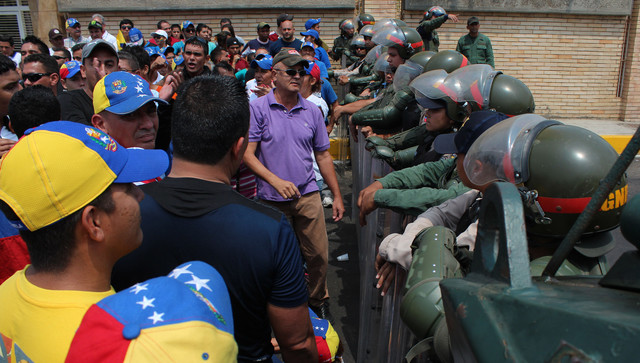
This week:  A narrow margin in the Venezuelan election by Hugo Chávez’s heir Nicolás Maduro spells uncertainty for the country; behind by less than two percent of the vote, opposition candidate Henrique Capriles challenges the election results and demands a full recount; tensions then rise after Venezuela’s government reneges on its promise to carry out the recount of the votes; government security forces and opposition protesters clash in Venezuela over election results; and the news of Maduro’s narrow victory in Venezuela causes bonds to fall and credit-default swaps to rise.  Capriles calls off a march planned to demand an election recount after Maduro and his government threaten a crackdown; U.S. Secretary of State John Kerry encourages a recount of the votes casted in Venezuela’s presidential election; amid post-election violence, Human Rights Watch reports that Venezuela’s government continues to limit citizens’ rights to speak freely and assemble peacefully; and protestors take to the streets with pots and pans to express dissatisfaction towards Maduro and the government’s handling of the election results. Several South American governments hold an emergency meeting to discuss Venezuela’s political crisis; Venezuela’s electoral committee finally agrees to audit – but not fully recount – the presidential vote after demands from the opposition; the aftermath of the presidential election in Venezuela continues to batter the country’s already struggling economy; and the slim election victory represents another sign of the many problems ahead for Maduro and Venezuela. Indeed, the election has further tainted the legitimacy of Maduro and of the government he would represent.

Tight win for Chavez’s heir spells uncertainty for Venezuela, Reuters

Late socialist leader Hugo Chavez’s chosen successor Nicolas Maduro won Venezuela’s presidential election by a whisker but now faces opposition protests plus a host of economic and political challenges in the OPEC nation.

Opposition candidate demands recount after Chavez’s heir Nicolas Maduro wins Venezuela presidency, Fox News

Hugo Chavez’s hand-picked successor, Nicolas Maduro, has officially won Venezuela’s presidential election by a stunningly narrow margin that highlights rising discontent over problems ranging from crime to power blackouts.

Tensions Surge in Venezuela After Vote, The Wall Street Journal

Tension in Venezuela rose sharply Monday after the government reneged on its promise to carry out a full recount of the bitterly contested presidential vote and declared acting President Nicolás Maduro as president-elect.

Protests in Venezuela as opposition disputes Nicolás Maduro’s victory, The Guardian

Venezuelan security forces quelled protests on Monday as Nicolás Maduro – the handpicked heir of Hugo Chávez – was proclaimed president after a wafer-thin and fiercely disputed vote.

Venezuelan Bonds Sink Most in 2 Months on Maduro’s One-Point Win, Bloomberg Businessweek

Venezuela’s bonds tumbled the most in two months and credit-default swaps rose after ex-President Hugo Chavez’s handpicked successor, Nicolas Maduro, won emergency elections by one percentage point over opposition candidate Henrique Capriles.

Capriles Calls Off Protest After Venezuela Threatens Crackdown, Bloomberg Businessweek

Venezuelan opposition leader Henrique Capriles Radonski took a step back from the brink of a mounting confrontation with the government by calling off a march planned for today to protest the results of the April 14 presidential election.

Kerry Encourages Venezuela Recount, The New York Times

Secretary of State John Kerry said Wednesday that Venezuela should hold a recount of votes cast in its presidential election, which the country’s electoral authorities say was narrowly won by a protégé of former President Hugo Chávez.

Venezuela: Respect Free Speech and Assembly, Human Rights Watch

The government of Venezuela should not limit citizens’ rights to freely express their views and assemble peacefully in response to the disputed presidential election, Human Rights Watch said today.

Stand against Venezuela’s new strongman, NY Daily News

There is a stirring sound echoing through Venezuela right now: that of the cacerolazo , a form of protest that involves participants taking to the streets banging pots and pans.

Venezuela dispute prompts urgent meeting of regional leaders, Reuters

Several South American presidents will hold an emergency meeting on Thursday in Lima to discuss the political crisis in Venezuela following the disputed election of President Nicolas Maduro, Peru’s foreign ministry said on Wednesday.

Conceding to opposition, election council to audit Venezuela vote, The Washington Post

Venezuela’s electoral council says it will audit the 46 percent of the vote not scrutinized on election night, a surprise concession that opposition candidate Henrique Capriles says will prove that he won the presidency.

Venezuela’s Election Downshifts Views on Economy, Debt, Wall Street Journal

We hear elections have consequences, which are usually obvious if the winner’s mandate is strong.

Analysis: Venezuela’s Maduro inherits tough economic problems, Reuters

Venezuelan President-elect Nicolas Maduro faces a difficult economic panorama of rising inflation and slowing growth, further complicated by his slim election victory that is being challenged by the opposition.

Maduro’s lousy start, The Economist

Hugo Chávez has been dead for more than a month, but visitors to Caracas could be forgiven for thinking that Venezuela’s bombastic former president was still alive and in power. His image plasters the streets; his speeches fill the airwaves. The blitz was ordered by his anointed successor, Nicolás Maduro, to harness Chávez’s popularity in order to win a landslide in an election on April 14th. The plan failed.