Jul
12
2013
Posted by
admin
Comments

In Case You Missed It… Articles Roundup Week of 7/12/13

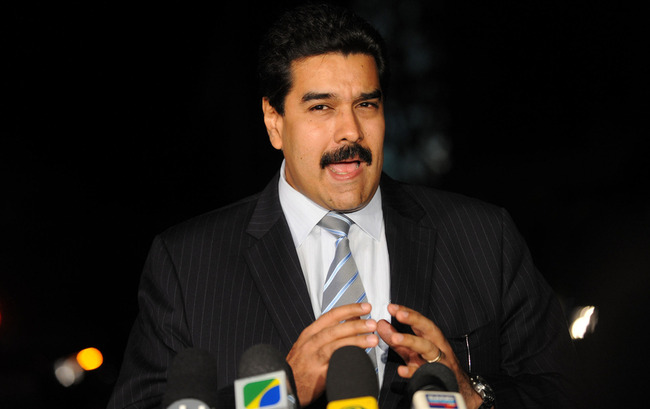
1 photo e1373659882830 In Case You Missed It… Articles Roundup Week of 7/12/13

Courtesy of: Policy Mic

This week: In defiance of Washington, Venezuela offers asylum to NSA leaker Edward Snowden; 44 percent of Venezuelans seek better relations with the United States; if asylum is granted, Venezuela may face economic and diplomatic sanctions by the United States; Maduro faces a potential revolt from radical sectors of his party who think he is negotiating with the United States. Human Rights Watch sends a letter to the United Nations criticizing the Venezuelan government for using criminal investigations to intimidate the opposition; Venezuelan “birther” movement further questions Maduro’s legitimacy; swarms of motorcycles in Venezuela’s capital are linked to violent crime; facing a shortage of hard currency, Christmas toys may be in short supply this year in Venezuela. Venezuelan inflation rises to 4.7 percent in June, reaching a staggering 40 percent for the past year; Venezuelan Central Bank says it will sell $200 million at auction in an attempt to alleviate shortages; the Central Bank of Venezuela removes the cap on the amount of U.S. dollars individuals are allowed to buy via Sicad; Venezuela’s restrictive hiring and firing practices discourage companies from filling openings, further dampening investment in the country; and Venezuelan daily oil exports to US fall 8.3 percent in the first half of 2013.

Venezuela offers asylum to U.S. fugitive Snowden, Reuters

Venezuela’s President Nicolas Maduro offered asylum to Edward Snowden who is believed to be holed up in the transit area of Moscow’s Sheremetyevo international airport; this action was made in defiance of Washington, which is demanding his arrest for divulging details of secret U.S. spy programs.

Many Venezuelans want better relations with the U.S., Pew Research Center

Poll shows that a plurality of Venezuelans (44%) prefer to have a closer relationship with the US than existed during the presidency of Chavez, while Maduro’s offer of asylum to Snowden would entail worsening ties with US, something that the Venezuelan public would avoid.

Venezuela may face economic sanctions if it grants asylum to Snowden, El Universal

Venezuela will face economic and diplomatic sanctions by the United States if Nicolás Maduro’s government grants asylum to former CIA agent Edward Snowden, who formally requested asylum to Venezuela on Monday.

With Snowden offer, Venezuela’s Maduro is on world stage, The Washington Post

American fugitive Edward Snowden’s diminishing possibilities of remaining free to continue releasing information about secret U.S. surveillance programs increasingly appear to hinge on Venezuela, which awaited word Monday on whether the former National Security Agency contractor would accept its offer of asylum and fly to the oil-rich country.

Letter to the UN about post-electoral violence in Venezuela, Human Rights Watch

Human Rights Watch is extremely concerned that Venezuelan authorities are using criminal investigations as a political tool to accuse the opposition, without adequate justification, of the commission of crimes.

Venezuela ‘Birther’ Movement Questions President’s Eligibility, Bloomberg

Venezuela’s opposition has been questioning Maduro’s Venezuelan nationality, since he was born in Colombia to Colombian parents, which would make his presidency fall foul of the constitution.

A circus without a ringmaster, The Economist

During the presidency of Hugo Chávez, who ruled from 1999 until his death from cancer in March, the domineering personality of the comandante left no doubt as to who was in charge of Venezuela.

Swarms of motorcycles in Venezuela’s capital tied to traffic chaos, violent crime, Washington Post

Ronald Alvarez was driving in chaotic, bumper-to-bumper traffic when he heard a throaty buzz and insistent “Beep! Beep! Beep!” approaching rapidly from behind.

Christmas toys may be in short supply in Venezuela, Reuters

Whether they’ve been naughty or nice, Venezuelan children might be stuck without Christmas presents this year.

Venezuela’s 12-Month Inflation Rate Advances to Just Shy of 40% in June, The Wall Street Journal

Venezuela’s 12-month inflation approached 40% in June after jumping 4.7% in June and 6.1% in May, pressured by a rise in government spending last year and in the wake of the country’s latest currency devaluation in February.

Venezuela central bank to sell $200 mln in forex auction, Reuters

Venezuela’s central bank said it will sell $200 mill at auction, of which $170 million would be allocated to businesses and $30 million to individuals, under its revamped currency system as government increases imports to alleviate the product shortages.

Central Bank of Venezuela removes cap in sale of US dollars to individuals, El Universal

The Central Bank of Venezuela (BCV) removed a cap limiting the amount of US dollars that individuals are allowed to buy via the Sicad.

Venezuela Forces Employment Even With Shuttered Factories, Bloomberg

Jean Salero gets up at dawn to clock in for his daily shift at a shuttered beer factory in the Venezuelan city of Barquisimeto.

Venezuela’s oil exports to the US fall in 2013, El Universal

Venezuelan oil exports to the US in the period Jan-Jun 2013 hit their lowest level since the 1990s, hitting 754,000 barrels per day from 823,000 bpd in 2012, amidst Venezuela’s strategy to prioritize clients and allies such as China or India and curb oil shipments to the US.
 
Jun
13
2013
Posted by
admin
Comments

ICYMI: Venezuela gets a lifeline from the United States

The Washington Post
June 11, 2013
By Editorial Board

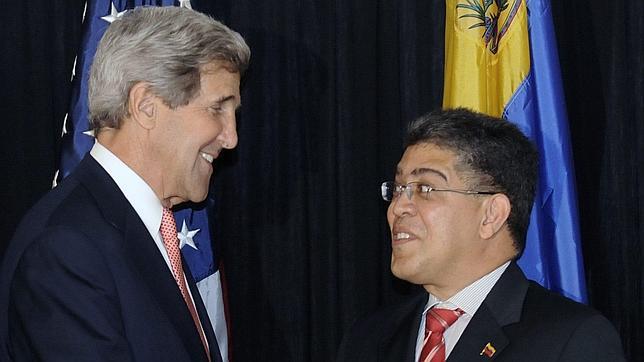
kerry jaua 644x362 e1371130314425 ICYMI: Venezuela gets a lifeline from the United States

Courtesy of: Agence France Presse

Nicolás Maduro, the former bus driver chosen by Hugo Chávez to lead Venezuela after his death, has been struggling to consolidate his position since being declared the victor in a questionable presidential election in April. With the economy stalling, inflation spiking and shortages spreading, the new president appears at a loss about how to respond, other than to blame domestic and foreign enemies. Nor has he been able to overcome a serious split in the Chavista movement between his own, Cuba-backed clique and another based in the military.

Perhaps most alarming for Mr. Maduro, an energized opposition has refused to accept the election outcome; its capable leader, Henrique Capriles, has been gaining sympathy around the region. The president of neighboring Colombia, Juan Manuel Santos, met with Mr. Capriles on May 29, prompting paroxysms of rage from Mr. Maduro and his aides. Other Latin American governments, while avoiding a confrontation with Caracas, have made it clear they regard the new leader’s legitimacy as questionable; the regional group Unasur called for an audit of the election results.

One government, however, has chosen to toss Mr. Maduro a lifeline: the United States. Last week Secretary of State John F. Kerry took time to meet Venezuelan Foreign Minister Elias Jaua on the sidelines of an Organization of American States meeting, then announced that the Obama administration would like to “find a new way forward” with the Maduro administration and “quickly move to the appointment of ambassadors.” Mr. Kerry even thanked Mr. Maduro for “taking steps toward this encounter” — words that the state-run media trumpeted.

What did Mr. Maduro do to earn this assistance from Mr. Kerry? Since Mr. Chávez’s death in March, the Venezuelan leader has repeatedly used the United States as a foil. He expelled two U.S. military attaches posted at the embassy in Caracas, claiming that they were trying to destabilize the country; he claimed the CIA was provoking violence in order to justify an invasion; and he called President Obama “the big boss of the devils.” A U.S. filmmaker, Timothy Tracy, was arrested and charged with plotting against the government — a ludicrous allegation that was backed with no evidence. Though Mr. Tracy was put on a plane to Miami on the day of the Kerry-Jaua encounter, Mr. Kerry agreed to the meeting before that gesture.

There’s nothing wrong, in principle, with diplomatic meetings or even in dispatching an ambassador to a country such as Venezuela. The State Department has also been meeting with senior opposition leaders and has yet to say it recognizes the presidential election results. But Mr. Kerry’s words amounted to a precious endorsement for Mr. Maduro — and the Obama administration appears bent on cultivating him regardless of his actions. Perhaps the increasingly desperate new leader has secretly promised concessions to Washington on matters such as drug trafficking. But with senior government and military officials involved in the transhipment of cocaine to the United States and Europe, he is unlikely to deliver.

In short, this looks like a reset for the sake of reset, launched without regard for good timing or the cause of Venezuelan democracy.

To read this article at The Washington Post, please click here.

 
Apr
22
2013
Posted by
admin
Comments

ICYMI: Maduro’s Lousy Start

The Economist
April 20, 2013

179882148 e1366652149467 ICYMI: Maduro’s Lousy Start

Courtesy of: Agence France Presse

Hugo Chávez has been dead for more than a month, but visitors to Caracas could be forgiven for thinking that Venezuela’s bombastic former president was still alive and in power. His image plasters the streets; his speeches fill the airwaves. The blitz was ordered by his anointed successor, Nicolás Maduro, to harness Chávez’s popularity in order to win a landslide in an election on April 14th. The plan failed.

Six months ago Chávez romped to a third term with a cushion of 11 percentage points. Polls had predicted that Mr Maduro (pictured) would repeat the feat, riding a wave of chavista sympathy. Instead he won by less than 2%, and then only after flagrantly breaking electoral rules. The result demonstrates that, without Chávez at the helm, chavismo, a noxious cocktail of populism, incompetence and repression, is a far less potent force. That is the good news. The bad news is that Venezuela’s already polarised society is now split down the middle, and seething. The country could unravel unless Mr Maduro steers a responsible course. It is far from clear that he will.

Henrique Capriles, the centrist who came second in the polls, demands a recount. During the campaign Mr Maduro enjoyed untrammelled freedom to bore viewers rigid on state television. More serious alleged breaches of electoral rules include the use of fake IDs and intimidation at polling stations. Appeals are likely to fall on deaf ears, because the electoral authority is among the institutions that lost their independence during Chávez’s 14 years in power. As Mr Maduro whipped up hysteria against the “fascist” opposition, Mr Capriles wisely called off a big rally for fear that, with seven already dead, violence would spread. There are already worrying signs that the government is ramping up repression.

There is at least some justice that the mess created during the Chávez years now falls to a fellow chavista. The economy is in ruins. Growth has stalled, the currency is digesting a 32% devaluation in February and inflation is likely to reach 30%. Price controls, the expropriation of farms and anti-business policies have created food shortages. The appearance in Caracas of sugar or cooking oil can create queues and excitement otherwise seen only in Cuba.

Chávez loyalists, of whom there are many millions, will tell Mr Maduro to be more chavista: more populist, more profligate, more authoritarian. He has already aped his predecessor, and fawned on his memory, to the point of parody. Describing Chávez as a “Christ of the Americas”, he referred to the election as “Resurrection Day”.

Yet chavismo’s bill is now due. Last year the budget deficit was 8.5% of GDP. Even with oil at over $100 a barrel, Venezuela’s public spending is unsustainable. Power cuts are frequent and roads are crumbling. Under an ineffective police force, the murder rate has soared to twice that of Mexico.

Reap what you sow

Now is the time for Mr Maduro to unite his country, not crush dissent. He should agree to recount the ballots. The state’s institutions, above all the judiciary and armed forces, need to regain their neutrality. And the weak economy will grow only if the government seeks rapprochement with the private sector and scraps controls on prices and foreign exchange. Mr Maduro’s tainted, wafer-thin victory suggests that Venezuelans want less chavismo, not more. That is certainly what their unfortunate country needs.

To read this article at The Economist, please click here.