Jul
26
2013
Posted by
admin
Comments

In Case You Missed It…Articles Roundup Week of 7/26/13

ob xv412 pd0613 g 20130613101301 e1374873855883 In Case You Missed It...Articles Roundup Week of 7/26/13

Courtesy of: Zuma Press

This week: Maduro responded to Samantha Power’s negative comments on Venezuela by halting efforts to improve U.S.-Venezuela relations; the United States leaves door open to improve relations but it does not rectify Power’s statements; Venezuelan Chargé d’Affaires to the United States affirms that the effort to restore relations was ‘suspended’ but that the government is willing to have a “friendly” bilateral relations with Washington; and Venezuela-Colombia relations are improving with country leaders meeting and discussing their responsibility of working together. The Eclac forecasts that Venezuela will have a 1 percent gross domestic product growth in 2013, the lowest in Latin America; Venezuela seeks $5 billion loan with China to finance a state investment fund that was recently involved in a $85 million embezzlement fraud; Venezuela’s dollar auction is seen by analysts as too little of an effort to revamp the price distortions in the economy; and Ferrominera workers halt the state-owned iron company in rejection of the militarization of the firm. Authentic leaked audio recording describes the highest levels of the Venezuelan government as gripped by rivalries and corruption; almost a dozen state institutions were hacked by groups of cyber pirates demanding Maduro’s resignation; Cabello stated that he will make public hard evidence of assassination attempts that were targeted against himself and president Maduro; and medical associations declare a state of emergency in Venezuela’s health system.

Venezuela Stops Efforts to Improve U.S. Relations, New York Times

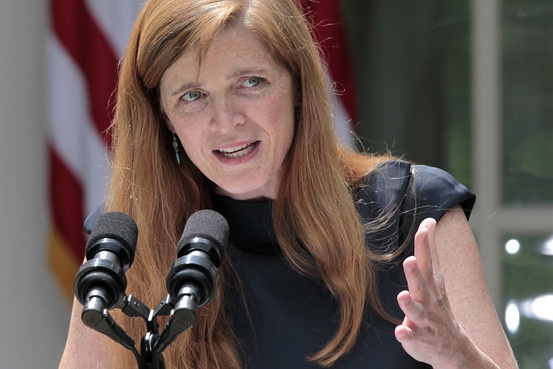
The nominee for US ambassador to the United Nations, Samantha Power, spoke before a Senate committee last Wednesday and said that one of her roles as an ambassador would be to challenge a “crackdown on civil society” in several countries, including Venezuela. These statements were first lashed out by Nicolás Maduro on Thursday, and late on Friday the Foreign Ministry said it was terminating efforts to improve relations with the US.

US leaves “door open” to Venezuela, says no apologies, El Universal

The US confirmed on Wednesday that the door was open to improve relations with Venezuela, but avoided any sort of rectification as requested by President Nicolas Maduro, who announced the end of discussions to restore relations after the statements issued recently  by the US ambassador nominee to the United Nations, Samantha Power.

Venezuela willing to have friendly relations with the United States, El Universal

Venezuelan Chargé d’Affaires to the United States Calixto Ortega stated on Thursday that a bilateral rapprochement launched in June to restore relations between the US and Venezuela has been “suspended,” but stressed that Nicolás Maduro’s Administration is willing to have “friendly” bilateral relations with Washington.

Venezuela, Colombia Resume Relations After Spat, Latin American Herald Tribune

Venezuela and Colombia renewed relations after two months of Maduro accusing Santos of destabilizing political harmony by meeting with Venezuelan opposition leader Capriles. Santos acknowledged that there are things the two parties don’t agree on, but that the obligation and responsibility of providing prosperity to their countries will enable them to work together.

Venezuela to experience the lowest economic growth in Latin America, El Universal

Venezuela is the country with the lowest forecast gross domestic product growth in Latin America for 2013. In fact, The Economic Commission for Latin America and the Caribbean (Eclac) estimated that Venezuelan economic growth would hit only 1% this year, below El Salvador, with 2%.

Venezuela seeks $5 billion China loan for scandal-plagued fund, Reuters

Venezuela is seeking a loan of up to $5 billion from China to finance a state investment fund that was recently the victim of an embezzlement scheme by the fund’s own employees involving millions of dollars. Eight people were arrested for appropriating $84 million from the fund, which has received two $4 billion tranches from the China Development Bank since its inception in 2007.

Venezuela’s Revamped Dollar Auctions Seen as Too Little, Wall Street Journal

Venezuela revived its system of auctions for putting more hard currency into the hands of importers and travelers, but analysts say the effort is falling short of addressing distortions caused by the country’s restrictive foreign exchange policies.

Venezuela’s Ferrominera comes to a halt amid militarization, El Universal

A group of workers with Venezuelan state-owned iron company CVG Ferrominera on Thursday blocked both the gate seven and the railways leading to the plant, in rejection of the militarization of the firm on Wednesday evening. Demonstrators explained that the company’s board suspended the transport service on Wednesday evening and troops blocked the gates as part of a contingency plan to restart the plant with National Guard troops.

Venezuelan Newspaper: Probe Says Leaked Audio Describing Corruption Is Authentic, Wall Street Journal

And audio recording allegedly describes the highest levels of the government as gripped by rivalries and corruption. Mr. Silva discussed with a Cuban intelligence officer a rivalry between Diosdado Cabello, the head of the national legislature, and recently elected President Nicolas Maduro. The man said to be Mr. Silva also accuses Mr. Cabello of raiding the government’s international reserves through the use of shady import companies.

Massive cyber attack against Maduro’s Venezuelan, Miami Herald 

From the stock market to the army, the air force and the national guard, web pages of almost a dozen Venezuelan state institutions were hacked by groups of cyber pirates demanding Nicolás Maduro’s resignation from a presidency they called fraudulent. The groups Anonymous Venezuela and Venezuelan Hackers claimed joint responsibility for the attacks launched Tuesday night. The targets include web pages of government agencies, ministries, municipalities…

“Overwhelming” Evidence of Plot to Assassinate Venezuela’s Maduro, Global Research

Head of Venezuela’s National Assembly Diosdado Cabello has stated that he will make public “hard evidence of assassination attempts” targeting himself and President Nicolas Maduro “in due course”. Cabello told legislators “We know who they are, what they are, what they want, and we will find them.”

Medical associations on state of emergency in Venezuela, El Universal

The Network of Medical and Scientific Associations declared a state of emergency in the Venezuelan health system and rejected the scale of charges drafted without including health federations, professional associations, private hospitals and other relevant entities. “We declare a state of emergency for multiple reasons. We cannot ignore how serious it would be regulating, over the use of force, charges arising out of clinical services or closing private health centers based in the country

 
Dec
2
2011
Posted by
admin
Comments

ICYMI – Venezuela: Private Sector Crowded Out

The Financial Times
By Benedict Mander

Huge sums of money have been ploughed into social programmes that, by government estimates, have reached more than 20m people, and Mr Chávez has overseen a reduction in poverty by more than half.

But beyond simply crowding out private sector efforts to help the poor, some argue the government has also played an active role in ensuring there are fewer opportunities to do so.

“It’s not only that the government doesn’t like [corporate philanthropy], it’s actually doing something to put a stop to it,” says a Venezuelan who runs a private non-profit organisation involved in microfinance and who preferred to remain anonymous for fear of reprisals.

“The government has pulled the rug from under our feet, as it doesn’t like microfinance. It’s exactly what they don’t want because it enables people not to have to depend on them.”

He says changes to banking laws have made microfinance increasingly less viable for his foundation and many microfinance organisations have been forced to move into conventional banking to survive.

But in spite of persistent attempts to diminish the affluence and influence of the rich, who Mr Chavez considers his political opponents, as well as a generalised hostility to the private sector, corporate philanthropy is surviving. Pressing social needs mean there remains plenty of room for non-profit organisations in sectors such as healthcare, education and housing.

A proportion of the most important private sector philanthropic work is carried out by some of Mr Chávez’s most high-profile adversaries.
One of the country’s biggest charities is the Polar Foundation, the social arm of the largest privately owned company.

Mr Chávez has repeatedly threatened to expropriate Polar, the food group, and he once said, Lorenzo Mendoza, its president would go to hell for being rich.
Private philanthropy has also flourished in areas where the government struggles to deliver.

Many public hospitals are in poor condition, for example, but the Children’s Orthopaedic Hospital in Caracas, a non-profit private foundation set up in 1945 by Eugenio Mendoza, a relative of Polar’s president, is flourishing.

But for many companies, being socially responsible is a challenge, and often not a priority. “With so much regulation and low profit margins there’s not much room for manoeuvre,” says Asdrubal Oliveros, an economist at Ecoanalitica, a consultancy.

“The government wants to monopolise the social arena to generate political returns … It is part of the DNA of ’21st century socialism’ that the state just keeps growing.”

“We are very happy we have been able to survive in this environment and to do the work we do,” says the philanthropist involved in microfinance.

 
Jul
18
2011
Posted by
admin
Comments

In Case You Missed It… Venezuela’s Docs Flee — So Does Chávez

Venezuela’s Docs Flee — So Does Chávez
It’s no coincidence that the president has returned to Cuba for medical attention.

By Mary Anastasia O’Grady
The Wall Street Journal

July 18, 2011

If we are to believe Hugo Chávez, doctors have removed a cancerous tumor the size of a baseball from somewhere inside his body. The type of cancer he has and the stage of its advance remain a Venezuelan state secret, but it is likely that he is a very sick man.

This news, for a leader who is only 56 years old, might have elicited a wide sweep of public sympathy under different circumstances. Instead, Mr. Chávez’s first-class treatment in a Cuban medical facility from a Spanish doctor has served to elevate the resentment many Venezuelans have about the declining quality of health care in their country.

The scarcity of basic goods in Venezuela is well documented. Just last week, the Venezuelan daily El Universal reported that its own survey of six supermarkets and government-owned food outlets found that out of 16 price-regulated staples, at least 10 were scarce.

Admittedly this was a narrow survey, but it garnered attention because it confirmed the daily experience of millions of Venezuelans. No cooking oil of any variety could be found in the six stores, and this included soy oil, which is not subject to price controls. Regulated cuts of meat were not available in the supermarkets; no price-controlled cheeses were found anywhere; processed corn flour was available in only one store.

Producers know why this is happening. In June, the food processor Polar asked the government to raise the price cap on corn oil because of the high cost of “the imported raw material.” Other companies have made similar appeals. But the government has good reason to resist: The easy money policy of the Central Bank of Venezuela (BCV) has provoked the highest inflation in the region, even with price controls on many products. According to the Spanish-language news outlet Noticias Financieras, the BCV reported that the cost of personal-care products was up 30.5% in the 12 months ending June 30. Food and nonalcoholic beverages climbed 22.3% over the same period.

Yet it is in health care where Venezuelans are feeling the inflation pain most. Hospital services are up 39.7% year over year, doctor and paramedic services are up 21.5%, and the cost of medicines and medical equipment has risen 17.4%.

These cost increases refer, of course, to private clinics and goods that are not subject to price controls. Wherever prices can’t be raised, both quality and supply are deteriorating rapidly.

One needn’t be sick enough for a hospital to appreciate the problem. Venezuelans report shortages of everything from aspirin to cholesterol drugs, and it’s likely this has triggered hoarding, which has exacerbated the situation.

Most medicines sold in Venezuela, prescription or over-the-counter, are imported or contain imported materials. This means that the distributor has to pay the market rate in dollars to suppliers abroad. Obviously if the government sets the retail price below the cost for the importer, the transaction will create a loss.

Chávez-nomics has been even more devastating for doctors in the public hospitals. Dr. Douglas León Natera of the Venezuelan Medical Federation (FMV) told El Universal on June 16 that doctors earn a mere 2,600 bolivars (roughly $325 at the market exchange rate) monthly, and that even though hospitals have become targets of the country’s rising crime, the government has failed to provide protection for health-care staff. Doctors also cite scarce and low-quality resources and long hours. On June 30 the FMV called a strike to protest low pay and arduous working conditions. Last week Mr. Chávez offered them a 30% raise. They refused to yield. They are, however, continuing to treat urgent cases.

Pharmaceutical importers have been reluctant to complain publicly about their difficulties; large companies that offend Mr. Chávez can become targets of nationalization. It’s a bit more difficult to nationalize a doctor. A strike is just one option. Many of Venezuela’s best doctors have fled the country, which explains how it is, according to the FMV, that in public hospitals there are 130,000 patients waiting for surgery.

In its 2010 annual report, the ministry of health acknowledged the shortage of doctors, particularly in specialties such as anesthesiology, neonatal care, cardiovascular surgery, neurosurgery and child cardiology. Private hospitals are also deteriorating now as the poor turn up for care with government medical insurance, but the insurer doesn’t fulfill its obligation to pay.

The government has admitted that a large number of doctors have fled, but it says it’s not worried. More than 25,000 Venezuelan students are now enrolled in Venezuela’s new Bolivarian medical schools or in medical schools in Cuba. Unfortunately the curriculum is not public, and Venezuelans are worried that the students spend more time studying revolutionary politics than anatomy. Mr. Chávez seems to understand this, if nothing else. His surgeon hails from Spain.