Courtesy of: Zuma Press
This week: Maduro responded to Samantha Power’s negative comments on Venezuela by halting efforts to improve U.S.-Venezuela relations; the United States leaves door open to improve relations but it does not rectify Power’s statements; Venezuelan Chargé d’Affaires to the United States affirms that the effort to restore relations was ‘suspended’ but that the government is willing to have a “friendly” bilateral relations with Washington; and Venezuela-Colombia relations are improving with country leaders meeting and discussing their responsibility of working together. The Eclac forecasts that Venezuela will have a 1 percent gross domestic product growth in 2013, the lowest in Latin America; Venezuela seeks $5 billion loan with China to finance a state investment fund that was recently involved in a $85 million embezzlement fraud; Venezuela’s dollar auction is seen by analysts as too little of an effort to revamp the price distortions in the economy; and Ferrominera workers halt the state-owned iron company in rejection of the militarization of the firm. Authentic leaked audio recording describes the highest levels of the Venezuelan government as gripped by rivalries and corruption; almost a dozen state institutions were hacked by groups of cyber pirates demanding Maduro’s resignation; Cabello stated that he will make public hard evidence of assassination attempts that were targeted against himself and president Maduro; and medical associations declare a state of emergency in Venezuela’s health system.
Venezuela Stops Efforts to Improve U.S. Relations, New York Times
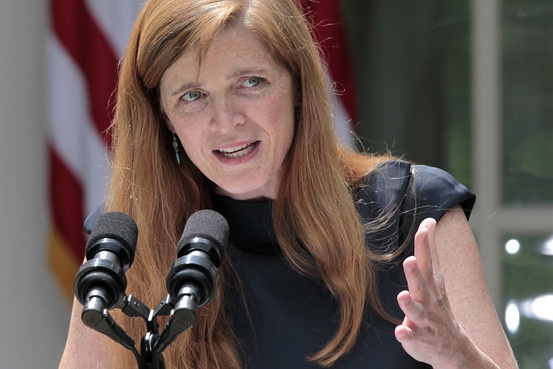
The nominee for US ambassador to the United Nations, Samantha Power, spoke before a Senate committee last Wednesday and said that one of her roles as an ambassador would be to challenge a “crackdown on civil society” in several countries, including Venezuela. These statements were first lashed out by Nicolás Maduro on Thursday, and late on Friday the Foreign Ministry said it was terminating efforts to improve relations with the US.
US leaves “door open” to Venezuela, says no apologies, El Universal
The US confirmed on Wednesday that the door was open to improve relations with Venezuela, but avoided any sort of rectification as requested by President Nicolas Maduro, who announced the end of discussions to restore relations after the statements issued recently by the US ambassador nominee to the United Nations, Samantha Power.
Venezuela willing to have friendly relations with the United States, El Universal
Venezuelan Chargé d’Affaires to the United States Calixto Ortega stated on Thursday that a bilateral rapprochement launched in June to restore relations between the US and Venezuela has been “suspended,” but stressed that Nicolás Maduro’s Administration is willing to have “friendly” bilateral relations with Washington.
Venezuela, Colombia Resume Relations After Spat, Latin American Herald Tribune
Venezuela and Colombia renewed relations after two months of Maduro accusing Santos of destabilizing political harmony by meeting with Venezuelan opposition leader Capriles. Santos acknowledged that there are things the two parties don’t agree on, but that the obligation and responsibility of providing prosperity to their countries will enable them to work together.
Venezuela to experience the lowest economic growth in Latin America, El Universal
Venezuela is the country with the lowest forecast gross domestic product growth in Latin America for 2013. In fact, The Economic Commission for Latin America and the Caribbean (Eclac) estimated that Venezuelan economic growth would hit only 1% this year, below El Salvador, with 2%.
Venezuela seeks $5 billion China loan for scandal-plagued fund, Reuters
Venezuela is seeking a loan of up to $5 billion from China to finance a state investment fund that was recently the victim of an embezzlement scheme by the fund’s own employees involving millions of dollars. Eight people were arrested for appropriating $84 million from the fund, which has received two $4 billion tranches from the China Development Bank since its inception in 2007.
Venezuela’s Revamped Dollar Auctions Seen as Too Little, Wall Street Journal
Venezuela revived its system of auctions for putting more hard currency into the hands of importers and travelers, but analysts say the effort is falling short of addressing distortions caused by the country’s restrictive foreign exchange policies.
Venezuela’s Ferrominera comes to a halt amid militarization, El Universal
A group of workers with Venezuelan state-owned iron company CVG Ferrominera on Thursday blocked both the gate seven and the railways leading to the plant, in rejection of the militarization of the firm on Wednesday evening. Demonstrators explained that the company’s board suspended the transport service on Wednesday evening and troops blocked the gates as part of a contingency plan to restart the plant with National Guard troops.
Venezuelan Newspaper: Probe Says Leaked Audio Describing Corruption Is Authentic, Wall Street Journal
And audio recording allegedly describes the highest levels of the government as gripped by rivalries and corruption. Mr. Silva discussed with a Cuban intelligence officer a rivalry between Diosdado Cabello, the head of the national legislature, and recently elected President Nicolas Maduro. The man said to be Mr. Silva also accuses Mr. Cabello of raiding the government’s international reserves through the use of shady import companies.
Massive cyber attack against Maduro’s Venezuelan, Miami Herald
From the stock market to the army, the air force and the national guard, web pages of almost a dozen Venezuelan state institutions were hacked by groups of cyber pirates demanding Nicolás Maduro’s resignation from a presidency they called fraudulent. The groups Anonymous Venezuela and Venezuelan Hackers claimed joint responsibility for the attacks launched Tuesday night. The targets include web pages of government agencies, ministries, municipalities…
“Overwhelming” Evidence of Plot to Assassinate Venezuela’s Maduro, Global Research
Head of Venezuela’s National Assembly Diosdado Cabello has stated that he will make public “hard evidence of assassination attempts” targeting himself and President Nicolas Maduro “in due course”. Cabello told legislators “We know who they are, what they are, what they want, and we will find them.”
Medical associations on state of emergency in Venezuela, El Universal
The Network of Medical and Scientific Associations declared a state of emergency in the Venezuelan health system and rejected the scale of charges drafted without including health federations, professional associations, private hospitals and other relevant entities. “We declare a state of emergency for multiple reasons. We cannot ignore how serious it would be regulating, over the use of force, charges arising out of clinical services or closing private health centers based in the country