Feb
7
2012
Posted by
admin
Comments

Game Changer in U.S.-Venezuela Relations

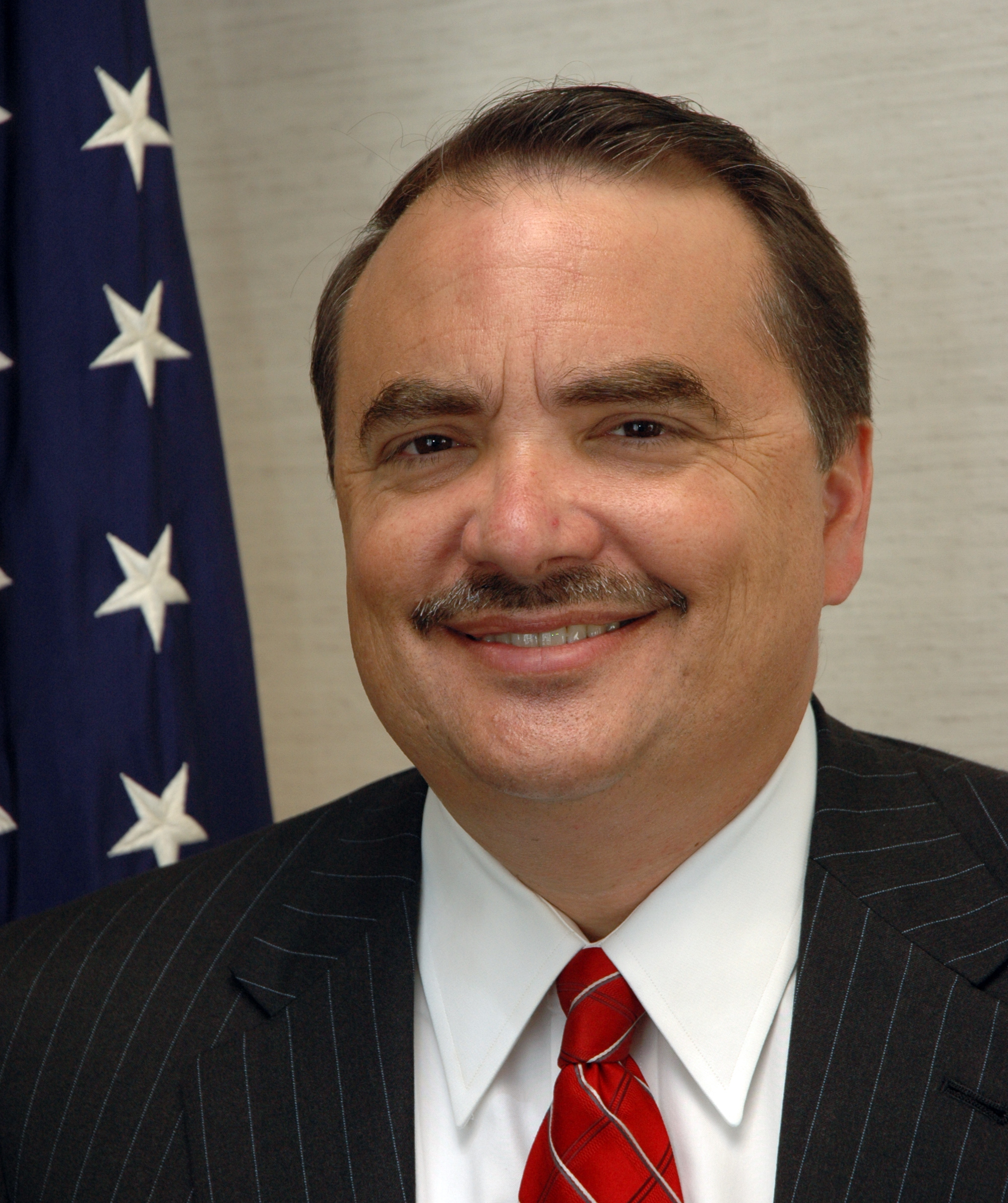
DSC 0754 150x150 Game Changer in U.S. Venezuela RelationsJosé R. Cárdenas served in several foreign policy positions during the George W. Bush administration (2004-2009), including on the National Security Council staff. He is a consultant with Vision Americas in Washington, DC.

Bombshell testimony on Capitol Hill last week by U.S. Director of National Intelligence James Clapper has dramatically altered the stakes in Washington’s relations with the Hugo Chávez regime in Venezuela. Speaking before the Senate Select Committee on Intelligence for the annual Worldwide Threat Assessment, Clapper said that Iranian leaders had changed their calculus and are now prepared to respond to perceived threats with terrorist attacks inside the United States.

Clapper said: “The 2011 plot to assassinate the Saudi ambassador to the United States shows that some Iranian officials — probably including Supreme Leader Ali Khamenei — have changed their calculus and are now more willing to conduct an attack in the United States in response to real or perceived U.S. actions that threaten the regime. We are also concerned about Iranian plotting against U.S. or allied interests overseas. Iran’s willingness to sponsor future attacks in the United States or against our interests abroad probably will be shaped by Tehran’s evaluation of the costs it bears for the plot against the ambassador as well as Iranian leaders’ perceptions of U.S. threats against the regime.”

The implications for U.S.-Venezuela relations are clear. Now that it has been assessed that Iran is prepared to attack the U.S. homeland, focus must now be placed on its capabilities and means to do so. That Hugo Chávez has made Venezuela — less than a three-hour flight from Florida — one of Iran’s most important international allies is now a paramount concern to U.S. security agencies.

Indeed, Chávez’s deep-seated economic, military, and intelligence relationship with Iran, running into the tens of billions of dollars, provides an enormous cover for covert operations and other destabilizing activities. That relationship runs from establishing Venezuela’s Margarita Island as a center for Iranian and Hezbollah operations in the Americas and facilitating Iran’s development of a nuclear capability by helping it obtain uranium, to blunting  sanctions by providing Iran’s access to Venezuela’s banking system and jointly trafficking in weapons (here and here) and narcotics. The DEA believes a weekly flight between Iran and Caracas is used for, among other nefarious purposes, smuggling South American cocaine to the Middle East.

Moreover, we know already that a member of the terrorist network plotting to detonate fuel tanks at JFK International Airport in New York in 2007 was arrested on the run to Venezuela, where he planned to board a Venezuelan flight to Tehran.

Lastly, the explosive documentary aired last month on Univisión, “The Iranian Threat,” included not only incriminating information on Venezuelan and Iranian diplomats discussing cyberattacks on sensitive U.S. computer systems (The State Department subsequently expelled the Venezuelan diplomat from the United States, where she had been re-posted), but also compelling evidence on how young Latinos are targeted for recruitment and paramilitary training in Iranian and Venezuelan camps visited by Hezbollah, Hamas, and the Colombian FARC.

As the Chairman of the House Foreign Affairs Committee, Congresswoman Ileana Ros-Lehtinen, put it succinctly in another hearing last week, “The Iranian regime has formed alliances with Chávez, Ortega, Castro, and Correa that many believe can destabilize the hemisphere. These alliances can pose an immediate threat by giving Iran – directly through the IRGC, the Qods force, or its proxies like Hezbollah – a platform in the region to carry out attacks against the United States, our interests, and allies.”

In addition, Clapper told the Senate that the intelligence community remains concerned about Iran’s ties to governments in the region and was tracking the issue closely, adding, specific to Iran’s activities in the region, “there is more to unfold here.”

Clearly, Clapper’s testimony reflects a substantial change in the U.S. government’s own calculus about Iran, Venezuela, and the Western Hemisphere.  If Iran is now prepared to strike the U.S. homeland, then all actions need to be pursued to debilitate its capability to do so, and that means targeting its presence in Venezuela. Hugo Chávez made a very dangerous bet when he introduced Iran to the Western Hemisphere. Now, he should be made to pay the price.

 
Mar
21
2011
Posted by
admin
Comments

Is there a Chavez terror network on America’s doorstep?

Is there a Chavez terror network on America’s doorstep?

Washington Post

By Roger Noriega

March 20, 2011

President Obama’s trip to South America has showcased promising partnerships in Brazil and elsewhere. His visit, however, should also focus attention in the region and within his administration on the fact that Iran and Venezuela are conspiring to sow Tehran’s brand of proxy terrorism in the Western Hemisphere.

On Aug. 22, 2010, at Iran’s suggestion, Venezuelan President Hugo Chavez hosted senior leaders of Hamas, Hezbollah and Palestinian Islamic Jihad (PIJ) in a secret summit at military intelligence headquarters at the Fuerte Tiuna compound in southern Caracas. Among those present were Palestinian Islamic Jihad Secretary General Ramadan Abdullah Mohammad Shallah, who is on the FBI’s list of most-wanted terrorists; Hamas’s “supreme leader,” Khaled Meshal; and Hezbollah’s “chief of operations,” whose identity is a closely guarded secret.

The idea for this summit sprang from a meeting between Iran’s ambassador to Syria, Ahmad Mousavi, and his Venezuelan counterpart, Imad Saab Saab, at the Venezuelan embassy in Damascus on May 10, 2010. According to the report received by Venezuela’s foreign minister, the two envoys were discussing a meeting between their presidents and Hezbollah’s leader, Hasan Nasrallah, when the Iranian suggested that the three meet Chavez in Caracas. That these infamous criminals left their traditional havens demonstrates their confidence in Chavez and their determination to cultivate a terror network on America’s doorstep.

According to information from within the Venezuelan regime, arrangements for the August conclave were made by Chavez’s No. 2 diplomat in Syria, Ghazi Nassereddine Atef Salame. Nassereddine is a naturalized Venezuelan of Lebanese origin who runs Hezbollah’s growing network in South America — which includes terror operatives and drug traffickers. A document obtained recently from a senior Venezuelan diplomat indicates that Nassereddine does business with four companies operated by Walid Makled, a cocaine smuggler indicted in the United States and detained in Colombia.

Makled has admitted his ties to the drug trade in a series of media interviews from jail.  He claims to have documents and videotapes proving the complicity of Chavez’s military commander, Henry Rangel Silva, and other Chavista cronies in cocaine smuggling.  Colombian authorities say they must return Makled to his native Venezuela to face a murder charge, and U.S. diplomats have concluded it is pointless to continue pressing for his extradition to face drug charges in New York. Yet the revelation that Makled can cast light on Nassereddine’s Hezbollah network should spur U.S. diplomats to renew their push for Makled’s extradition to the United States.

The danger posed by a network of terrorists in the Americas is very real. Last May, Muhammad Saif-ur-Rehm Khan, a Pakistani applying for a U.S. visa at the American Embassy in Santiago, Chile, was detained after guards detected traces of bomb-making materials on his hands. U.S. officials discovered Khan’s link to the Islamist group Jamaat al-Tabligh. It is not clear how much they shared with Chilean investigators. Lacking evidence to prosecute Khan, Chilean authorities released him in January, and he left the country bound for Turkey. A high-ranking Chilean source informed me that, before his arrest, Khan lived and associated with persons of Egyptian, Saudi and Lebanese background — many of whom carried Venezuelan passports. One of the officials accused of issuing such Venezuelan identity documents to suspicious foreigners is Chavez confidante Tarek Zaidan El Aissami. Also Venezuela’s interior minister, El Aissami is of Syrian descent; his father is known for having publicly praised Saddam Hussein and Osama bin Laden; and his brother, Firaz, is an associate of the cocaine smuggler Makled.

The threat posed by globe-trotting terrorists is ever-present. A U.S. security official told me in mid-January that two known al-Qaeda operatives were in Caracas planning a “chemical” attack on the U.S. embassy; on Jan. 31, the embassy was closed, and reports at the time cited “credible threats.”

A Venezuelan government source has told me that two Iranian terrorist trainers are on Venezuela’s Margarita Island instructing operatives who have assembled from around the region. In addition, radical Muslims from Venezuela and Colombia are brought to a cultural center in Caracas named for the Ayatollah Khomeini and Simon Bolivar for spiritual training, and some are dispatched to Qom, Iran, for Islamic studies. Knowledgeable sources confirm that the most fervent recruits in Qom are given weapons and explosives training and are returned home as “sleeper” agents.

U.S. authorities could act today to degrade Chavez’s ability to support terrorism and Tehran. There are money-laundering, drug-trafficking or Iran-specific statutes they could invoke. The question is whether they will respond swiftly and effectively enough to prevent a deadly attack.

The writer was ambassador to the Organization of American States from 2001 to 2003 and assistant secretary of state from 2003 to 2005. He is a visiting fellow at the American Enterprise Institute and managing director of Vision Americas LLC, which represents U.S. and foreign clients.