May
8
2013
Posted by
admin
Comments

Nicolás Maduro off to an inauspicious start as Venezuela’s dubiously-elected president

Nicolas Maduro e1368042661461 Nicolás Maduro off to an inauspicious start as Venezuela’s dubiously elected president

Courtesy of: Agence France Presse

Almost immediately after Venezuela’s partisan electoral authority declared Nicolás Maduro the winner of last month’s presidential election, he and his ruling PSUV party faced a choice that may yet define Venezuela’s future for years to come. Reports of thousands of irregularities in the voting process, including suspicions of fraud, sparked fears about the election’s legitimacy. The actions of Maduro – who first consented to the opposition’s calls for a full and transparent recount, later issued a hasty retraction, and then began a crackdown on peaceful opposition protestors – has only deepened those fears.

Maduro’s desperation is perhaps well-founded: a poll today found that a majority of Venezuelans believe the country is on the wrong track and, if given the chance, most would now choose Henrique Capriles for president over Maduro. The uncertainty and repression surrounding the Venezuelan election has grown so egregious that President Obama has abstained from recognizing Maduro as the winner. The President observed that the “entire hemisphere has been watching the violence, the protests, the crackdowns on the opposition.” ABC reports:

President Barack Obama avoided recognizing the government of Venezuela during an interview with Univision, explaining that he was concerned about recent “crackdowns” against members of the Venezuelan opposition. He also said that recent reports suggest that basic principles of democracy and human rights are not being fully observed by Venezuela’s government.

Obama and the U.S. State Department are among a growing chorus calling for a full and transparent recount of the Venezuelan election, a chorus that now includes the Organization of American States, former Colombian president Alvaro Uribe, and internationally-respected human rights watchdog groups. Though Maduro may lack Hugo Chávez’s charisma and support among Venezuelans, he evinces the same contempt for the international community.  That contempt, combined with Maduro’s increasingly flagrant repression of his own people, mean that recent weeks for Venezuela have been turbulent indeed.

It’s hard to deny that Maduro’s “election” lacks legitimacy, before the eyes of both Venezuelans and the world. The partial audit the government agreed to is viewed as little more than a public relations gesture, and hardly sufficient to investigate the serious voting irregularities that led many to wonder whether Capriles was the election’s true winner.

As those doubts grow, Maduro has flexed the government’s authoritarian muscle to stifle dissent and cow the opposition into obedience. The state-run media – which recently tightened its grip on the airwaves by purchasing the previously-independent TV station Globovision – has dutifully propagandized on behalf of Maduro; the government recently severed the video feed of a Capriles speech, preventing the opposition leader from making his case to Venezuelans.

Such tactics haven’t prevented the opposition from making their voice heard. The din of “Cacerola” protests resounds throughout the country. Capriles has filed an official protest with the country’s Supreme Court which, comprised of Maduro’s political allies, is unlikely to intervene. Maduro and the PSUV have met these peaceful expressions of dissent, however, with strongman tactics. Capriles called off an opposition March after the government issued a veiled-threat of violence against the protestors. Opposition lawmakers have been barred from speaking in the National Assembly. And a bloody brawl in the National Assembly injured 17 opposition lawmakers. Now the government has intimated it may throw Capriles in jail.

Such tactics, though they fly in the face of democracy and human rights, at least demonstrate that Maduro is feeling the pressure. The Economist opined after the election that “without Chávez at the helm, chavismo, a noxious cocktail of populism, incompetence and repression, is a far less potent force.” Nicolas Maduro cannot strong-arm his way to legitimacy. But that hasn’t stopped him trying.
 
Feb
7
2012
Posted by
admin
Comments

Game Changer in U.S.-Venezuela Relations

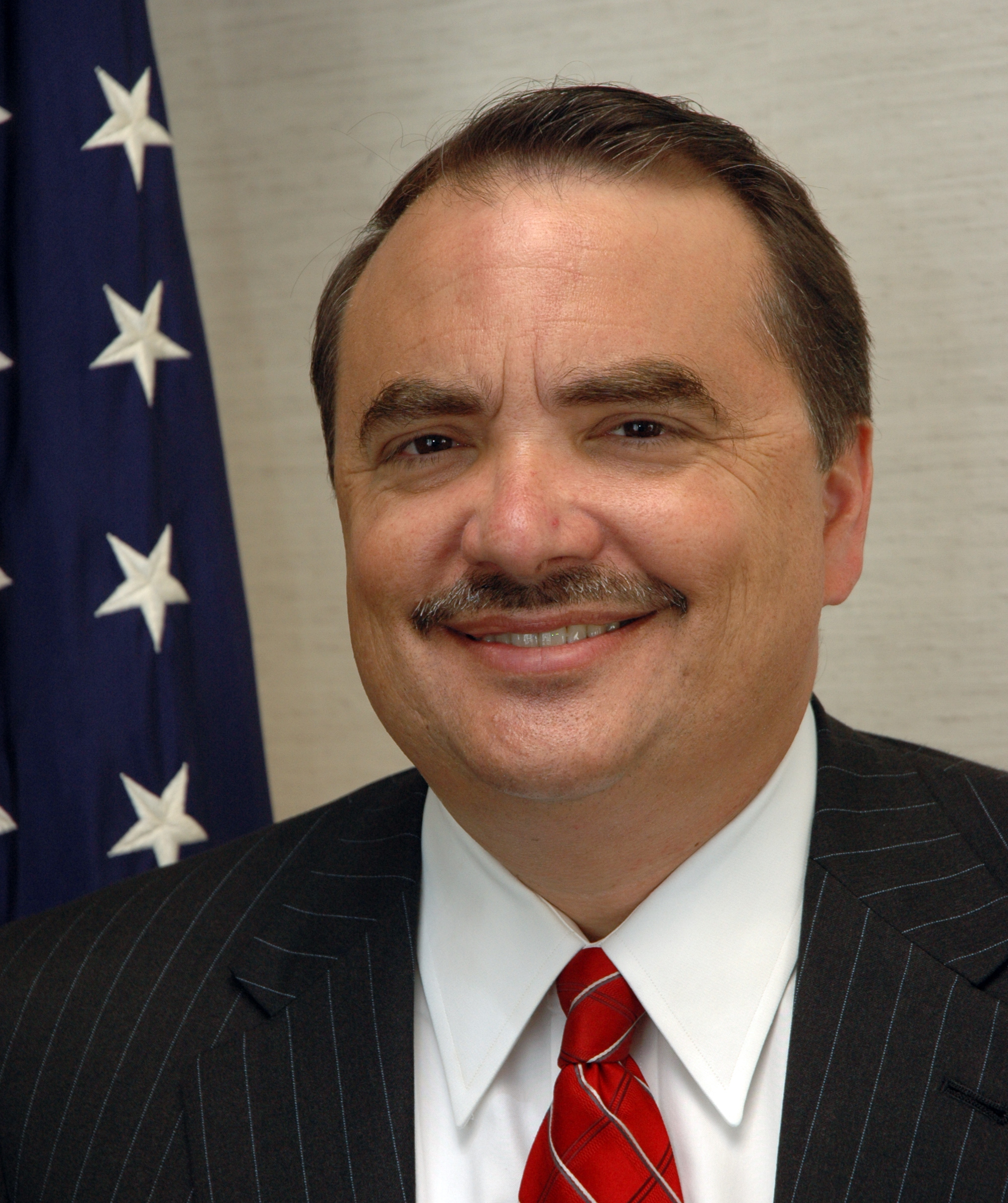
DSC 0754 150x150 Game Changer in U.S. Venezuela RelationsJosé R. Cárdenas served in several foreign policy positions during the George W. Bush administration (2004-2009), including on the National Security Council staff. He is a consultant with Vision Americas in Washington, DC.

Bombshell testimony on Capitol Hill last week by U.S. Director of National Intelligence James Clapper has dramatically altered the stakes in Washington’s relations with the Hugo Chávez regime in Venezuela. Speaking before the Senate Select Committee on Intelligence for the annual Worldwide Threat Assessment, Clapper said that Iranian leaders had changed their calculus and are now prepared to respond to perceived threats with terrorist attacks inside the United States.

Clapper said: “The 2011 plot to assassinate the Saudi ambassador to the United States shows that some Iranian officials — probably including Supreme Leader Ali Khamenei — have changed their calculus and are now more willing to conduct an attack in the United States in response to real or perceived U.S. actions that threaten the regime. We are also concerned about Iranian plotting against U.S. or allied interests overseas. Iran’s willingness to sponsor future attacks in the United States or against our interests abroad probably will be shaped by Tehran’s evaluation of the costs it bears for the plot against the ambassador as well as Iranian leaders’ perceptions of U.S. threats against the regime.”

The implications for U.S.-Venezuela relations are clear. Now that it has been assessed that Iran is prepared to attack the U.S. homeland, focus must now be placed on its capabilities and means to do so. That Hugo Chávez has made Venezuela — less than a three-hour flight from Florida — one of Iran’s most important international allies is now a paramount concern to U.S. security agencies.

Indeed, Chávez’s deep-seated economic, military, and intelligence relationship with Iran, running into the tens of billions of dollars, provides an enormous cover for covert operations and other destabilizing activities. That relationship runs from establishing Venezuela’s Margarita Island as a center for Iranian and Hezbollah operations in the Americas and facilitating Iran’s development of a nuclear capability by helping it obtain uranium, to blunting  sanctions by providing Iran’s access to Venezuela’s banking system and jointly trafficking in weapons (here and here) and narcotics. The DEA believes a weekly flight between Iran and Caracas is used for, among other nefarious purposes, smuggling South American cocaine to the Middle East.

Moreover, we know already that a member of the terrorist network plotting to detonate fuel tanks at JFK International Airport in New York in 2007 was arrested on the run to Venezuela, where he planned to board a Venezuelan flight to Tehran.

Lastly, the explosive documentary aired last month on Univisión, “The Iranian Threat,” included not only incriminating information on Venezuelan and Iranian diplomats discussing cyberattacks on sensitive U.S. computer systems (The State Department subsequently expelled the Venezuelan diplomat from the United States, where she had been re-posted), but also compelling evidence on how young Latinos are targeted for recruitment and paramilitary training in Iranian and Venezuelan camps visited by Hezbollah, Hamas, and the Colombian FARC.

As the Chairman of the House Foreign Affairs Committee, Congresswoman Ileana Ros-Lehtinen, put it succinctly in another hearing last week, “The Iranian regime has formed alliances with Chávez, Ortega, Castro, and Correa that many believe can destabilize the hemisphere. These alliances can pose an immediate threat by giving Iran – directly through the IRGC, the Qods force, or its proxies like Hezbollah – a platform in the region to carry out attacks against the United States, our interests, and allies.”

In addition, Clapper told the Senate that the intelligence community remains concerned about Iran’s ties to governments in the region and was tracking the issue closely, adding, specific to Iran’s activities in the region, “there is more to unfold here.”

Clearly, Clapper’s testimony reflects a substantial change in the U.S. government’s own calculus about Iran, Venezuela, and the Western Hemisphere.  If Iran is now prepared to strike the U.S. homeland, then all actions need to be pursued to debilitate its capability to do so, and that means targeting its presence in Venezuela. Hugo Chávez made a very dangerous bet when he introduced Iran to the Western Hemisphere. Now, he should be made to pay the price.