The Wall Street Journal
April 16, 2013
By Ezequiel Minaya and Kejal Vyas

Courtesy of: Agence France Presse
CARACAS—Tension in Venezuela rose sharply Monday after the government reneged on its promise to carry out a full recount of the bitterly contested presidential vote and declared acting President Nicolás Maduro as president-elect.
The opposition, pointing to irregularities in the election, said it wouldn’t recognize the result and began to demonstrating across the country, as the U.S. urged a vote recount.
Citizens around the capital burned garbage in the street and banged pots and pans—a traditional Latin American protest tactic—as armored personnel carriers dotted the city. National Guard troops fired tear gas and rubber bullets to disperse protesting students.
The emerging showdown over the recount and how to move forward raised tensions in this deeply divided nation, which holds the world’s largest reserves of oil and is sliding toward economic crisis after 14 years of free-spending rule by Hugo Chávez, who died in March after a battle with cancer.
“This is the worst possible outcome,” said Carl Meacham, director of the Americas Program at the Center for Strategic and International Studies in Washington. “The possibility for conflict has increased in a major way, and this is not going away in the short term. This is going to drag on.”
Mr. Maduro, handpicked by Mr. Chávez as his successor, took 7.56 million votes, or 50.75%, while opposition leader Henrique Capriles received 7.30 million ballots, or 48.98%, with more than 99% of the ballots counted, election officials said Monday.

Courtesy of: The Wall Street Journal
Some 100,000 expatriate ballots haven’t yet been counted as part of the tally. In the past they have overwhelmingly backed the opposition.
The narrow result was a shock in a country where polls had shown Mr. Maduro with a double-digit lead in the weeks before the vote. He now faces an emboldened opposition while trying to maintain unity among his own movement.
After the initial results were released late Sunday, Mr. Maduro proclaimed victory, but said he welcomed a full recount. The government reversed that decision Monday, even as the opposition said that it had evidence of scores of election irregularities.
“There will not be any vote by vote recount,” said Diosdado Cabello, a former Chávez ally who is the head of the National Assembly, has broad support in the military, and is seen as the second-most-powerful man in the government after Mr. Maduro. “That is a whim of the ultraright wing in this country.”
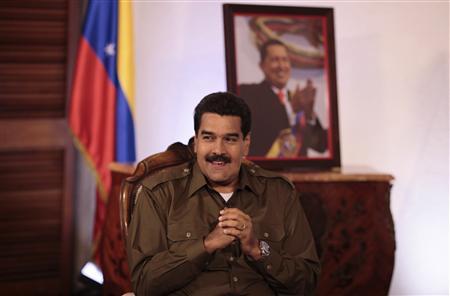
Late in the day, thousands of people clad in red shirts joined top politicians and the military high command for a ceremony to declare him president-elect. Mr. Maduro, a former bus driver who became foreign minister under Mr. Chávez, is due to be sworn in on Friday.
“I am the son of Chávez,” Mr. Maduro said in a speech after being declared president-elect by the election agency, which is dominated pro-Chávez officials. The 50-year-old accused the opposition of trying to overturn a clean election and generate instability.
Mr. Capriles urged his supporters to remain calm and refrain from violence. He asked Mr. Maduro why there wouldn’t be a recount: “What’s the rush? What are you hiding? If you declare yourself president today, you will be illegitimate, spurious.”
An opposition official said Mr. Capriles’s camp was counting the polling station tallies on its own across the country and believed its candidate had won. Mr. Capriles called on supporters to protest by election agency offices around the country.
Messrs. Maduro and Capriles both appealed to their supporters to hold demonstrations on Wednesday in Caracas, raising the specter of confrontation.
“If Capriles starts marches throughout the country, the Chavistas [Chávez supporters] will start beating the hell out of the opposition people, the police and military will have to intervene,” said Riordan Roett, the head of Latin American studies at Johns Hopkins University in Baltimore. “There will be blood. This violence won’t stop. I don’t see Capriles backing down anytime soon, nor Maduro’s people.”
International reaction seemed divided. Leftist governments throughout Latin America including Argentina, Bolivia, Brazil, Cuba and Nicaragua were quick to congratulate Mr. Maduro on his victory. Russia and China also congratulated him.
Spain, the U.S. and the secretary-general of the Organization of American States, José Miguel Insulza, all called for a recount.
White House spokesman Jay Carney called it an “important, prudent and necessary step to ensure that all Venezuelans have confidence in these results.” He added that “rushing to a decision in these circumstances would be inconsistent with the expectations of Venezuelans for a clear and democratic outcome.”
In several speeches during the day, Mr. Maduro ratcheted up the rhetoric, accusing the opposition of wanting to engineer a coup and comparing them to Nazi right-wingers in Germany in the 1930s. He said he would respond with a “hard hand.”
Resorting to a favorite ploy of his deceased mentor, he accused the U.S. government of trying to sabotage Venezuela’s democracy and its electric grid. He offered no details or evidence.
Mr. Capriles, a 40-year-old distance runner and state governor, said he had hundreds of reports of election irregularities. His campaign showed one video taken at a polling station where a man in a red shirt—the color of the ruling United Socialist Party of Venezuela—escorted another person into the polling booth, the campaign said, presumably to ensure they voted for the government.
One television channel showed footage of what it said were empty ballot boxes—which are supposed to be under army guard—in a car found in Mr. Chávez’s home state of Barinas.
There were no official election observers because Venezuela has said it doesn’t need its votes to be monitored.
The narrow victory margin came after a campaign that the opposition said was unfair, with Mr. Maduro enjoying a huge advantage on television and radio as well as the government’s vast resources. The government denied an uneven playing field.
In Caracas, thousands of Capriles supporters, many of them students, blocked a major avenue by Plaza Altamira, a traditional center of anti-Chávez protests in the wealthier eastern part of the city. The protesters burned garbage in the street, and faced off with National Guard troops armed with tear gas. “I am furious, I can’t get rid of my feelings of rage,” said Mabel Leon, a 22 year old college student. Alejandro Teppa, a 29-year-old sculptor, waved a Venezuelan flag. “Everybody is sick and tired of the revolution. We want democracy,” he said. “Chavez came in with blood and he will go out only in blood. Chavez and Maduro are the same garbage.”
Not far away, thousands of his supporters clad in pro-Chavez T-shirts, caps and waving flags crammed around the electoral commission’s headquarters. Many wore taped-on bushy mustaches to show their support for the hirsute Mr. Maduro.
Luisa Gonzalez, 65, said she believes Mr. Maduro rightfully won the presidency and dismissed calls by the opposition for a recount. “I came here today to defend our sovereignty,” said Ms. González, clutching photos of Mr. Chavez.
If Mr. Maduro’s victory stands, the tall and mustachioed leader will be tested quickly. He inherits a nation with financial strains that are growing despite almost a decade of high oil prices. Inflation is expected to reach more than 30% this year.
The government’s budget deficit ended last year at roughly 15% of annual economic output—far higher than in crisis-hit European nations. A lack of dollars has led to shortages of everything from milk to corn flour, the staple of the Venezuelan diet.
Making matters worse, rates of violent crime are among the worst in the world, power outages regularly plunge parts of the country into darkness, the state oil industry is suffering from a lack of investment and corruption is widely seen as getting worse.
Given Mr. Maduro’s narrow victory, he will have little mandate to tackle difficult economic decisions like cutting spending. “Economic policy and political stability are likely to deteriorate rapidly,” analysts at Eurasia risk consultancy wrote in a note to clients Monday.
Investors shunned Venezuelan debt Monday, following news of the political standoff. Yields on long-term bonds rose sharply, from 9.15% to 9.4%, in the morning, then fell back slightly to 9.3%.
Resolving growing troubles in the economy will involve increasingly difficult trade-offs for Mr. Maduro, particularly with a narrow victory that robs him of a broad mandate. Any decline in public spending, for instance, could create a backlash for a young president who lacks Mr. Chávez’s charisma, and a connection with the poor.
“Maduro has no easy options. He’s the loser with the Chavistas, who will start to question him, while the opposition feels that the end is near,” said Javier Corrales, a political analyst at Amherst College.
Just last week, Mr. Maduro promised that he would raise the monthly minimum wage three times later this year if he won the vote, bringing it up some 45% to as much as $471 per month. Mr. Maduro said the wage increases would help workers cope with rising costs. Economists say it will only fuel inflation.
“This is a Pyrrhic victory,” said Orlando Ochoa, an economist at the Andres Bello Catholic University. “Within a year, he’s going to have real trouble.”
Analysts estimated that roughly 1 million voters who supported Mr. Chávez last October—when he won re-election against Mr. Capriles—changed sides this time around. Isaac González said that for the past 14 years, Hugo Chávez could count on his vote. But on Sunday, the 27-year-old driver for an events company, didn’t vote for the ruling Socialists for the first time.
Playing dominoes in the colonial plaza of Petare, once a Chávez stronghold, Mr. González said he still had great admiration for Mr. Chávez but he didn’t feel Mr. Maduro could fill his shoes.
“I think Maduro depended too much on Chávez, he need to be his own man. Now that Chávez is gone he should find his own path.”
“He needs to bring down the heat and try to bring the two sides together, because this country right here is split in half,” he said making a chopping motion with his hand.
Already, Diosdado Cabello, the president of the National Assembly who most analysts believe to be Mr. Maduro’s most formidable rival for leadership within Mr. Chávez’s movement, called Chavismo, said adherents must undergo a profound process of self criticism.
Mr. Corrales said he interpreted Mr. Cabello’s message to imply a criticism of Mr. Maduro and his campaign. Mr. Corrales said he believed Chávez fans will rally around Mr. Maduro at first to defend his questioned electoral triumph, but could easily break ranks a few months on when Mr. Maduro, if he is confirmed as president, has to take unpopular decisions to deal with a failing economy.
On campaign, Mr. Maduro proved to be a hard-liner, eschewing any attempt to talk about national reconciliation, said Mr. Corrales. In coming days, Mr. Maduro may be tempted to crack down on the opposition to try and shore up his weak political position, the analyst said. “This is a very delicate situation. Maduro could take a turn toward repression,” he said.
Mr. Corrales said the close electoral results pose a quandary for the U.S. as Mr. Maduro—and Cuba, the Venezuelan government’s key ally—will certainly try to blame the disappointing election results on some sort of a U.S. plot and try to make turn a domestic political issue into an international confrontation with the U.S. “The U.S. has to be careful, if not, Maduro will try to make it fall into a David vs Goliath confrontation,” he said.
To read this article at The Wall Street Journal, please click here.