The New York Times
By William Neuman
April 20, 2012
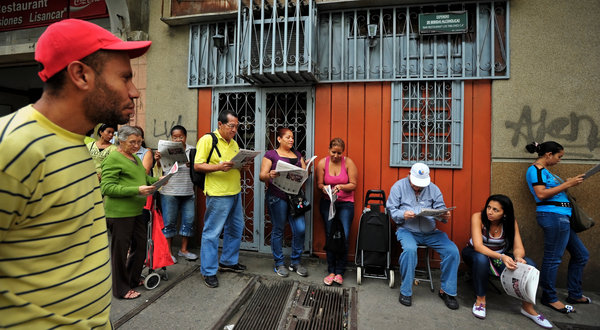
By 6:30 a.m., a full hour and a half before the store would open, about two dozen people were already in line. They waited patiently, not for the latest iPhone, but for something far more basic: groceries.
“Whatever I can get,” said Katherine Huga, 23, a mother of two, describing her shopping list. She gave a shrug of resignation. “You buy what they have.”
Venezuela is one of the world’s top oil producers at a time of soaring energy prices, yet shortages of staples like milk, meat and toilet paper are a chronic part of life here, often turning grocery shopping into a hit or miss proposition.
Some residents arrange their calendars around the once-a-week deliveries made to government-subsidized stores like this one, lining up before dawn to buy a single frozen chicken before the stock runs out. Or a couple of bags of flour. Or a bottle of cooking oil.
The shortages affect both the poor and the well-off, in surprising ways. A supermarket in the upscale La Castellana neighborhood recently had plenty of chicken and cheese — even quail eggs — but not a single roll of toilet paper. Only a few bags of coffee remained on a bottom shelf.
Asked where a shopper could get milk on a day when that, too, was out of stock, a manager said with sarcasm, “At Chávez’s house.”
At the heart of the debate is President Hugo Chávez‘s socialist-inspired government, which imposes strict price controls that are intended to make a range of foods and other goods more affordable for the poor. They are often the very products that are the hardest to find.
“Venezuela is too rich a country to have this,” Nery Reyes, 55, a restaurant worker, said outside a government-subsidized store in the working-class Santa Rosalía neighborhood.
“I’m wasting my day here standing in line to buy one chicken and some rice.”
Venezuela was long one of the most prosperous countries in the region, with sophisticated manufacturing, vibrant agriculture and strong businesses, making it hard for many residents to accept such widespread scarcities. But amid the prosperity, the gap between rich and poor was extreme, a problem that Mr. Chávez and his ministers say they are trying to eliminate.
They blame unfettered capitalism for the country’s economic ills and argue that controls are needed to keep prices in check in a country where inflation rose to 27.6 percent last year, one of the highest rates in the world. They say companies cause shortages on purpose, holding products off the market to push up prices. This month, the government required price cuts on fruit juice, toothpaste, disposable diapers and more than a dozen other products.
“We are not asking them to lose money, just that they make money in a rational way, that they don’t rob the people,” Mr. Chávez said recently.
But many economists call it a classic case of a government causing a problem rather than solving it. Prices are set so low, they say, that companies and producers cannot make a profit. So farmers grow less food, manufacturers cut back production and retailers stock less inventory. Moreover, some of the shortages are in industries, like dairy and coffee, where the government has seized private companies and is now running them, saying it is in the national interest.
In January, according to a scarcity index compiled by the Central Bank of Venezuela, the difficulty of finding basic goods on store shelves was at its worst level since 2008. While that measure has eased considerably, many products can still be hard to come by.
Datanálisis, a polling firm that regularly tracks scarcities, said that powdered milk, a staple here, could not be found in 42 percent of the stores its researchers visited in early March.
Liquid milk can be even harder to find.
Other products in short supply last month, according to Datanálisis, included beef, chicken, vegetable oil and sugar. The polling firm also says that the problem is most extreme in the government-subsidized stores that were created to provide affordable food to the poor.
But with inflation so crippling, many shoppers at those stores said the inconvenience was worth it.
“It’s an enormous help,” said Ana Lozano, 62, a retiree who takes in ironing to supplement her pension, who was waiting outside the Santa Rosalía grocery. “That’s why there’s such a long line.”
The government appears keenly aware of the twin threats of shortages and inflation as it prepares for the October election in which Mr. Chávez is seeking a new six-year term. The price controls have been defended in government advertisements and accompanied by repeated threats from Mr. Chávez to nationalize any company that cannot keep its products on the market.
Vice President Elías Jaua has warned of a media campaign to frighten Venezuelans into hoarding, which would provoke artificial shortages. Government advertisements urge consumers not to succumb to panic buying, using a proverbial admonition: Bread for today is hunger for tomorrow.
Francisco Rodríguez, an economist with Bank of America Merrill Lynch who studies the Venezuelan economy, said the government might score some political points with the new round of price controls. But over time, he argued, they will spell trouble for the economy.
“In the medium to long term, this is going to be a disaster,” Mr. Rodriguez said.
The price controls also mean that products missing from store shelves usually show up on the black market at much higher prices, a source of outrage for many. For government supporters, that is proof of speculation. Others say it is the consequence of a misguided policy.
Emilio Ortiz, 52, a shop owner, said he could buy sugar and powdered milk from his distributors only once last year. He gets cooking oil once a month, but only about half of what he requests. He also said that profits were so low on controlled products that he must raise other prices to compensate.
One of his customers asked if the store had Harina Pan, which is considered the quintessential local brand of flour to use in making arepas, the signature corn cakes that are a staple of the Venezuelan diet.
“There isn’t any,” Mr. Ortiz said. It would be like an American store not having any Coca-Cola.
The customer asked if other stores nearby carried it.
“You can’t find it,” Mr. Ortiz said glumly.
If there is one product that Venezuela should be able to produce in abundance it is coffee, a major crop here for centuries. Until 2009, Venezuela was a coffee exporter, but it began importing large amounts of it three years ago to make up for a decline in production.
Farmers and coffee roasters say the problem is simple: retail price controls keep profits close to or below what it costs farmers to grow and harvest the coffee. As a result, many do not invest in new plantings or fertilizer, or they cut back on the amount of land used to grow coffee. Making matters worse, the recent harvest was poor in many areas.
A group representing small- to medium-size roasters said last month that there was no domestic coffee left on the wholesale market — the earliest time of year that industry leaders could remember such supplies running out. The group announced a deal with the government to buy imported beans to keep coffee on store shelves.
Similar problems have played out with other agricultural products under price controls, like lags in production and rising imports for beef, milk and corn.
Waiting in line to buy chicken and other staples, Jenny Montero, 30, recalled how she could not find cooking oil last fall and had to switch from the fried food she prefers to soups and stews.
“It was good for me,” she said drily, pushing her 14-month-old daughter in a stroller. “I lost several pounds.”
María Eugenia Díaz contributed reporting.
To read this post on The New York Times, please click here.
By 6:30 a.m., a full hour and a half before the store would open, about two dozen people were already in line. They waited patiently, not for the latest iPhone, but for something far more basic: groceries.
“Whatever I can get,” said Katherine Huga, 23, a mother of two, describing her shopping list. She gave a shrug of resignation. “You buy what they have.”
Venezuela is one of the world’s top oil producers at a time of soaring energy prices, yet shortages of staples like milk, meat and toilet paper are a chronic part of life here, often turning grocery shopping into a hit or miss proposition.
Some residents arrange their calendars around the once-a-week deliveries made to government-subsidized stores like this one, lining up before dawn to buy a single frozen chicken before the stock runs out. Or a couple of bags of flour. Or a bottle of cooking oil.
The shortages affect both the poor and the well-off, in surprising ways. A supermarket in the upscale La Castellana neighborhood recently had plenty of chicken and cheese — even quail eggs — but not a single roll of toilet paper. Only a few bags of coffee remained on a bottom shelf.
Asked where a shopper could get milk on a day when that, too, was out of stock, a manager said with sarcasm, “At Chávez’s house.”
At the heart of the debate is President Hugo Chávez‘s socialist-inspired government, which imposes strict price controls that are intended to make a range of foods and other goods more affordable for the poor. They are often the very products that are the hardest to find.
“Venezuela is too rich a country to have this,” Nery Reyes, 55, a restaurant worker, said outside a government-subsidized store in the working-class Santa Rosalía neighborhood.
“I’m wasting my day here standing in line to buy one chicken and some rice.”
Venezuela was long one of the most prosperous countries in the region, with sophisticated manufacturing, vibrant agriculture and strong businesses, making it hard for many residents to accept such widespread scarcities. But amid the prosperity, the gap between rich and poor was extreme, a problem that Mr. Chávez and his ministers say they are trying to eliminate.
They blame unfettered capitalism for the country’s economic ills and argue that controls are needed to keep prices in check in a country where inflation rose to 27.6 percent last year, one of the highest rates in the world. They say companies cause shortages on purpose, holding products off the market to push up prices. This month, the government required price cuts on fruit juice, toothpaste, disposable diapers and more than a dozen other products.
“We are not asking them to lose money, just that they make money in a rational way, that they don’t rob the people,” Mr. Chávez said recently.
But many economists call it a classic case of a government causing a problem rather than solving it. Prices are set so low, they say, that companies and producers cannot make a profit. So farmers grow less food, manufacturers cut back production and retailers stock less inventory. Moreover, some of the shortages are in industries, like dairy and coffee, where the government has seized private companies and is now running them, saying it is in the national interest.
In January, according to a scarcity index compiled by the Central Bank of Venezuela, the difficulty of finding basic goods on store shelves was at its worst level since 2008. While that measure has eased considerably, many products can still be hard to come by.
Datanálisis, a polling firm that regularly tracks scarcities, said that powdered milk, a staple here, could not be found in 42 percent of the stores its researchers visited in early March.
Liquid milk can be even harder to find.
Other products in short supply last month, according to Datanálisis, included beef, chicken, vegetable oil and sugar. The polling firm also says that the problem is most extreme in the government-subsidized stores that were created to provide affordable food to the poor.
But with inflation so crippling, many shoppers at those stores said the inconvenience was worth it.
“It’s an enormous help,” said Ana Lozano, 62, a retiree who takes in ironing to supplement her pension, who was waiting outside the Santa Rosalía grocery. “That’s why there’s such a long line.”
The government appears keenly aware of the twin threats of shortages and inflation as it prepares for the October election in which Mr. Chávez is seeking a new six-year term. The price controls have been defended in government advertisements and accompanied by repeated threats from Mr. Chávez to nationalize any company that cannot keep its products on the market.
Vice President Elías Jaua has warned of a media campaign to frighten Venezuelans into hoarding, which would provoke artificial shortages. Government advertisements urge consumers not to succumb to panic buying, using a proverbial admonition: Bread for today is hunger for tomorrow.
Francisco Rodríguez, an economist with Bank of America Merrill Lynch who studies the Venezuelan economy, said the government might score some political points with the new round of price controls. But over time, he argued, they will spell trouble for the economy.
“In the medium to long term, this is going to be a disaster,” Mr. Rodriguez said.
The price controls also mean that products missing from store shelves usually show up on the black market at much higher prices, a source of outrage for many. For government supporters, that is proof of speculation. Others say it is the consequence of a misguided policy.
Emilio Ortiz, 52, a shop owner, said he could buy sugar and powdered milk from his distributors only once last year. He gets cooking oil once a month, but only about half of what he requests. He also said that profits were so low on controlled products that he must raise other prices to compensate.
One of his customers asked if the store had Harina Pan, which is considered the quintessential local brand of flour to use in making arepas, the signature corn cakes that are a staple of the Venezuelan diet.
“There isn’t any,” Mr. Ortiz said. It would be like an American store not having any Coca-Cola.
The customer asked if other stores nearby carried it.
“You can’t find it,” Mr. Ortiz said glumly.
If there is one product that Venezuela should be able to produce in abundance it is coffee, a major crop here for centuries. Until 2009, Venezuela was a coffee exporter, but it began importing large amounts of it three years ago to make up for a decline in production.
Farmers and coffee roasters say the problem is simple: retail price controls keep profits close to or below what it costs farmers to grow and harvest the coffee. As a result, many do not invest in new plantings or fertilizer, or they cut back on the amount of land used to grow coffee. Making matters worse, the recent harvest was poor in many areas.
A group representing small- to medium-size roasters said last month that there was no domestic coffee left on the wholesale market — the earliest time of year that industry leaders could remember such supplies running out. The group announced a deal with the government to buy imported beans to keep coffee on store shelves.
Similar problems have played out with other agricultural products under price controls, like lags in production and rising imports for beef, milk and corn.
Waiting in line to buy chicken and other staples, Jenny Montero, 30, recalled how she could not find cooking oil last fall and had to switch from the fried food she prefers to soups and stews.
“It was good for me,” she said drily, pushing her 14-month-old daughter in a stroller. “I lost several pounds.”
María Eugenia Díaz contributed reporting.
To read this article on The New York Times, please click here.