Jun
7
2013
Posted by
admin
Comments

In Case You Missed It… Articles Roundup Week of 6/7/13

jaua kerry.jpg.520.360.thumb  e1370640648452 In Case You Missed It… Articles Roundup Week of 6/7/13

Courtesy of: Associated Press

This week: Venezuela’s economy slows sharply in the first quarter, signaling a difficult year for the already struggling nation; in a clear sign that food shortages are worsening, restrictions on the sale of 20 basic goods are set to begin next week in Venezuela’s most populous state; Telefonica plans to boost spending in Venezuela to avoid sitting on cash that may lose a third of its value if a second currency devaluation occurs this year; Venezuela’s inflation hits a record monthly high of 6.1 percent in May, taking its annualized rate to a startling 35.2 percent; meanwhile, pressure mounts on the government to accelerate the approval of foreign currency. After months of tensions, U.S. Secretary of State John Kerry meets with Venezuelan foreign minister Elías Jaua during an OAS meeting; U.S. filmmaker Timothy Trace, who had been arrested earlier this year, is released and expelled from the country; Venezuela’s opposition hits the diplomatic road, traveling abroad to pressure the government following April’s disputed election; and the sale of Venezuela’s largest private media group reignites concerns that the government is attempting to silence the press, masking falling popular support and deteriorating economy. The number of cases submitted to the ICC because of arbitrary arrests and power abuses in Venezuela amount to 194; Venezuelan attorney rejects international allegations of torture by the Maduro government; and Venezuela’s opposition says it will submit records of 180,125 dead people that remain eligible to vote.

Venezuela’s economy slows sharply as ‘stagflation’ looms, Reuters

Venezuela’s economy slowed sharply in the first quarter, the central bank said on Friday, auguring a difficult year for the OPEC nation that is already struggling with galloping inflation and shortages of basic consumer goods.

Rationing of 20 products to begin in Venezuelan state next week, Associated Press

In a sign Venezuela’s food shortages could be worsening, restrictions on the sale of 20 basic items including toilet paper and chicken subject to price controls are set to begin next week in its most populous state, officials said Tuesday.

Telefonica Said to Plan for Another Venezuela Devaluation, Bloomberg

Telefonica SA (TEF) plans to boost spending in Venezuela to avoid sitting on cash that may lose a third of its value as speculation mounts that the government may devalue the bolivar for a second time this year, according to a person familiar with the matter.

Venezuela inflation soars to record monthly high 6.1 pct, Reuters

Venezuela’s inflation hit a record monthly high of 6.1 percent in May, compounding new President Nicolas Maduro’s economic headaches less than two months after taking office in the OPEC member country.

Toilet Paper-Less Venezuela Fueling Bond Sale Talk: Andes Credit, Bloomberg

Venezuelan Finance Minister Nelson Merentes is planning the nation’s first overseas meetings with creditors in nine years as a scarcity of dollars exacerbates shortages of everything from toilet paper to soap.

Kerry Meets With Official of Venezuela to Set Talks, New York Times

After months of tensions between the United States and Venezuela, Secretary of State John Kerry met on Wednesday with the Venezuelan foreign minister, Elías Jaua, in Antigua, Guatemala, and announced the start of talks aimed at improving relations between the two countries.

Venezuela frees, expels U.S. filmmaker, CNN

A U.S. filmmaker arrested in Venezuela and accused of instigating unrest was released from prison and expelled from the country, his attorney told CNN affiliate Globovisión.

Venezuela’s opposition hits the diplomatic road, Foreign Policy

Last week, Venezuelan opposition leader Henrique Capriles made his first trip abroad following last April’s disputed election.

Fears for Venezuela press freedom as critic is silenced, Financial Times

The sale of Venezuela’s largest private media group has reignited concerns that the government is attempting to muzzle the press to mask falling popular support amid a deteriorating economy and widespread shortages.

Demonstration is now considered a crime, El Universal

A total number of 194 cases of youngsters and minors who were arbitrarily detained and abused or tortured by state police officers and para-police groups, have been substantiated and submitted by the team of lawyers grouped in the Venezuelan Criminal Forum to the International Criminal Court based in The Hague.

Attorney General rejects international complaints against Venezuela, El Universal

Venezuelan Attorney General Luisa Ortega Díaz stated on Thursday that the Venezuelan State has acted promptly in specific cases related to violation of human rights.

Opposition introduces register of voters including 180,125 dead, El Universal

Experts from the opposition Unified Democratic Panel (MUD) plan to submit this week to the National Electoral Council (CNE) data of 180,125 dead people that remain enabled to vote.
 
Feb
1
2013
Posted by
admin
Comments

ICYMI: Chavez-run government holds total power: rights group

Agence France-Presse
February 1, 2013

hugochavez ICYMI: Chavez run government holds total power: rights group

Courtesy of: Marcello Casal Jr.

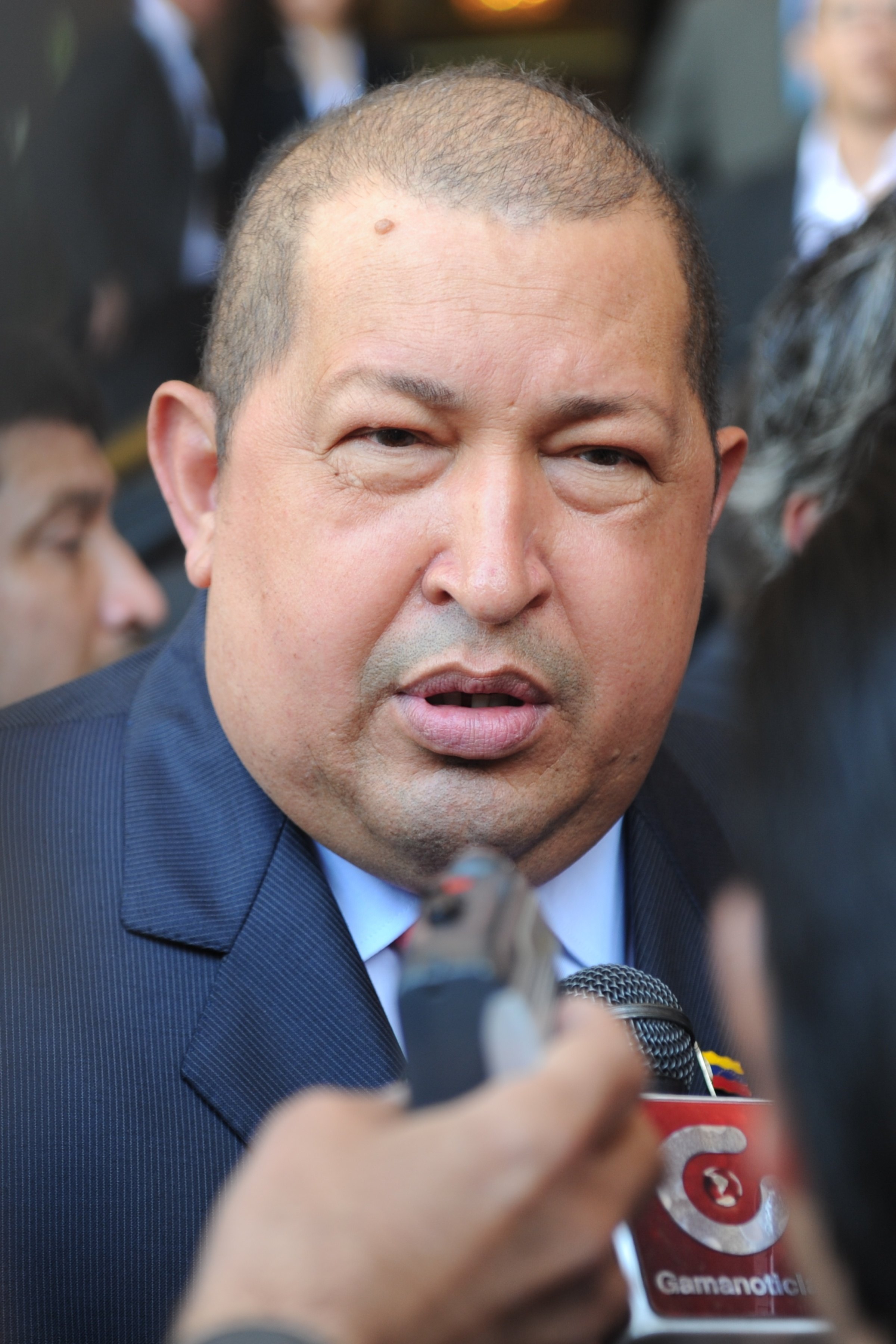
Venezuela’s government, headed by ailing and absent President Hugo Chavez, holds “total” power while the country’s Supreme Court lacks all credibility, Human Rights Watch said Thursday.

“In Venezuela, there is what one would call a total concentration of power,” Jose Miguel Vivanco, HRW’s America’s director told reporters at the presentation of the group’s annual global rights report.

“What should constitute a democratic regime with separation of powers does not exist,” Vivanco said, adding that the state’s Supreme Court has lacked “the absolute minimum credibility” since it was “captured” by the Chavez government in 2004.

The Supreme Court played a central role recently in upholding the constitutionality of the government’s decision to indefinitely delay Chavez’s swearing in to a new term six year term on January 10.

Chavez, who is convalescing from a fourth round of cancer surgery in Cuba, was too sick to make it back for the inauguration. But the delay allows him and his government to stay in office until he is well enough to take the oath.

Meanwhile, Chavez, who won reelection in October, has not been seen in public since December 10, the day before he underwent surgery.

Vivanco called the Supreme Court’s decision “quite surprising,” saying it left Venezuela in a “very abnormal situation” where “the former government still rules.”

“This is very revealing and an excellent example… of what it means to not have an independent judiciary that can preserve and uphold democratic principles and the very constitution devised by President Chavez.”

HRW said in its latest report that during Chavez’s presidency, “the accumulation of power in the executive branch and the erosion of human rights guarantees have enabled his government to intimidate, censor, and prosecute Venezuelans who criticize the president or thwart his political agenda.”

It added that Venezuelans who criticize the government face reprisals and, among other things, “has undercut the ability of judges to adjudicate politically sensitive cases.”

While the Chavez government has “abused its powers to regulate the media,” its prisons are among the most violent in the region.

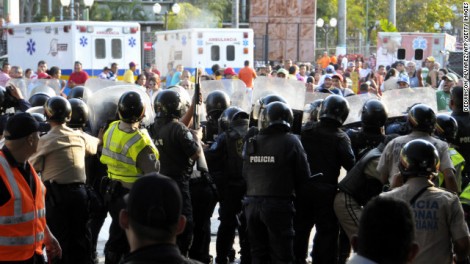
Earlier this month, a riot at a prison in the country’s northwest left 58 dead and twice as many wounded.

The Venezuelan government regularly dismisses HRW’s reports.

To read this article on Global Post, please click here.

 
Jan
30
2013
Posted by
admin
Comments

Venezuela’s Deadliest Prison Riot Provokes Outrage

130126021907 venezuela prison riot story top1 e1359577489113 Venezuela’s Deadliest Prison Riot Provokes Outrage

Courtesy of: CNN

Conditions in Venezuelan prisons have long been known as dangerous and ruthless, among the worst in the hemisphere. But this weekend, in one of the deadliest prison clashes in the nation’s history, the world found out just how mismanaged Venezuela’s prison system really is. According to medical officials, 61 people were killed and 120 injured after violence erupted at the Uribana prison complex, located near the city of Barquisimeto in northwest Venezuela.

The fighting began early Friday morning after troops entered the complex to search for and confiscate illegal weapons. Just two hours into the incursion, the well-armed inmates mounted a resistance; refusing to allow officials to enter the wards. Chaos quickly followed. Venezuelan Penitentiary Service Minister Iris Varela announced the closure of the jail, but it was not until Sunday – two full days later – that authorities finished removing inmates and relocating them among 19 penitentiaries throughout the country. In the meantime, relatives of inmates were left desperately awaiting information from authorities.

Inaugurated in 1999, during Hugo Chávez’s first year in office, Uribana is Venezuela’s largest prison. At that time, the facility was held up as the model of a modern Venezuelan prison. The notion quickly faded, however, as the complex fast became an exemplar of Venezuela’s egregiously overcrowded and poorly-supervised prison system. Minister Varela even admitted on Sunday that 2,459 inmates resided in the prison, in a space built for only 850.

The Uribana tragedy has sparked outrage among human rights watchdogs. The United Nations High Commissioner for Human Rights (UNHCHR) called for a “prompt investigation” to identify those accountable and compensate the relatives of the victims. Direct blame has fallen on Varela, who has failed to make any real progress in curbing violence or reducing the rampant overcrowding of the nation’s prisons.

Already, the Venezuelan government’s response to the tragedy is fraught with political favoritism. Only members of Chávez’s party were allowed to participate in the National Assembly subcommittee charged with investigating the riot. Opposition parties, who have been denied input into the process, have called for the resignation of Varela. Vice President and acting president Nicolás Maduro gave the minister his full support. The ailing Chávez, ensconced in Cuba for nearly two months, remains completely silent on the issue.

Violence in Venezuelan prisons – particularly among rival gangs – has become essentially routine. Overcrowding is at epidemic levels, as thirty-three jails, originally built for 12,000 inmates, now house nearly 47,000 people. Weapons including guns and knives are common and widespread in these prisons, while guards remain absent or ineffectual, allowing lucrative illegal activities to take place. The 61 Venezuelans who died this weekend were hardly the first fatalities of Venezuela’s growing prison crisis. NGOs and human rights watchdogs reported that 560 people were killed in Venezuelan prisons in 2011. According to a Venezuelan rights group, more than 300 people were killed in 2012 as well, including the 25 Venezuelans killed during the highly-publicized standoff at the El Yare I prison facility. So far, however, the government’s response has been marred by political patronage, making it unlikely that the crisis will soon stop.