Jun
13
2013
Posted by
admin
Comments

ICYMI: Venezuela gets a lifeline from the United States

The Washington Post
June 11, 2013
By Editorial Board
kerry jaua 644x362 e1371130314425 ICYMI: Venezuela gets a lifeline from the United States

Courtesy of: Agence France Presse

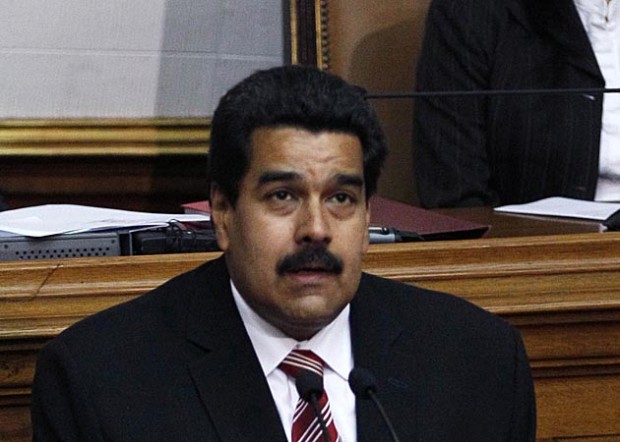
Nicolás Maduro, the former bus driver chosen by Hugo Chávez to lead Venezuela after his death, has been struggling to consolidate his position since being declared the victor in a questionable presidential election in April. With the economy stalling, inflation spiking and shortages spreading, the new president appears at a loss about how to respond, other than to blame domestic and foreign enemies. Nor has he been able to overcome a serious split in the Chavista movement between his own, Cuba-backed clique and another based in the military.

Perhaps most alarming for Mr. Maduro, an energized opposition has refused to accept the election outcome; its capable leader, Henrique Capriles, has been gaining sympathy around the region. The president of neighboring Colombia, Juan Manuel Santos, met with Mr. Capriles on May 29, prompting paroxysms of rage from Mr. Maduro and his aides. Other Latin American governments, while avoiding a confrontation with Caracas, have made it clear they regard the new leader’s legitimacy as questionable; the regional group Unasur called for an audit of the election results.

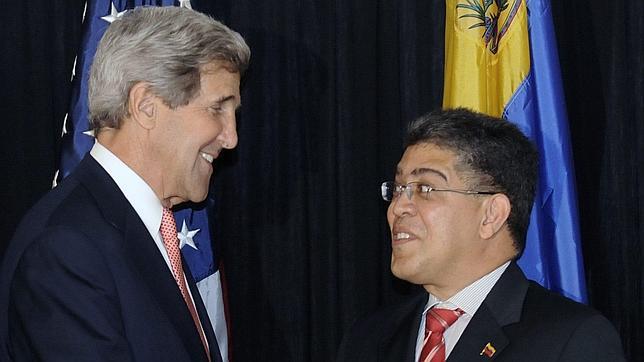
One government, however, has chosen to toss Mr. Maduro a lifeline: the United States. Last week Secretary of State John F. Kerry took time to meet Venezuelan Foreign Minister Elias Jaua on the sidelines of an Organization of American States meeting, then announced that the Obama administration would like to “find a new way forward” with the Maduro administration and “quickly move to the appointment of ambassadors.” Mr. Kerry even thanked Mr. Maduro for “taking steps toward this encounter” — words that the state-run media trumpeted.

What did Mr. Maduro do to earn this assistance from Mr. Kerry? Since Mr. Chávez’s death in March, the Venezuelan leader has repeatedly used the United States as a foil. He expelled two U.S. military attaches posted at the embassy in Caracas, claiming that they were trying to destabilize the country; he claimed the CIA was provoking violence in order to justify an invasion; and he called President Obama “the big boss of the devils.” A U.S. filmmaker, Timothy Tracy, was arrested and charged with plotting against the government — a ludicrous allegation that was backed with no evidence. Though Mr. Tracy was put on a plane to Miami on the day of the Kerry-Jaua encounter, Mr. Kerry agreed to the meeting before that gesture.

There’s nothing wrong, in principle, with diplomatic meetings or even in dispatching an ambassador to a country such as Venezuela. The State Department has also been meeting with senior opposition leaders and has yet to say it recognizes the presidential election results. But Mr. Kerry’s words amounted to a precious endorsement for Mr. Maduro — and the Obama administration appears bent on cultivating him regardless of his actions. Perhaps the increasingly desperate new leader has secretly promised concessions to Washington on matters such as drug trafficking. But with senior government and military officials involved in the transhipment of cocaine to the United States and Europe, he is unlikely to deliver.

In short, this looks like a reset for the sake of reset, launched without regard for good timing or the cause of Venezuelan democracy.

To read this article at The Washington Post, please click here.

 
Jun
7
2013
Posted by
admin
Comments

In Case You Missed It… Articles Roundup Week of 6/7/13

jaua kerry.jpg.520.360.thumb  e1370640648452 In Case You Missed It… Articles Roundup Week of 6/7/13

Courtesy of: Associated Press

This week: Venezuela’s economy slows sharply in the first quarter, signaling a difficult year for the already struggling nation; in a clear sign that food shortages are worsening, restrictions on the sale of 20 basic goods are set to begin next week in Venezuela’s most populous state; Telefonica plans to boost spending in Venezuela to avoid sitting on cash that may lose a third of its value if a second currency devaluation occurs this year; Venezuela’s inflation hits a record monthly high of 6.1 percent in May, taking its annualized rate to a startling 35.2 percent; meanwhile, pressure mounts on the government to accelerate the approval of foreign currency. After months of tensions, U.S. Secretary of State John Kerry meets with Venezuelan foreign minister Elías Jaua during an OAS meeting; U.S. filmmaker Timothy Trace, who had been arrested earlier this year, is released and expelled from the country; Venezuela’s opposition hits the diplomatic road, traveling abroad to pressure the government following April’s disputed election; and the sale of Venezuela’s largest private media group reignites concerns that the government is attempting to silence the press, masking falling popular support and deteriorating economy. The number of cases submitted to the ICC because of arbitrary arrests and power abuses in Venezuela amount to 194; Venezuelan attorney rejects international allegations of torture by the Maduro government; and Venezuela’s opposition says it will submit records of 180,125 dead people that remain eligible to vote.

Venezuela’s economy slows sharply as ‘stagflation’ looms, Reuters

Venezuela’s economy slowed sharply in the first quarter, the central bank said on Friday, auguring a difficult year for the OPEC nation that is already struggling with galloping inflation and shortages of basic consumer goods.

Rationing of 20 products to begin in Venezuelan state next week, Associated Press

In a sign Venezuela’s food shortages could be worsening, restrictions on the sale of 20 basic items including toilet paper and chicken subject to price controls are set to begin next week in its most populous state, officials said Tuesday.

Telefonica Said to Plan for Another Venezuela Devaluation, Bloomberg

Telefonica SA (TEF) plans to boost spending in Venezuela to avoid sitting on cash that may lose a third of its value as speculation mounts that the government may devalue the bolivar for a second time this year, according to a person familiar with the matter.

Venezuela inflation soars to record monthly high 6.1 pct, Reuters

Venezuela’s inflation hit a record monthly high of 6.1 percent in May, compounding new President Nicolas Maduro’s economic headaches less than two months after taking office in the OPEC member country.

Toilet Paper-Less Venezuela Fueling Bond Sale Talk: Andes Credit, Bloomberg

Venezuelan Finance Minister Nelson Merentes is planning the nation’s first overseas meetings with creditors in nine years as a scarcity of dollars exacerbates shortages of everything from toilet paper to soap.

Kerry Meets With Official of Venezuela to Set Talks, New York Times

After months of tensions between the United States and Venezuela, Secretary of State John Kerry met on Wednesday with the Venezuelan foreign minister, Elías Jaua, in Antigua, Guatemala, and announced the start of talks aimed at improving relations between the two countries.

Venezuela frees, expels U.S. filmmaker, CNN

A U.S. filmmaker arrested in Venezuela and accused of instigating unrest was released from prison and expelled from the country, his attorney told CNN affiliate Globovisión.

Venezuela’s opposition hits the diplomatic road, Foreign Policy

Last week, Venezuelan opposition leader Henrique Capriles made his first trip abroad following last April’s disputed election.

Fears for Venezuela press freedom as critic is silenced, Financial Times

The sale of Venezuela’s largest private media group has reignited concerns that the government is attempting to muzzle the press to mask falling popular support amid a deteriorating economy and widespread shortages.

Demonstration is now considered a crime, El Universal

A total number of 194 cases of youngsters and minors who were arbitrarily detained and abused or tortured by state police officers and para-police groups, have been substantiated and submitted by the team of lawyers grouped in the Venezuelan Criminal Forum to the International Criminal Court based in The Hague.

Attorney General rejects international complaints against Venezuela, El Universal

Venezuelan Attorney General Luisa Ortega Díaz stated on Thursday that the Venezuelan State has acted promptly in specific cases related to violation of human rights.

Opposition introduces register of voters including 180,125 dead, El Universal

Experts from the opposition Unified Democratic Panel (MUD) plan to submit this week to the National Electoral Council (CNE) data of 180,125 dead people that remain enabled to vote.

 
Jun
5
2013
Posted by
admin
Comments

Nicolas Maduro’s Embarrassing Week

Nicolas Maduro1 620x442 e1370466156876 Nicolas Maduro’s Embarrassing Week

Courtesy of: Associated Prses

The presidency of former bus driver Nicolás Maduro began inauspiciously, his government using intimidation and threats to consolidate power.  Now, two months after he claimed victory in an election fraught by irregularities, things have only gotten worse for Maduro. The aftermath of Venezuela’s election controversy have caused Maduro to lose support and popularity among his own people. And as violence and a sinking economy continue to take their toll on Venezuelans, Maduro is now coming face-to-face with the consequences of years of Chávez’s failed socialist policies.

Maduro reacted like a spurned child when news emerged that opposition leader Henrique Capriles had traveled to Colombia and had been received there by President Juan Manuel Santos. As Venezuela’s socialist policies have kept the country in economic squalor, Colombia is one of Latin America’s success stories, and a strong U.S. ally in the region. Capriles met with President Santos, along with members of the Colombian parliament, where the leaders discussed Venezuela’s narrow presidential election along with the country’s dire economic situation.

“We are taking the voice of millions of Venezuelans beyond our borders,” Capriles said in Colombia. “The fight for democracy has to be everyone’s fight.” Indeed, news emerged this week that voter rolls indicate that deceased Venezuelans had “voted” in recent elections – the latest in a series of disturbing revelations about the state of democracy in Venezuela.

Economically, the situation is perilous and getting worse. With inflation near 30 percent and Venezuelans struggling to find basic goods like toilet paper, the country’s economy is heading for a recession sure to make matters worse. The Venezuelan government plans to institute restrictions on the sale of 20 basic items subject to price controls in Zulia, the country’s most populous state. Starting next week, the state will issue computer chip cards that will limit consumer purchases of certain products. Though the government has spun the move as a fight against contraband on the Colombian border, it is another clear sign that Venezuela’s shortages are worsening.

Meanwhile Venezuela’s bonds have bottomed out; Moody’s now rates them as junk status, a sign that the financial community has lost faith in Maduro’s government.

Indeed, criticism from the international community and from watchdogs continues to ratchet up. The meeting between President Santos and Capriles embarrassed Maduro on the world stage; the shootings of two U.S. embassy officials only further underscored the dreadful violence that plagues Venezuela. Desperate to quell the concerns of the international community, Venezuela has requested a meeting with top U.S. Diplomat John Kerry. Kerry will meet with Foreign Minster Elías Jaua at the ongoing Organization of American States General Assembly session in Guatemala. The meeting – the first at the cabinet level between the nations in several years – will explore ways to improve fractured relations between the two nations.

The only hope for Venezuela’s economy and her people lies in moderation, yet the signs often point in the opposite direction. Maduro has grasped for scapegoats, blaming Venezuela’s scant remaining private industry for the problems caused by the government. Venezuela’s last independent television station, Globovisión, was recently purchased by a group of businessmen with ties to the country’s ruling party. Now, as if on cue, the station has pledged to curb criticism of the government on its airwaves.

With Venezuela’s media already almost entirely controlled by the government, Globivision represented the last semblance of free media in the country. Its sale “appears to represent a new extension of the Venezuelan government’s control over broadcast media,” write Latin America experts Hugo Pérez Hernáiz and David Smilde.

All in all: it paints an embarrassing picture for Venezuela’s new president. Lacking in legitimacy before the international community and his own people, his government unable to reverse the economic calamity it caused, Nicolas Maduro’s first months in office started poorly, and have only gotten worse. And the Venezuelan people are feeling the consequences.