Jul
19
2012
Posted by
admin
Comments

Chávez uses the power of his government to give himself an edge

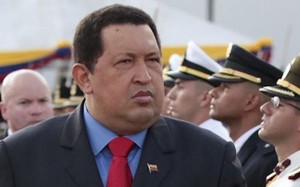
490140 300x187 Chávez uses the power of his government to give himself an edge

Courtesy of: Reuters / Miraflores Palace

Facing what has become the closest electoral campaign of his life, Hugo Chávez is using the full force of the government, including its near-monopoly on the media, to give him an extra edge ahead of the October 7 vote.

Two new polls are showing opposition candidate Henrique Capriles narrowing the gap with Chávez, with one poll even showing the two candidates in a virtual tie. The opposition, with Capriles at the helm, is clearly the strongest it has ever been. And with a significant percentage of the population still undecided, the race is still very much up in the air.

Apparently concerned with the latest polls, Chávez has begun to take advantage of the government’s broad authority to aid his campaign. Just this month the opposition accused Chávez of using the police to block a campaign rally and preventing Capriles’ supporters from entering a Caracas slum. The stand-off, which the Chávez campaign blamed on Capriles, ended in violence and three people were injured. It is just the latest chapter in Chávez’s electoral manipulations.

As questions swirl about his health, Chávez appears in public at a rate drastically less than in previous elections. When he does appear, however, he often uses mandatory national broadcasts – known as “cadenas” – to put himself in front of the electorate, including several times before of the official start of the campaign. Official campaign rules limit political broadcasts to three minutes, but Venezuela’s National Electoral Council is powerless to curtail the use of these cadenas. On multiple occasions, Chávez has taken advantage of this privilege, talking for hours on all of the nation’s networks. Using his government’s authority over the media, he is able to promote his campaign to Venezuelans in a way Capriles cannot hope to match.

Meanwhile, he has worked to suppress the few voices in the media that do not provide him a loyal echo chamber. Two weeks ago his government – using its heavily controlled jurists on Venezuela’s Supreme court – attempted to shut down Globovision, the largest, and one of the only remaining, independent television stations left in the country. The Supreme Court ruled that its assets could be seized as a penalty for not paying a fine, which was still being appealed in a lower court. Globovision quickly paid the fine, as the asset seizure would have virtually forced the station out of existence otherwise, but the government’s intention was clear. Globovision is not the first anti-Chávez station to be threatened. This case evoked memories of RCTV, a station that aired coverage critical of Chávez and was shut down for its transgressions more than five years ago.

In addition to leveraging his control of the media, the Chávez administration has also taken measures to suppress turnout of likely opposition sympathizers. It was announced, for instance, that no voting center will be opened in Miami, home of 23,000 Venezuelans, most of them supporters of the opposition. Expatriate voters in Miami will now have to travel more than 600 miles to New Orleans to cast their vote.

This is nothing new. In fact just yesterday, Human Rights Watch released its second report on Venezuela in the past four years, again levying harsh criticism of the Venezuelan government for consolidating power in the executive branch, eroding human rights protections, and using its authority in the courts and the media to intimidate, censor and prosecute its critics.

Considered separately, each these actions tips the electoral scales slightly in Chávez’s favor. Taken together, they constitute a consistent, multifaceted effort to use every resource at the government’s disposal to ensure that Hugo Chávez and his party retain power after the fall election. With his government in near-total control of the media and the near-ubiquity of the president’s image throughout the country, those resources are indeed considerable. In a race as tight as Venezuela’s is shaping up to be, even the slightest edge can make the difference between victory and defeat. And Chávez’s built-in advantages are anything but slight.

 
Jun
29
2012
Posted by
admin
Comments

ICYMI: Venezuela court orders embargo on channel’s assets

CBS Money Watch
June 29, 2012

CARACAS, Venezuela — Venezuela’s Supreme Court on Thursday ordered an embargo on nearly $5.7 million in assets belonging to a television channel that takes a critical line against President Hugo Chavez’s government. The decision came as regulators sought to force the channel to pay a fine totaling more than $2 million.

The Supreme Court said in a statement that it had ordered an embargo on Globovision’s assets totaling 24.4 million bolivars, or $5.7 million.

The channel has been trying to challenge the fine imposed by regulators for its coverage of a prison uprising last year. But Ricardo Antela, a lawyer for the news channel, said it now plans to pay to original fine to avoid a larger penalty.

“There are only two options left: pay the fine of 9 million bolivars ($2.2 million) or expose ourselves to an embargo of almost 25 million,” Antela said. If Globovision were to face the higher penalty, he said, it could lead to the “the closing of the channel.”

He said that Globovision’s executives have decided since “there isn’t going to be justice in this case,” they will go to court to pay the original fine on Friday. Antela said they also plan to pay interest as determined by the Central Bank.

Once the fine is paid, the court’s order of an embargo on assets should be lifted, he said. The lawyer said the court had ordered a jury to convene to formally put in place the embargo on Globovision’s assets.

The court said it had responded to a request by the National Telecommunications Commission due to the channel’s failure to pay the fine initially imposed in October. Government officials did not immediately comment on the court’s decision.

Globovision, a 24-hour news network, has been the only anti-Chavez channel on the air since another opposition-aligned station, RCTV, was forced off cable and satellite TV in 2010. RCTV had been booted off the open airwaves in 2007.

Telecommunications regulators last year imposed the fine against Globovision accusing it of “apologizing for crime,” “altering the public order” and promoting political intolerance during its coverage of an intervention by troops to quash rioting at El Rodeo prison.

The commission’s director general, Pedro Maldonado, said at the time that for four days Globovision broadcast 18 emotional reports with relatives of the prisoners and repeated them almost 300 times, adding the sound of gunfire over the reports.

The June 2011 prison riot erupted after troops raided one of two adjacent prisons looking for weapons. The raid set off gunfights that left three dead, and the standoff finally ended with negotiations after 27 days. Authorities said four inmates who escaped also were slain by soldiers.

Globovision has accused Chavez’s government of trying to shut it down, and has said it did nothing wrong.

Globovision still has three pending appeals seeking to challenge the fine, while two have been rejected by courts, Antela said. The Supreme Court previously upheld the $2 million fine against Globovision in March.

The channel’s majority owner, Guillermo Zuloaga, fled into exile in 2010 after a court issued an arrest warrant on charges of usury and conspiracy. He has accused prosecutors of carrying out a vendetta on orders from Chavez.

To read this article on CBS Money Watch, please click here.

 
May
10
2012
Posted by
admin
Comments

Is Hugo Chávez Preparing Venezuela for His Departure?

Time Magazine / Global Spin
By Tim Padgett | @TimPadgett2
May 10, 2012

a2012 04 30t195816z 37842696 300x200 Is Hugo Chávez Preparing Venezuela for His Departure?

Venezuelan President Hugo Chávez holds the signed new labor law during a national TV broadcast in Caracas on April 30, 2012 (Courtesy of: Miraflores Palace / Reuters)

“Get your personal affairs in order.” It’s the hardest thing doctors have to tell cancer patients who are as ill as media reports suggest Hugo Chávez is. With an election looming in less than five months, the 57-year-old Venezuelan President would also need to get his political affairs in order — and many believe the socialist leader took the first step last week when, before going to Cuba for more treatment, he named a “council of state” as a presidential consulting body. But the council’s murky role is now as much a source of morbid speculation as Chávez’s health is, and that has raised the level of tension and uncertainty inside the home of the western hemisphere’s largest oil reserves.

When Chávez announced the council on May 1 — its eight members, including Vice President Elías Jaua, are all loyal Chavistas — he only ordered it to draft a plan for withdrawing Venezuela from the Inter-American Human Rights Commission. (The commission, an arm of the Organization of American States, or OAS, has regularly butted heads with the often authoritarian President and his left-wing revolution.) But since then, pundits across the hemisphere have surmised that the council’s real purpose is to steer Venezuela and Chávez’s United Socialist Party (PSUV) through a chaotic transition after his death. That includes picking his replacement, if need be, on the Oct. 7 presidential ballot. “Chávez is setting up a mechanism for the final phase of his presence in this world,” one anti-Chávez analyst told the Miami daily El Nuevo Herald.

Chávez has refused to disclose what kind of cancer he’s battling, and no one but he and his Cuban doctors knows for sure if he’s terminally ill. For his part, Chávez repudiated reports of his impending demise this week from his hospital bed in Havana, insisting in his typically martial rhetoric that he’ll soon be back “on the first line of battle … fulfilling my duties as head of state.” In Caracas, National Assembly president Diosdado Cabello, oft mentioned as a successor, said Chávez remains the PSUV’s “sure candidate” for October.

But either way, it’s hard to imagine Chávez, who has ruled Venezuela for 13 years and is seeking another six-year term, letting anyone but himself choose his successor while he’s still alive. And given the mythic status el comandante holds among his largely poor and working-class base — and the mass sympathy he’s garnered since his cancer was diagnosed last summer — it’s even harder to think his lieutenants would risk alienating that base by picking someone before Chávez is gone.

Yet if Chávez’s cancer is indeed so advanced that he could pass away before October, then the importance of the council of state — the first Chávez has ever created even though it’s written into his 1999 constitution — becomes “very big,” says Javier Corrales, an expert on Venezuelan politics at Amherst College. And that starts, Corrales says, with the move to pull Venezuela out of the Inter-American Human Rights Commission, which has criticized Chávez for, among other controversies, arbitrarily disqualifying scores of opposition politicians from running for office in recent years.

Under one worst-case scenario, say analysts, the council could, with the approval of the largely Chavista military, declare a state of emergency and delay the election (if not outright cancel it) to give whomever replaces Chávez more time to build a bond with voters. Such a constitutionally questionable move would in turn provoke angry protests from the opposition, which Chavista security forces would have to put down — preferably without having to answer to the Inter-American Human Rights Commission. “The effort to take Venezuela out of [the commission] is serious in that regard,” says Corrales. “There’s a fear it suggests the Chavistas are preparing for turbulence.”

Even if the council doesn’t pull a stunt like suspending the election, the PSUV’s concerns about a Chávez replacement not catching fire with the electorate are valid. Few, if any, of the possible successors being mentioned possess the President’s firebrand charisma. And the former army paratrooper officer has always made sure that his deputies share as little of his power and limelight as possible. Despite his illness, Chávez still leads opposition candidate Henrique Capriles, 39, governor of Miranda state, by double digits in some voter polls. But the more centrist Capriles — the first viable challenger Chávez has ever faced — defeats any of Chávez’s touted replacements in those same surveys.

What’s more, government insiders say Chávez’s illness has exacerbated a split in the PSUV ranks. The more hard-line socialist faction, led by Jaua and Chávez’s older brother Adán, is vying with the more pragmatic bloc that includes Cabello, himself a former army officer, and Foreign Minister Nicolás Maduro, a former union leader.

According to the Caracas daily El Nacional this week, global financial and security firms believe Maduro will emerge as the PSUV’s standard bearer should Chávez die or have to drop out of the race. El Nacional quotes the Texas-based Stratfor intelligence agency calling Maduro “the regime’s most pragmatic” minister, while the New York financial firm Nomura believes he’s “a less polarizing figure inside Chavismo” who can “quickly unite its different tribes.” Focus began shifting to Maduro last month, in fact, when he accompanied Chávez to Cuba for a round of radiation treatment.

For now, the council of state’s main occupation, besides divorcing Venezuela from the OAS human-rights body, is to aid the President with day-to-day government decisions — which Capriles and the opposition have for months insisted the control-obsessed Chávez has to start delegating. Even so, says José Manuel Puente, an economist at the Institute of Higher Administration Studies in Caracas, “Until his last breath, Chávez will be taking all the decisions.” The council, which also includes the Machiavellian former Vice President José Vicente Rangel, “is a preventive measure on Chávez’s part,” says Puente, “a mechanism of precaution” to ensure his revolution doesn’t implode if and when he departs the scene.

But it may also be a healthy sign to Chávez’s followers that they no longer have to remain in denial about his condition. Or about the condition of their revolution — which, like their inflation- and crime-plagued country, has for 13 years been too much a one-man act — and its real vulnerability in the October election. Still, Chávez has always held power in large part by keeping friends and foes alike guessing what he’ll do next. The council of state brings one more element of uncertainty to his passion play — a reminder, says Puente, that “if anyone [in Venezuela] tells you they know what’s going to happen next in this drama, they’re lying.”

To read the original article from Time Magazine / Global Spin, please click here.